
Candles Against the Dark: Falun Gong Marks 27 Years of Persecution Worldwide
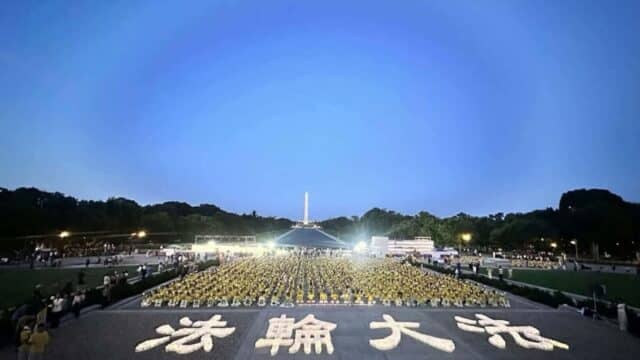
On July 23, Falun Gong practitioners hold a candlelight vigil at the National Mall to mourn for the practitioners who lost their lives in the CCP’s suppression.(Photo: An anonymous Falun Gong practitioner)
On July 20, 1999, the Chinese Communist Party (CCP) set out to erase Falun Gong. Twenty-seven years later, it has not succeeded—and this July, that failure was on display in city after city around the world.
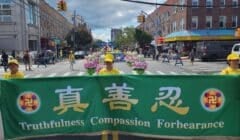
From Washington to Kuala Lumpur, from the front of the Lincoln Memorial to the pavement outside the Chinese Embassy in London, practitioners gathered through late July to mark the anniversary of the campaign against their faith. They lit candles for the dead, held their portraits aloft, and told passersby—many hearing it for the first time—what has been done to people whose only offense was to believe in Truthfulness, Compassion, and Forbearance. The commemorations spanned continents, with gatherings reported in the United States, Canada, South Korea, Malaysia, the United Kingdom, Japan, Australia, and beyond. Wherever they were held, the message was the same: the persecution has not ended, and neither has the resolve to see it stopped.
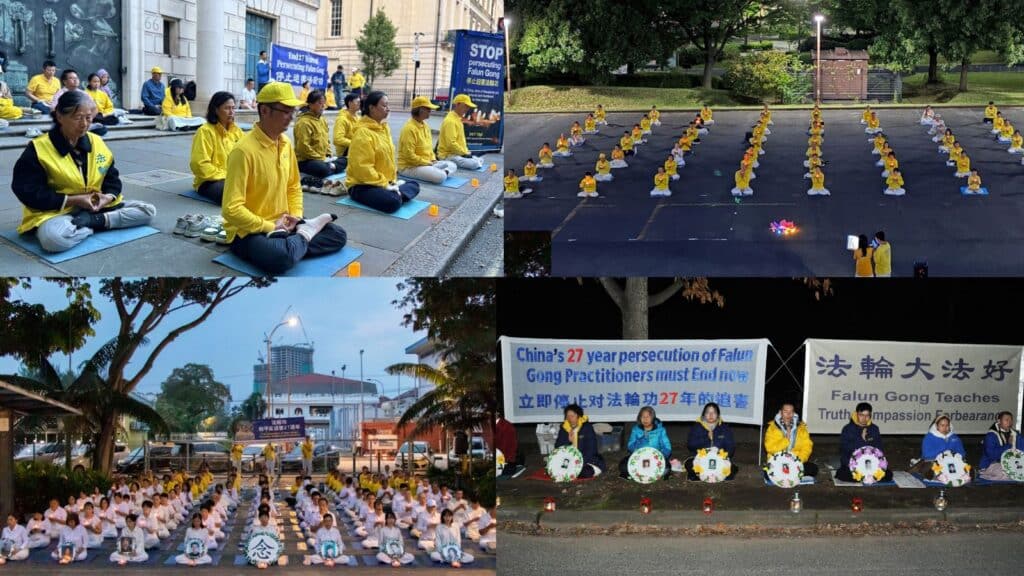
The practice was introduced in China in 1992 and, within seven years, had drawn an estimated 100 million people. More than a quarter century after the regime moved to wipe it out, the human cost keeps mounting: practitioners are still detained and tortured for meditating or speaking to their neighbors; more than 5,300 deaths in custody have been documented, with the true toll believed far higher; and the state-sanctioned forced harvesting of practitioners’ organs continues.
Washington, DC
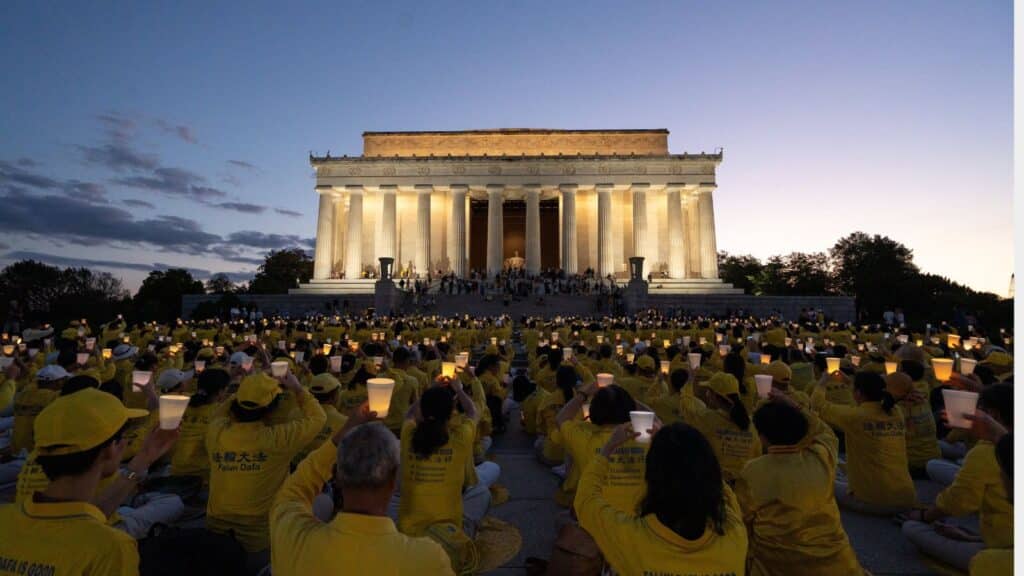
Around 2,000 practitioners rallied and marched through the capital on July 23, gathering that evening in front of the Lincoln Memorial, with the Washington Monument rising in the distance.
As twilight deepened into blue, they sat in orderly rows in their yellow and white, each holding a candle, while hundreds more candles below them spelled out the Chinese characters for “Falun Dafa” across the plaza and portraits of the deceased lined the front.
Marina Vassong of Philadelphia, who left the Soviet Union decades ago and lost family in the Holocaust, said the world had once vowed “Never Again,” yet a comparable horror was unfolding in China unstopped. Colleen Thiel, watching from among the tourists, could not reconcile the cruelty with the belief behind it. “To torture and imprison people whose core belief is kindness is completely incomprehensible to me,” she said.
Toronto, Canada
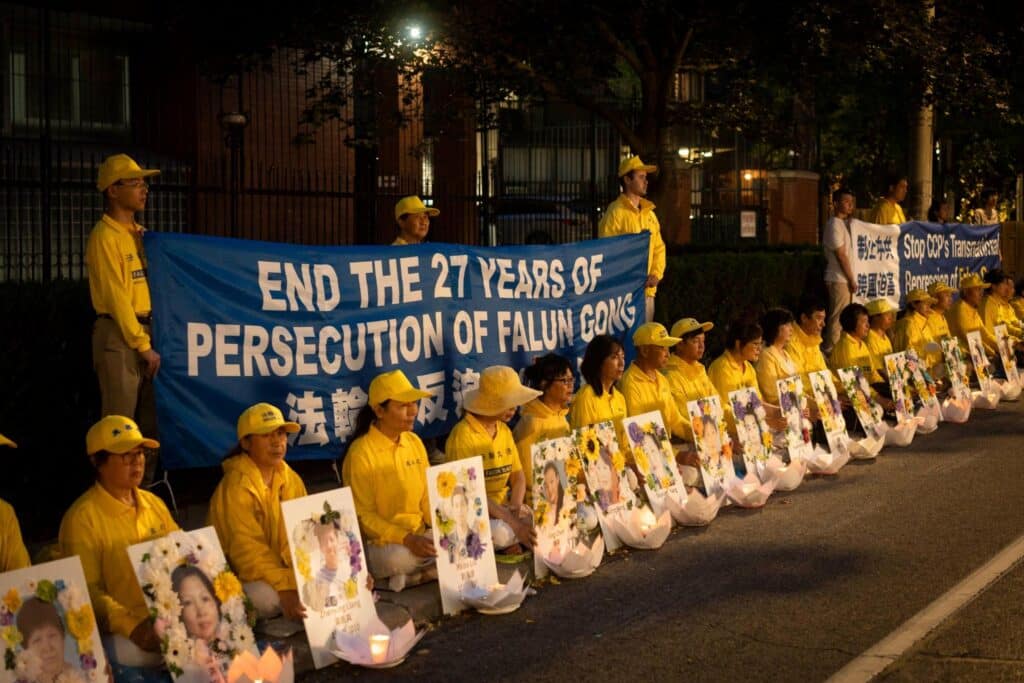
The rain never let up in Toronto on July 18, and practitioners carried on regardless—morning exercises outside the Ontario Legislative Building, a rally, a midday march, and an evening vigil at the Chinese Consulate.
The calm of it drew people in. Zelia, visiting from Turkey, stopped mid-jog to watch, then tried the exercises herself and sat in meditation for half an hour in the wet. Marvin, seeing such an event for the first time, was stunned to learn of the forced organ harvesting, calling it terrifying because it had become “an institutionalized practice.” Watching the evening vigil, a woman named Lori said its stillness left her more open to the message: “It’s so beautiful here because it’s peaceful and allows for quiet reflection.”
Seoul, South Korea
Rain fell all day in Seoul, too, and practitioners moved through the exercises in the downpour before a rally, a memorial, and a two-kilometer march through the city center on July 20.
The South Korean Association of Falun Dafa warned that Beijing’s campaign no longer stops at China’s border, reaching into Korean institutions through pressure and united-front tactics. Film director Heo Eun-do, who last year opened the Seoul Larkspur International Film Festival with the organ-harvesting documentary State Organs, told the crowd that staying silent in the face of such abuses only helps them along. Most affecting was a visitor from Jilin Province, China, who said such a scene would be unthinkable at home—his mother, a practitioner, had never dared do the exercises by daylight, “only in secret at night.”
Kuala Lumpur, Malaysia
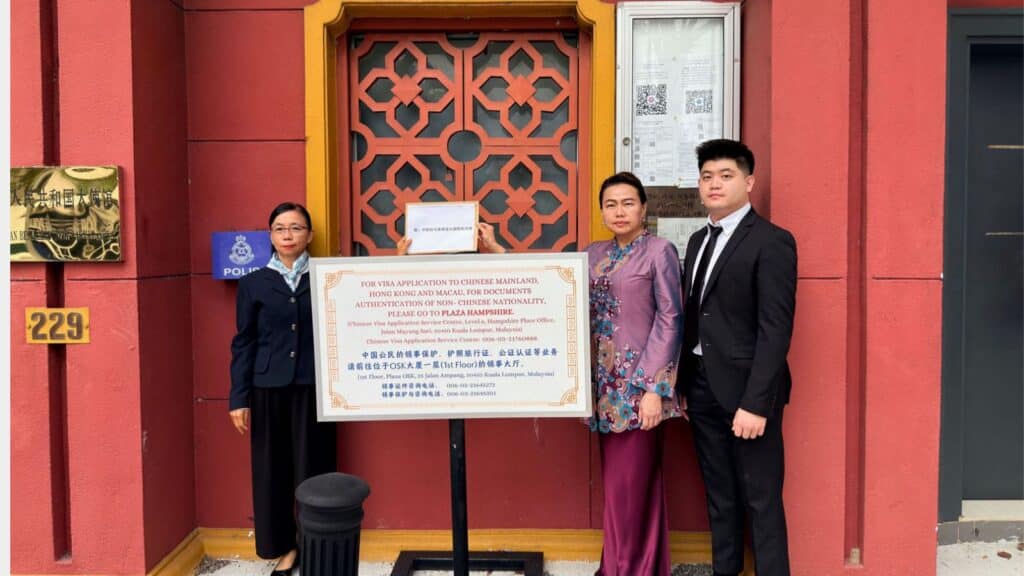
Practitioners marked the day in two registers. In the morning they assembled outside the Chinese Embassy, read a statement in Chinese, Malay, and English, and—undeterred by the mission they stood before—delivered a letter of protest to its door, pressing their demand that the persecution end. By late afternoon they had moved to Titiwangsa Park, where the exercise music drew a steady stream of passersby.
Bibbo, who runs a local meditation center, stopped because the sight felt familiar—and was shaken to learn, for the first time, that practitioners had been persecuted and even had their organs taken while alive. “This is something that deserves to be known worldwide, so people can help stop it,” she said. A survivor named Mr. Li, now living in Malaysia, described being tortured in a Chinese prison—his fingernails pierced with needles, two toenails torn out, and sleep withheld for twenty-two days.
London, United Kingdom
From seven until ten in the evening, practitioners took their places on the pavement across from the Chinese Embassy—the quieter bookend to a two-day parade the weekend before. Dressed in yellow, they sat in meditation before banners reading “Stop Persecuting Falun Gong” and “The World Needs Truthfulness-Compassion-Forbearance,” each holding a candle and a portrait of someone who had died, ringed with flowers.
Commuters and tourists were drawn to the illuminated display boards; some, learning that peaceful people had been killed for their organs, reacted with visible shock and signed a petition urging the British government to act. Now and then a passing driver leaned on the horn—a small salute across the dark.
Separated by oceans and time zones, these gatherings said one thing together. Practitioners came to grieve the dead, to bring into the light what the CCP has worked so hard to bury, and to ask the world not to look away. Year after year, in more cities and more languages, more people are stopping to listen—and lifting their own voices to demand that a persecution now in its 27th year finally come to an end.
This article refers to several reports from Minghui.org, an official Falun Dafa website that publishes firsthand accounts from practitioners in China and around the world. The original reports can be found at Minghui.org.