
Falun Gong Survivor and Journalist Detail CCP Repression From Chinese Labor Camps to American Courts
At a Washington briefing, a Falun Gong practitioner held up a toy he made in a Chinese labor camp, and an investigative journalist showed how Beijing turns American institutions against the faith community
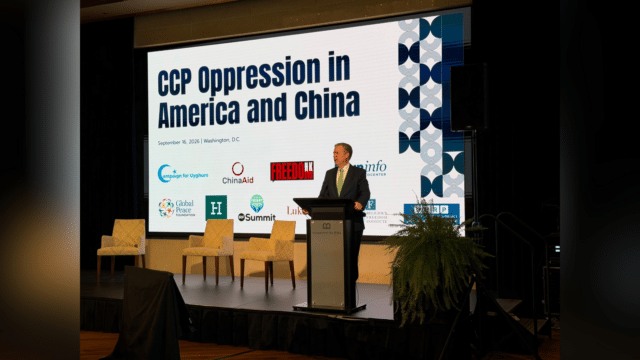
Former U.S. Ambassador-at-Large for International Religious Freedom Sam Brownback speaks at "CCP Oppression in America and China," held Sept. 16, 2026, at the Museum of the Bible in Washington, D.C. (Photo: Falun Dafa Information Center)
A week before Chinese leader Xi Jinping’s state visit to Washington, religious freedom advocates gathered at the Museum of the Bible on September 16 with one immediate goal: to put the persecution of people of faith on the agenda when President Trump and Xi meet.
The briefing, titled “CCP Oppression in America and China,” was convened by the International Religious Freedom (IRF) Summit, the Religious Freedom Institute, and allied groups. Christians, Falun Gong practitioners, Uyghurs, and Tibetans described what the Chinese Communist Party (CCP) does to believers inside China and, increasingly, inside the United States.
A war against faith
Sam Brownback, co-chair of the IRF Summit and former U.S. Ambassador-at-Large for International Religious Freedom, opened the briefing by saying the Chinese regime is waging a war against faith and religion. The United States, he said, “can no longer tolerate or accept” a regime “hostile to religion, and hostile to the United States of America.”
If Beijing will not stop persecuting believers, Brownback said, Washington should revoke China’s Permanent Normal Trade Relations status. He called on President Trump to raise religious freedom directly with Xi and to press for the release of everyone imprisoned in China for their beliefs.
Made in a labor camp
William Huang, a Falun Gong practitioner from Pennsylvania who now works as a senior electrical engineer, walked to the podium holding a Spider-Man toy. “This is one of our slave labor products we made in the labor camp,” he told the audience.
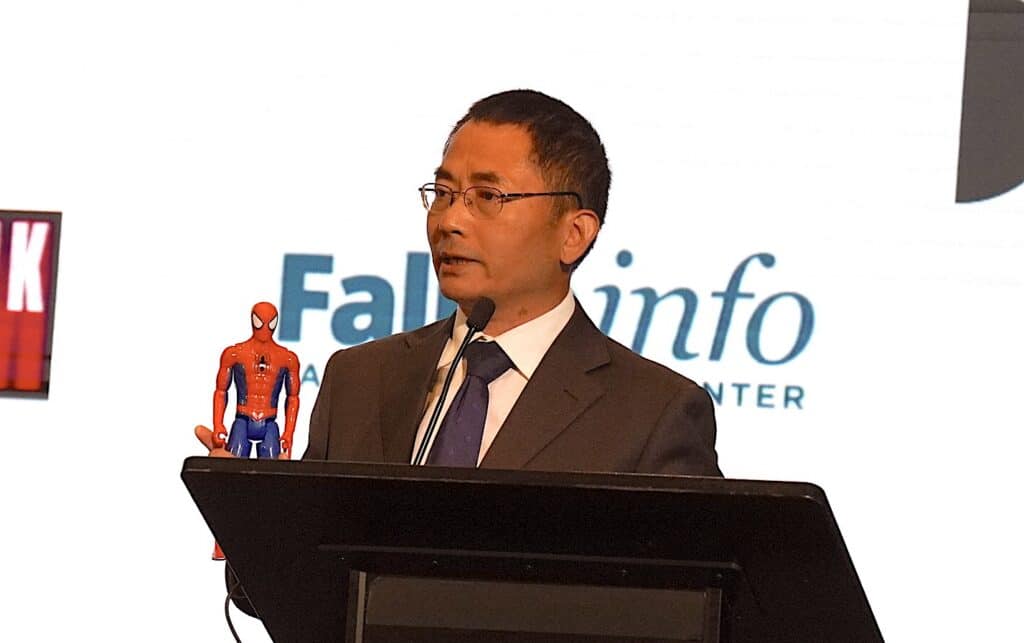
Huang began practicing Falun Gong in 1998 as a Ph.D. candidate at Beijing’s Tsinghua University, often called China’s MIT. At the time, an estimated 100 million people in China practiced Falun Gong. Fearing its popularity and independence, then-CCP leader Jiang Zemin launched a campaign to eradicate the practice in July 1999, and millions were detained. Huang’s doctoral studies ended, and he spent five years in custody.
Detainees were forced to work at least 16 hours a day, sometimes 18, with no weekends or holidays. They made plastic flowers, Christmas lights, necklaces, sweaters, jade products, mooncake boxes, and toys, and pried open pistachio shells by hand with heavy iron wire. About 20 inmates shared a cell smaller than 300 square feet, where they slept, ate, used the toilet, and worked.
After arriving in the United States in 2008, Huang found the same products in American stores, labeled “Made in China” and sold at very low prices. “You can imagine how shocked I was at that moment,” he said.
Torture and blood tests
When Huang refused the forced labor and went on a hunger strike, guards made him squat for three days, then kneel before hundreds of detainees and confess to being a criminal. When he refused, he was handcuffed behind his back and shocked with more than 10 high-voltage electric batons at once, including on his ears and palms. “I really can feel the hot current goes through everywhere in my body,” he said. “I almost died.”
Worse, he said, was the brainwashing. He was deprived of sleep for months, forced to watch videos defaming Falun Gong, and held in isolation for nearly a year, allowed to speak only to seven inmates who recorded his every word and movement for the guards. Authorities also arrested his parents, both practitioners, to pressure him.
Huang was also given blood tests in custody with no explanation. Only after his release, when he learned of forced organ harvesting, did he understand what they might mean. “Potentially I could be the victim of the forced organ harvesting,” he said. His experience is far from unique: in a recent FDIC survey, 56 percent of respondents who had been detained in China reported being subjected to blood tests or other medical examinations.
Huang has never been able to return to China. When both of his parents died about a decade ago, he could not go home. “This is really my lifelong regret,” he said.
The persecution has followed him abroad. Huang pointed to a threat intelligence report released days earlier by the AI company Anthropic, which found that a CCP-linked operation had used its Claude models to track Falun Gong practitioners, Shen Yun, and NTD. “It’s very concerning,” he said. “But I’m not scared. I will continue to tell the truth to people, to expose the evil of the CCP.”
He urged the Senate to pass the Falun Gong and Victims of Forced Organ Harvesting Protection Act (S.4009), noting that the issue touches ordinary Americans, from goods on store shelves to patients who travel to China for organ transplants. “This kind of persecution we are talking about here today is not only a thousand miles away in China,” he said.
‘It looks American’
Steve Lance, an investigative journalist and the executive producer and host of NTD’s Capital Report, said most Americans picture transnational repression as something overt. The more dangerous form, he said, is harder to recognize. “It looks American,” he said. “A lawsuit, a complaint to a government agency, an investigation, a protest, even a news story.”
Drawing on nearly two years of research for the documentary Unbroken, which examines Beijing’s campaign against Shen Yun Performing Arts, Lance traced the pattern to the CCP’s “three warfares” doctrine of media, legal, and psychological warfare. The aim of legal warfare, he said, is not to defeat the U.S. legal system but to use it.
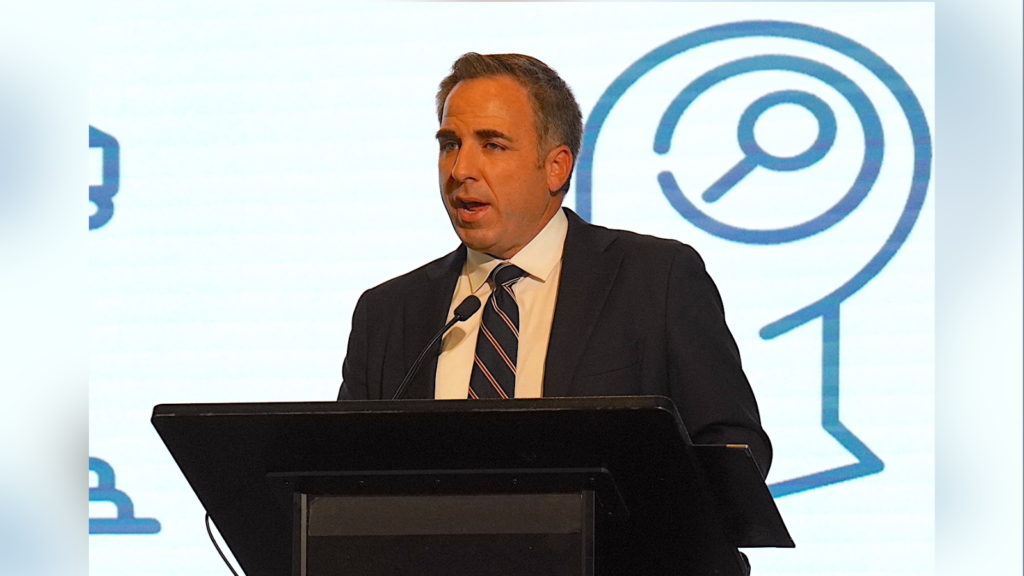
He cited the case of John Chen and Lin Feng, who pleaded guilty to acting as unregistered agents of the Chinese government after trying to bribe an undercover FBI agent posing as an IRS official to strip Shen Yun of its tax-exempt status. “The CCP attempted to make the Internal Revenue Service of the United States of America do the work for them,” Lance said.
In a second example, The New York Times published allegations about Shen Yun’s working conditions and compensation, and the New York State Department of Labor opened an inquiry, which the Times itself reported had begun after questions from its reporters. Lance noted that there is nothing inherently improper about journalism prompting a government inquiry. “In fact, this is often how accountability works,” he said. The department closed the matter with zero dollars in back wages and zero in wage underpayments. By then, however, “much of the reputational effect had already occurred,” Lance said.
In a third example, two former Shen Yun performers now tied to the state-run Beijing Dance Academy filed a federal lawsuit against the company, and the Times published a dedicated story about it by 3 a.m. the following morning. Lance said the coverage left out the plaintiffs’ own interests. “Of course, this doesn’t prove coordination with Beijing,” he added.
Lance was clear that none of these actions, on its own, is evidence of foreign direction. “People have a constitutional right to sue, regardless if they’re foreign nationals on American land. Journalists have a right to investigate. Government agencies have an obligation to examine credible complaints. Courts should decide legitimate disputes on their merits,” he said. “That is why tracing these actions back to their source is so important.”
That tracing is what his investigation set out to do. His team obtained leaked Chinese government directives naming Shen Yun and Falun Gong as targets for “precise strikes” and calling for the mobilization of experts, scholars, journalists, and overseas Chinese influencers to generate narratives capable of prompting investigations by Western authorities. In January, the Chinese embassy in Washington circulated material attacking Shen Yun to media bureau chiefs, citing the same three examples as evidence.
‘Beijing sees the whole board’
“Winning is not always necessary for the CCP,” Lance said. “The process itself is the punishment.”
His recommendation was concrete: someone in the federal government must be responsible for connecting the dots. Today, a lawsuit sits with the courts, a labor complaint with a regulator, a threat with the FBI, and an influence operation somewhere else. “But Beijing sees the whole board,” Lance said. “That is the vulnerability we have to close.”
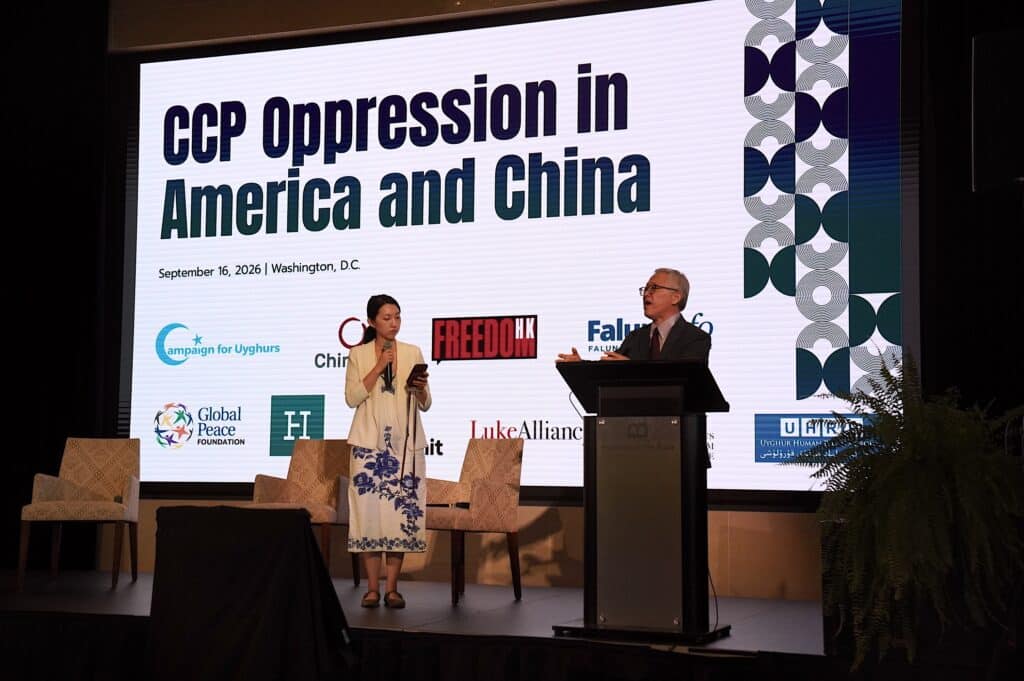
Other speakers included Pastor Ezra Jin of Beijing Zion Church, who was released this summer after more than 260 days in Chinese custody; Pastor Ding Shuqi of Early Rain Covenant Church in Chengdu; Ziba Murat, daughter of imprisoned Uyghur doctor Gulshan Abbas; Ryan Fioresi of the International Campaign for Tibet; and David Trimble. Participants closed by urging President Trump to raise the persecution of religious believers with Xi and to press for the release of those detained for their faith.