
Heilongjiang Man Released From Prison in a Coma Days Before His Term Ended, Dies One Week Later
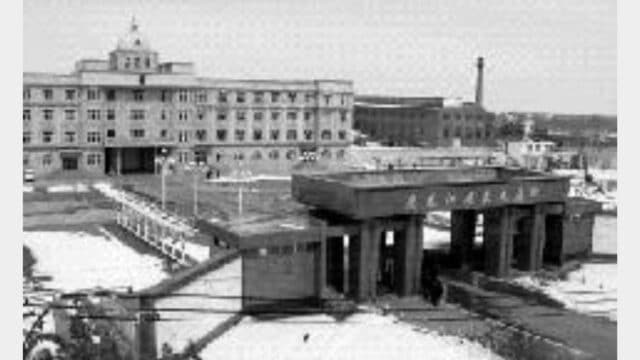
Tailai Prison, Heilongjiang Province (Source: Minghui.org)
Mr. Yu You, a 64-year-old Falun Gong practitioner from Qitaihe City, Heilongjiang Province, died on August 28, 2026, seven days after Tailai Prison released him unconscious, two days before his three-year sentence was due to end. One month earlier, his brother had visited and found him healthy and in good spirits. His case was reported by Minghui.org on October 17.
The prison insisted that Mr. Yu had suffered a brain hemorrhage but did not provide any documentation to prove it.
“I’ll be home in a month”
Mr. Yu’s younger brother visited him at Tailai Prison on July 21, 2026. Mr. Yu was healthy and alert. When his brother offered to deposit money for daily necessities, Mr. Yu declined. “No need,” he said. “I’ll be home in a month.” His brother deposited 4,000 yuan anyway.
On August 21, the prison suddenly notified local community officials to collect him. When his family arrived, they were told Mr. Yu had suffered a brain hemorrhage and was unconscious. Fearing they would be held responsible, community workers required the family to sign a written guarantee before letting them take him home.
At home, Mr. Yu never regained consciousness. He could not eat or drink. His family took him to a hospital, but the hospital refused to admit him because he had no identity card. He died on August 28.
After his death, the family asked the prison to return the 4,000 yuan. Prison officials said they had never received the money. The family has asked repeatedly since then and received no explanation.
Mr. Yu had spent years moving from place to place to avoid arrest. On August 23, 2023, police arrested him at his residence in Jixi City and took him back to the Qitaihe City Detention Center. He was later sentenced to three years. The details of his indictment, trial, and sentencing are not known. He was transferred to Tailai Prison in Qiqihar City at an unknown date.
Decades of torture and loss
Mr. Yu was a worker at the Beixing Farm in Qitaihe. He had suffered from multiple chronic illnesses for years. He took up Falun Gong in 1996 and, according to reports, regained his health. After the persecution began in July 1999, he was arrested and detained repeatedly.
On May 30, 2008, ahead of the Beijing Olympics, five police officers raided his home and arrested him. At the Hongxinglong Detention Center, he was kept handcuffed behind his back and fitted with 30-kilogram (66-pound) leg shackles for 35 days. The shackles cut deeply into his lower legs. He needed others to feed him and help him use the toilet.
During one interrogation, an officer pressed a pistol to his temple. According to reports, the officer threatened to kill him and stage the scene to make it look as if Mr. Yu had grabbed the gun. The same officer then put a plastic bucket over his head and beat it with a metal bucket handle throughout the night. Another official beat him on several occasions, knocking out some of his teeth.
He was sentenced to six years and taken to Jiamusi Prison in January 2009. There he was forced to package disposable chopsticks for restaurants, with a quota of 7,000 pairs a day. Prisoners were given two to three minutes to eat, squatting, and three minutes for toilet breaks.
Guards repeatedly pressed him to sign a statement renouncing Falun Gong. When he refused, they directed inmates to beat him. He was also force-fed unidentified drugs at night. In June 2009, after he refused to recite material denouncing Falun Gong, guards and inmates beat him so severely that he suffered a spinal injury and a broken little finger. An inmate whipped his face with a belt, leaving a cut more than two centimeters long. He was left covered in bruises and convulsing. He suffered chronic back pain for the rest of his life.
A family broken apart
Mr. Yu was released on September 29, 2013, and went back to repairing household appliances. In April 2016, his mother helped him rent a small shop, and the business grew quickly.
One month later, on May 8, 2016, police arrested him again, part of a sweep in which 17 local practitioners were arrested. Officers forced his fingerprints onto documents, sealed his shop, and hauled away its contents. They also searched his home and his parents’ home. His father, who had suffered a cerebral infarction and had difficulty speaking and moving, was badly shaken as police searched the home and repeatedly questioned him.
Mr. Yu’s health collapsed in the Qitaihe City Detention Center. His blood pressure reached 220 to 230 mmHg, at times exceeding what the gauge could measure. After more than 40 days, the detention center, fearing it would be held responsible if he died there, told his family to take him home.
Under the pressure, his wife divorced him and left the area. When Mr. Yu went to look for her, police placed him on a wanted list. He was forced to live in hiding. Officers repeatedly came to his family’s home asking where he was, and the family noticed strangers and unfamiliar vehicles waiting outside.
His father’s health declined steadily. He developed diabetes and was hospitalized twice. He fell into critical condition on June 26, 2017, and died on July 10, while Mr. Yu was still in hiding.
A pattern at Tailai Prison
For more than twenty years, there have been continual reports of Falun Gong practitioners dying at Tailai Prison as a result of persecution. According to Minghui.org’s compiled record, Heilongjiang provincial authorities have long used the prison as a central site for forcing practitioners to renounce their faith. In 2004, as Harbin No. 3 Prison faced a planned United Nations human rights inspection, more than 20 practitioners held there were secretly transferred to Tailai. That same year, provincial prison authorities ordered a “transformation” rate of 95 percent. Prison staff were reportedly paid a bonus for each practitioner who renounced the practice and penalized for each who refused.
The record describes how that target was pursued. Since 2003, four criminal inmates have been assigned to watch each practitioner around the clock. Practitioners who refused to renounce their faith were reportedly suspended for days, locked into a rigid iron frame, deprived of sleep, forced to ingest chili water, and made to stand in cold water in winter. They worked up to 14 hours a day producing goods such as car seat cushions, false eyelashes, and birch-bark crafts for export. The record also documents prices in the prison store set many times above market rates.
The first documented death came in 2005. Mr. Pan Hongdong, a university-trained computer specialist, died in the prison hospital on May 15 that year after prolonged torture. The record states that he suffered a sudden brain hemorrhage. Immediately afterward, the prison barred all family visits and withheld practitioners’ mail. That December, Mr. Xu Linshan died at home days after his family paid 30,000 yuan to secure his release on medical parole.
The deaths have continued. Mr. Lyu Guanru, 69, was carried into prison custody in 2019 unable to walk. He was subjected to “strict management” and forced “transformation” at Tailai and died on April 4, 2021, of what the record calls an unexplained brain hemorrhage. Mr. Zhong Guoquan, 72, died on February 6, 2022, while serving a three-and-a-half-year term. Mr. Yang Licheng, 81, showed symptoms of a brain hemorrhage in August 2025, one month before his four-and-a-half-year term was due to end, and died. Mr. Gao Ke, 72, a former elementary school teacher, suffered a mental breakdown after prolonged mistreatment and died on April 20, 2026.
In at least four cases, including Mr. Yu’s, the death followed a reported brain hemorrhage. Mr. Yu entered the final month of his sentence healthy. He left the prison unconscious, with no records of his care, and died a week later. His family still does not know what happened to him in that month.