


Falun Gong FAQ
The following sections contain answers to the most common questions about Falun Gong, the persecution in China, and the broader narratives concerning Falun Gong around the world.
If you don’t see an answer to your question, feel free to Contact Us.
The Basics of Falun Gong

What is Falun Gong (Falun Dafa)?
Falun Gong—also known as Falun Dafa—is a spiritual practice that includes meditation and gentle exercises alongside a moral philosophy centered on Truthfulness, Compassion, and Forbearance (Zhen 真, Shan 善, Ren 忍). Practitioners in over 100 countries aim to apply these principles in daily life, and many describe the practice as improving physical well-being and personal conduct. In the 1990s, some 70–100 million persons in China were reportedly practicing Falun Gong according to the Chinese government, making it one of the most widely practiced disciplines of this kind. Learn more about Falun Gong here: What is Falun Gong?
What does Falun Gong mean?
Falun Gong translates as “Practice of the Law Wheel” (or “Law Wheel Qigong”). The formal name, Falun Dafa, translates as “Great Way of the Law Wheel.” In some contexts, the word “Dharma” can replace “Way,” as in “Great Dharma of the Law Wheel”
Is Falun Gong a religion?
Yes. Falun Gong is often described as a spiritual practice or “self-cultivation” due to the literal translation into English, but practitioners have faith in the Creator and the divine (See “Teachings”). Unlike orthodox Western religions, however, Falun Gong does not require formal membership rolls, clergy, tithing, or weekly mandatory services. People practice the meditation individually or in groups, and participation is completely voluntary.
How do people practice Falun Gong?
Most practitioners learn the exercises and meditation, read the teachings on a regular basis, and apply the moral principles in everyday decisions. Instruction and group practice are always offered free of charge by volunteers. Learn more at: LearnFalunGong.org
Do practitioners pay dues or “join” Falun Gong?
No formal membership is required to practice Falun Gong, and it does not operate as a membership organization with dues. Many around the world learn the practice online or from volunteers, and practice in the privacy of their own home. Many others prefer to practice the exercises in groups, or even study the teachings in groups, similar to a Bible study in the Christian context.
Origins and History

When and where did Falun Gong begin?
While the practice has ancients roots in the Buddhist tradition, Falun Gong was introduced to the public in China in 1992, during a period when qigong and meditation practices were widely popular. Spread largely through word-of-mouth, by 1999 as many as 100 million people were practicing across China.
Is this a branch of Buddhism?
Falun Gong is Buddhist insofar as it aspires, ultimately, to achieve Buddhahood and enlightenment. It is more properly classified as a Buddhist qigong discipline than “religious Buddhism” as commonly understood in the West. Unlike many forms of institutional Buddhism, it does not feature a monastic/lay structure, ritual calendar, or devotional system. For a fuller discussion, readers are referred to the introduction book Falun Gong.
How did Falun Gong spread so quickly in China?
Falun Gong grew rapidly through word of mouth, public instruction, and group practice—similar to how many health and meditation practices spread. Estimates of participation varied widely, but it became one of the most popular spiritual/meditation disciplines in China before 1999.
Where is Falun Gong practiced today?
Falun Gong is now practiced in by millions in over 100 countries worldwide, with communities in North America, Europe, Asia-Pacific, the Middle East, and elsewhere.
Founder & Teachings
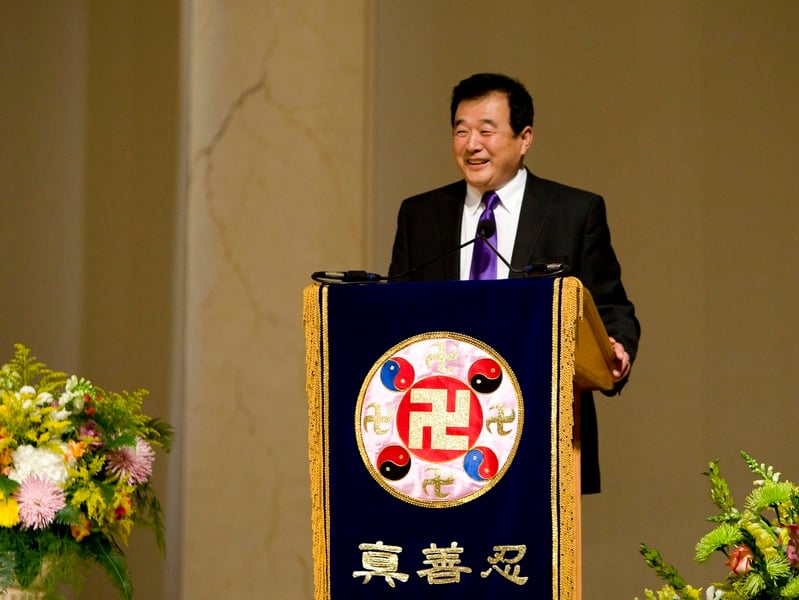
Who is Mr. Li Hongzhi?
Mr. Li Hongzhi is the founder and teacher of Falun Gong, also known as Falun Dafa. He first taught the practice of Falun Gong to the general public in 1992 in northeastern China in the city of Changchun. He is the recipient of numerous awards and citations for his efforts to promote human betterment. He is a five-time Nobel Peace Prize nominee (2000; 2001; 2004; 2007; 2008), and has been nominated by the European Parliament for the Sakharov Prize For Freedom of Thought. Since 2006, Mr. Li has served as the Artistic Director of Shen Yun Performing Arts, a U.S.-based performing arts company that performs for over one million people each year across five continents. Mr. Li’s position with Shen Yun is volunteer and does not provide an income.
Why do you call him “Master”?
“Master” is a common honorific in China for an accomplished instructor in skilled arts or spiritual disciplines, including qigong. The term is ubiquitous across Asia in monastic, religious school, and even martial arts school settings. It is used as a sign of respect for one’s teacher, similar to “professor” in an academic setting.
Mr. Li teaches and guides practitioners in their spiritual practice but does not get involved in their daily lives. In fact, when questions are brought to Mr. Li outside of spiritual guidance, he has frequently reminded practitioners that he is not their boss and only deals with spiritual matters.
How does Mr. Li make a living?
He has indicated that his income, as of 1999, comes from the sales of books he authored, all of which are also free to download from FalunDafa.org. Mr. Li does not accept income from any other entities or projects.
Is it true he’s made millions off of Falun Gong?
No. Mr. Li is generally described as having made a nominal amount from book and lecture-related income in the early years, and from book sales after 1999. Chinese state narratives have portrayed him as wealthy; practitioners and supporters dispute those claims and cite them as propaganda aimed at discrediting him.
What does Falun Gong teach?
Falun Gong teaches personal development through:
- aligning one’s conduct with the virtues of Truthfulness, Compassion, and Forbearance
- improving character (often discussed as moral self-discipline)
- practicing meditation and exercises for mind-body well-being
Does Falun Gong endorse any specific political beliefs?
No. Falun Gong is not a political movement. The practice itself does not have any specific political stances, and in fact, practitioners are encouraged not to involve the practice in politics. With practitioners in over 100 countries around the world, political opinions among adherents vary widely. Advocacy related to Falun Gong generally focuses on ending the persecution in China and protecting human rights, rather than pursuing partisan political goals.
Persecution in China
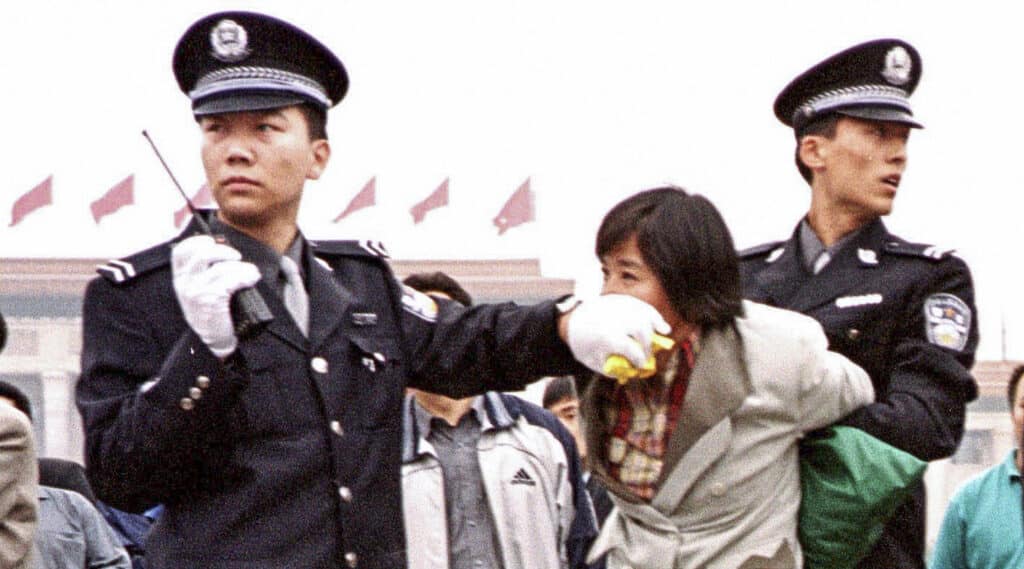
Why is the Chinese Communist Party persecuting Falun Gong?
Although Falun Gong was widely supported across China in the 1990s (including with praise published in state-run media), in July 1999, the CCP’s top leader, Jiang Zamin, ordered a brutal campaign to “eradicate” the group. There were several key factors that caused this:
- Falun Gong’s massive popularity: with 100 million people, the practice outnumbered communist party members by 40 million.
- Falun Gong’s independence: any group of this size outside the direct control of the communist party is perceived as a threat.
- Faith and tradition: for decades, the communist party had sought to root out China’s rich spiritual culture to instill Marxism in people. Falun Gong represented a renaissance of China’s spiritual traditions and the antithesis of communist ideology.
- CCP leader’s jealousy and political motivations: then CCP-leader Jiang was anxious to build a Mao-style cult following for himself, but Falun Gong was sweeping the country and steeling the spotlight.
Learn more about the reasons behind the CCP’s campaign to ‘eradicate’ Falun Gong here: Why is Falun Gong persecuted in China?
Didn’t Falun Gong surround the central government compound in Bejing (Zhong Nan Hai)? Wasn’t that provoking the Chinese Government?
Over 10,000 adherents did peacefully gather near Zhongnanhai on April 25, 1999. The gathering was aimed at the State Office of Petitions nearby and was peaceful, with no blocked entrances and unobstructed traffic. More specifically, the Falun Gong practitioners were told to go there to raise their concerns. Petitioning is a constitutionally recognized channel in China, and participants sought redress for prior harassment and detentions. The event did not initiate the crackdown; repression had been building for years beforehand.
Learn more about the April 25th incident: Behind the April 25th Appeal
What forms has the persecution taken?
Documented allegations and reporting over time describe a range of abuses, including:
- More than a million detained or imprisoned in detention centers, labor camps, prisons, or black jails
- Coercive “transformation” in “brainwashing centers,” often involving torture to coerce practitioners to renounce their beliefs
- Sexual assault and rape in custody
- Torture and ill-treatment in custody, often leading to death
- Forced organ harvesting where detainees are killed by extracting vital organs
- Restrictions on legal defense
- Denial of education and employment
- Surveillance and social media censorship
Learn more about the persecution here: Violent Suppression of 100 Million People
Learn more about the statistics and evidence here: Statistics & Evidence
How many people have been affected by this persecution?
When the persecution started in 1999, Chinese state estimates placed the number of practitioners at 70-100 million, which implies impacts on a much wider circle of families and communities—hundreds of millions. The campaign also relied on extensive propaganda, workplace “study” sessions, and social pressure that reached broad parts of society.
Precise totals are difficult due to restricted access and censorship in China. However, human rights documentation and open-source reporting describe a sustained pattern of abuse since 1999. As of February 2026, the confirmed death toll is well over 5,000 Falun Gong practitioners. The China Tribunal concludes that tens of thousands have been killed via forced organ harvesting.
Learn more about the statistics and evidence here: Statistics & Evidence
Why does the Chinese regime say they do this to Falun Gong?
The CCP denies maltreatment and has justified the ban by portraying Falun Gong as harmful to society, “anti-science,” or politically threatening. China experts and academics who have studied Falun Gong argue these are propaganda claims used to rationalize repression, noting the government sources are entirely unsubstantiated and often easily disproved.
Learn more about the reasons behind the CCP’s campaign to ‘eradicate’ Falun Gong here: Why is Falun Gong persecuted in China?
Is forced organ harvesting part of the persecution?
Yes, Falun Gong practitioners are killed through forced organ harvesting—the horrific practice of killing detainees to harvest their organs. Multiple researchers, institutions, and lawyers have raised concerns over organ sourcing and allegations of forced organ harvesting in China. The most notable is the independent, London-based China Tribunal in 2019 and 2020, which concluded that tens of thousands of Falun Gong practitioners have been killed and the crimes are on-going. The sole known survivor, Mr. Cheng Peiming, escaped China and now lives in America. Several countries, including the United States, the UK, Spain, and Israel have passed laws to curtail forced organ harvesting.
Learn more about Forced Organ Harvesting here: Forced Organ Harvesting
How have the Falun Gong responded to the persecution?
Adherents have responded entirely through nonviolent means, including petitions, letters, public vigils, awareness-raising, documentation, and appeals to international bodies. Inside China a grassroots network of tens of millions of people that makes and distributes underground pamphlets and newsletters exposing the persecution constitutes the largest civil disobedience movement in Chinese history. Outside China, activities have included rallies, forums, and advocacy for human rights accountability. Falun Gong practitioners in the West have also started organizations for breaking through China’s firewall, beaming truth-telling content into China via satellite, human rights organizations, media companies, and even performing arts companies—all of which help to expose the persecution in China and raise awareness worldwide.
Learn more about Falun Gong’s grassroots, civil disobedience in China: Civil Disobedience
If Falun Gong is so good, why did it get banned? Why aren’t other groups being targeted like this?
Many other communities have also faced persecution in China, including house-church Christians, Tibetan Buddhists, and human rights activists. The unique scale and ferocity of the Falun Gong campaign stems from its large size and its popularity throughout China. If you add the total populations of Uyghurs, Tibetans, and Hong Kong residents—three groups that are persecuted by the Chinese regime—their total population is still less than half of Falun Gong across China: 100 million. Furthermore, while Uyghurs and Tibetans are relegated to specific, out-of-the-way regions, Falun Gong practitioners are ubiquitous throughout the heartland of China; they are in every city, town and village across all 22 Mainland provinces and span all socio-economic levels of China, from poor farmers to university professors, from housewives to military leaders. Indeed, Falun Gong practitioners are indistinguishable from the general population, and therefore, from Beijing’s perspective represents a uniquely challenging threat.
It seems like Falun Gong has changed in nature, and is highly political now?
Falun Gong itself is not seeking political power, and it’s worth noting that advocacy efforts arose entirely in response to persecution. Activities such as protests and legal actions did not exist in the same way before the persecution in China and are aimed at ending abuses rather than gaining governing authority.
Didn’t several Falun Gong members set themselves on fire on Tiananmen Square?
The CCP has promoted this claim widely. Falun Gong teachings explicitly oppose killing and suicide. Falun Gong sources and several independent reports, including a February 2001 report by the Washington Post, dispute the official narrative and suggest the incident was staged.
Here is a more complete analysis: Immolation on Tiananmen Square.
Why haven’t I read or heard more about this?
Several factors are commonly cited: censorship inside China, pressure on foreign media access, and early propaganda framing that shaped international perceptions. Many journalists and researchers have noted the practical barriers to reporting on sensitive topics in China.
Here is a more complete analysis: Why Haven’t I Heard about This?
How have the U.S. and other world governments responded to the persecution?
Many governments and legislatures have issued statements, resolutions, or reports condemning abuses and calling for releases of detainees. The U.S. Congress has passed 5 resolutions in support of Falun Gong and condemning the persecution in China. Legislative bodies in Canada and across the EU have issued many statements and held hearings as well. The U.S. Department of State has highlighted the persecution of Falun Gong in its annual reports each year, as have other countries. In May 2025, the House of Representatives unanimously passed the Falun Gong Protection Act, mandating sanctions against and reporting on perpetrators of persecution in China.
More details are available here: Government Actions.
How have organizations such as Amnesty International responded to the persecution?
Over the past two decades, a wide range of international human rights groups, investigative journalists, Chinese lawyers, United Nations Rapporteurs, and U.S. government reports have independently documented and recounted the systematic rights abuses – including torture and deaths in custody – suffered by those who practice Falun Gong in China.
More details are available here: Independent Documentation.
Beijing’s Global Campaign against Falun Gong

Why does Falun Gong matter today?
“To understand China, first you must understand Falun Gong.” The issue affects the general public, democratic institutions, and civil society more broadly.
Falun Gong remains a major human rights issue because the evolving campaign against it has continued for decades and grown increasingly sophisticated. In fact, methods and tactics used to silence and repress Falun Gong are often deployed against other groups or even internationally. In this sense, Falun Gong is a testing ground for broader repression. Beijing’s tactics against Falun Gong also intersect with broader questions of religious freedom, rule of law, and national security, and malign foreign influence operations that destabilize democratic societies.
Is Falun Gong being targeted by transnational repression?
Yes. Literally hours after the repression started in China, Falun Gong volunteers in New York City and other countries faced home break-ins, death threats, and escalating vitriol mostly delivered through Chinese community groups and newspapers controlled by the CCP.
In recent years, the CCP dramatically escalated its efforts to silence and malign Falun Gong worldwide, while turning to more manipulative and insidious tactics. The regime and its proxies have sought to weaponize Western institutions, including U.S. media, law enforcement and government agencies. This escalated campaign has so far included attempts by CCP agents to bribe U.S. government officials, the filing of frivolous lawsuits by China-linked groups, thousands of fake social media accounts spreading disinformation, and a multitude of bomb and mass shooting threats, some of which were traced back to China by Taiwanese authorities. The CCP has also sought to bait or leverage American institutions against Beijing’s critics in the U.S. More details about this campaign are available here: Unprecedented Campaign to Eliminate Falun Gong Globally
What is “disinformation” in this context?
Disinformation is false or misleading information spread intentionally to shape public perceptions, undermine credibility, or inflame conflict. In campaigns targeting Falun Gong, this can include fabricated claims, impersonations, coordinated inauthentic social media activity, or “laundering” content through seemingly independent outlets.
What is “lawfare”?
Lawfare refers to the strategic use of legal filings—often weak, repetitive, or primarily reputational—to burden targets with costs, distract operations, or create negative headlines even when claims do not succeed.
Falun Gong-affiliated Organizations in the West
What is the Falun Dafa Information Center (FDIC)?
FDIC is a research and advocacy organization that documents human rights violations related to Falun Gong and tracks related trends, including transnational repression and disinformation.
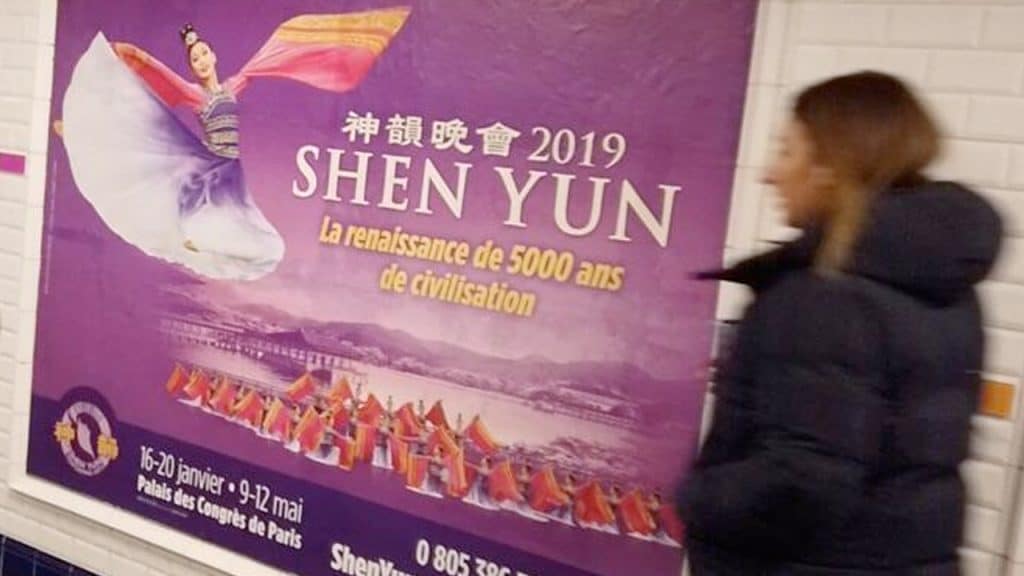
What is Falun Gong’s relationship with Shen Yun?
As the persecution of Falun Gong raged in China, in 2006, a small band of Falun Gong volunteers—mostly first-generation immigrants, well-educated and hailing from China’s cultural elite—broke ground in the quiet, rolling hills of upstate New York. Driven by a profound vision, they sought to revive China’s authentic culture, nearly eradicated by the Chinese Communist Party’s brutal campaigns. This is where Shen Yun Performing Arts was born.
Learn more about Shen Yun’s story here: The Real Story of Shen Yun
What is Falun Gong’s relationship to the Epoch Times?
None, strictly speaking. Falun Gong as an entity, which is represented by the Falun Dafa Information Center and Falun Dafa Associations, does not fund or staff or have an affiliation with the Epoch Times. In recent years, some media outlets have misrepresented the relationship between Falun Gong and The Epoch Times newspaper by portraying the paper as a “mouthpiece” or as representing the political views of Falun Gong. While it is true that The Epoch Times was founded by a small group of individuals who practice Falun Gong, the paper does not represent the spiritual practice, nor does it speak for its global, diverse community of practitioners.
Learn more details here: What’s the deal with Falun Gong and the Epoch Times?
Misconceptions
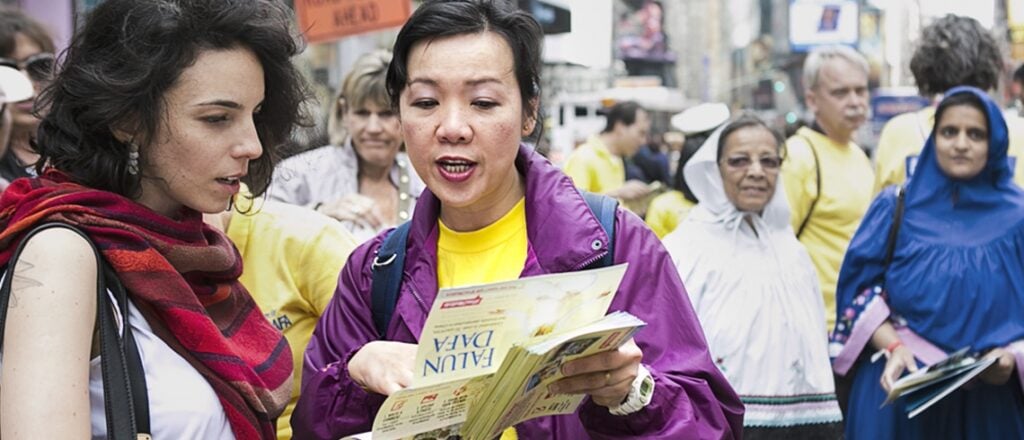
Is Falun Gong a cult?
No, but Beijing has tried hard to convince the world otherwise.
Academics and human rights groups in the West have concluded that Falun Gong is not a cult. Furthermore, they have called the ‘cult’ label a political tool of Beijing aimed to fuel persecution. The practice does not match any common indicators of cults such as compulsory membership, required financial contributions, isolation from family, or centralized control of followers’ day-to-day lives. It is a voluntary spiritual practice, and practitioners typically live ordinary lives in their communities.
Throughout the 1990s, top Chinese government officials praised Falun Gong for its health and well-being benefits. The Buddhist-based practice was also commended for repairing family relationships and building stronger communities. Because it grew so popular and independent from Beijing’s control, China’s top communist leader ordered Falun Gong eliminated in 1999. Not until several months after the persecution started did Chinese leaders first label Falun Gong a ‘cult’ to justify the campaign and deter criticism.
More recently, false allegations against Shen Yun Performing Arts, which was started by Falun Gong practitioners in the U.S., have resurfaced this “cult” label, but its largely built on narratives from people with undisclosed ties to the Chinese regime.
Learn more here: Is Falun Gong a “cult”?
Does Falun Gong discourage medical care?
This is a common claim in hostile narratives, but it is often presented without context and in ways that practitioners dispute. As with many spiritual communities, individuals may hold personal views about health, but Falun Gong teachings do not prohibit nor discourage taking medicine. Falun Gong teachings do touch upon on issues of karma and its connection to illness.
Falun Gong’s popularity, particularly in the 1990s in China, was largely attributable to its efficacy in improving health and promoting healthy lifestyles. This was well documented in several studies and openly praised by many Chinese government officials. ‘Falun Gong prohibits taking medicine’ was one of the primary propaganda points from the CCP aimed at justifying the crackdown, while also undermining one of Falun Gong’s main benefits — good health.
More recently, accusations that Shen Yun Performing Arts, which was started by Falun Gong practitioners, discourages medical treatment for its performers have resurfaced this false narrative. Statements from medical doctors who treat Shen Yun performers and an abundance of medical records demonstrate this accusation to be false: Shen Yun performers receive high-quality medical care.
Learn more here: Do Falun Gong practitioners avoid medicine?
Is Falun Gong homophobic or otherwise intolerant?
Absolutely not. The CCP slaps false labels on Falun Gong in the hopes of placing it in opposition to the tolerant views commonly held in the West. But in fact, these false claims are easily debunked. Falun Gong welcomes individuals of any sexual orientation or gender identity, and it does not promote or condone hatred or discrimination.
Like most world religions, Falun Gong espouses conservative sexual ethics. However, Falun Gong does not seek to impose its ethical precepts on anyone.
Falun Gong teachings stress that all people have an immortal soul, and in fact, individuals may re-incarnate into different races across different lifetimes. Many Falun Gong practitioners marry people of different races and have children of mixed race after they take up the practice.
Learn more here: Is Falun Gong “intolerant”?
Why are there so many negative stories or online attacks?
This is a very good question. While these stories represent a mixture of different influences, it is certainly not organic.
For more than two decades, Beijing has saturated the West with propaganda against Falun Gong. More recently, its disinformation campaign has found traction in the West via a series of new tactics:
- Offering money and trips to social media influencers to create and/or repost negative content against Falun Gong.
- Propagating false narratives around hot-button issues in the West, such as racism, homophobia, and progressive vs. MAGA politics hoping to mobilize Americans against Falun Gong.
- Baiting mainstream media with “victim” stories from individuals who have direct ties to the Chinese regime.
We recommend readers to cross-check claims with our Misconceptions section.
Are practitioners required to donate money or follow leaders?
There is no requirement to donate, and no membership structure that imposes dues. All local practice groups operate informally and volunteer-run. The practice is always free to learn.
For more discussion of the practice of Falun Gong itself, readers should visit the pages here titled Overview, Teachings & Beliefs, or The Practice. Those interested in learning how to do the practice will do best to visit www.falundafa.org.