|
|
Dear Reader,
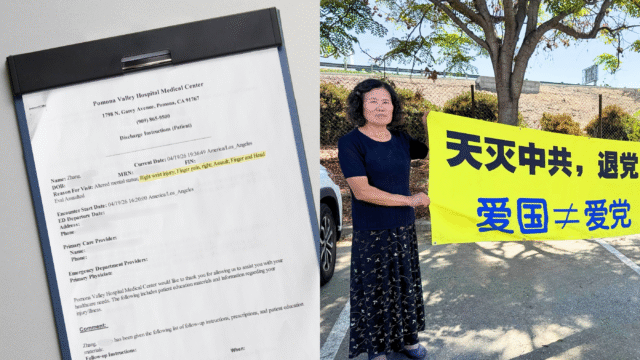
Last Sunday, a man violently assaulted a Falun Gong practitioner in Los Angeles using stones, wire, and a tree branch, leaving her with injuries to her head, wrist, and fingers. He was arrested by local police. According to the victim, the attacker displayed clear hostility toward her and her peaceful activities—exposing human rights abuses and encouraging people to renounce their ties to the Chinese Communist Party (CCP) and its affiliated youth organizations.
This week also marks the 27th anniversary of the April 25, 1999, Zhongnanhai Appeal, when over 10,000 Falun Gong practitioners gathered in Beijing to urge an end to the already escalating persecution. In this issue, we feature a firsthand account from a witness who is now a U.S. professor and who, at the time, was a top student at one of China’s most prestigious universities. The April 25 incident, and the subsequent wave of persecution against Falun Gong practitioners, profoundly altered his life, as well as the lives of his academic mentor and countless others.
Also in this issue:
Blind practitioner sentenced in Yunnan Province is now reportedly missing. United Kingdom’s (UK) Minister of State for Security Dan Jarvis MP and six MPs across party lines condemned attack of Falun Gong practitioner outside the British museum. The story behind the April 25 Incident: a protest that changed China.
We close with a video documenting the events of April 25, featuring historic footage of the appeal and firsthand accounts from those who were there. |
|
|
Sincerely, |
 |
Levi Browde, Executive Director
Falun Dafa Information Center |
|
|
|
|
FEATURE STORY |
Man Arrested After Attacking Elderly Falun Gong Volunteer in Los Angeles |
What’s new?
On April 19, Los Angeles police arrested a man for violently attacking May Zhang, a local Falun Gong volunteer. Ms. Zhang was hospitalized with injuries to her head, wrist, and fingers. The case remains under police investigation.
At the time of the attack, Ms. Zhang was volunteering at a public space, exposing rights abuses in China and calling for people to renounce their ties to the Chinese Communist Party (CCP). She noticed a man removing banners she had displayed near a main road. When she approached him to address the situation, he responded with immediate aggression: screaming at her, throwing stones, thrusting iron wire toward her face, and a while later striking the back of her head with a tree branch. People nearby subdued the man and held him until police arrived and made the arrest.
Ms. Zhang said the attack went well beyond any grievance over the banners. “He could have just taken them away,” she noted. Instead, she described what she experienced as “relentless intimidation from start to finish—the hysteria, the screaming, the threats.”
Why does it matter?
This attack reflects a broader pattern of physical hostility toward Falun Gong practitioners engaged in peaceful advocacy and public education. For practitioners who lived in China after 1999, such hostility is familiar. It mirrors the climate of state-sanctioned harassment they endured under the CCP’s campaign against Falun Gong.
This incident follows a troubling surge of physical assaults targeting Falun Gong practitioners across America. Similar attacks were documented in New York City throughout February and late March. Notably, this latest confrontation marks the first time this year that a suspect was apprehended at the scene.
Transnational repression targeting Falun Gong practitioners is a documented phenomenon spanning more than two decades. In September 2025 alone, three separate incidents of intimidation and assault were reported in Los Angeles.
In recent years, the CCP has escalated its campaign against Falun Gong globally, employing tactics that include mobilizing social media influencers, deploying disinformation networks, and cultivating influence within Western mainstream media.
What else do you need to know?
Many Falun Gong practitioners and other Chinese citizens participate in the Tuidang Movement, a nonviolent initiative encouraging Chinese citizens to renounce their membership in the Chinese Communist Party and its affiliated organizations. Since the movement began, more than 460 million people have publicly done so, many using aliases due to the risk of reprisals. As of April 2026, that number continues to grow. |
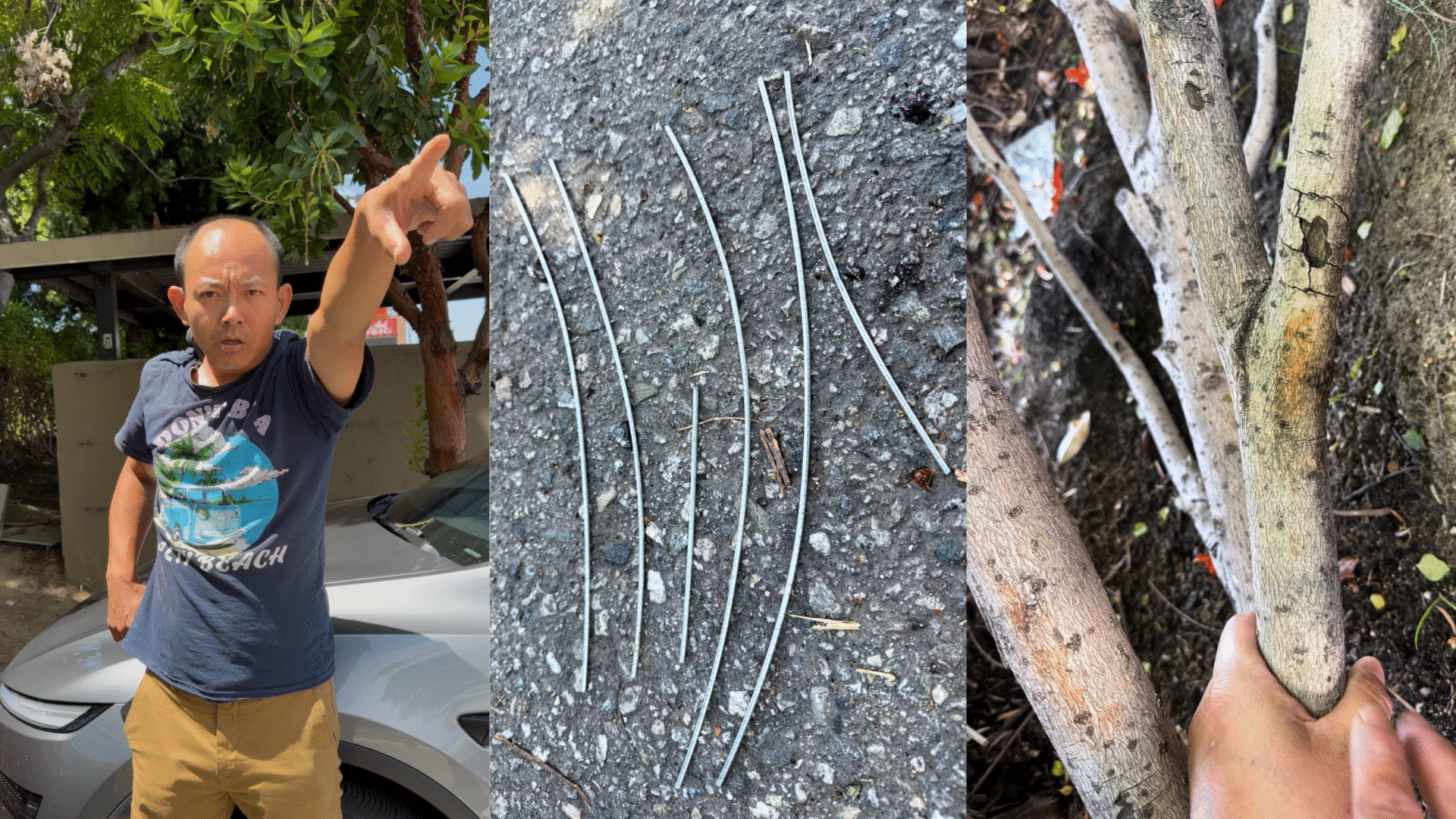 |
Left: The suspect arrested in connection with the assault on May Zhang. Center: A heavy-gauge wire reportedly thrown during the incident. Right: A branch of similar thickness to the one used in the attack, found by Ms. Zhang at the scene for reference. The actual weapon was taken away by police. |
| Read more |
|
|
PERSONAL ACCOUNT |
|
|
A Tsinghua Professor and His Protégé: Remembering the Zhongnanhai Appeal on April 25 |
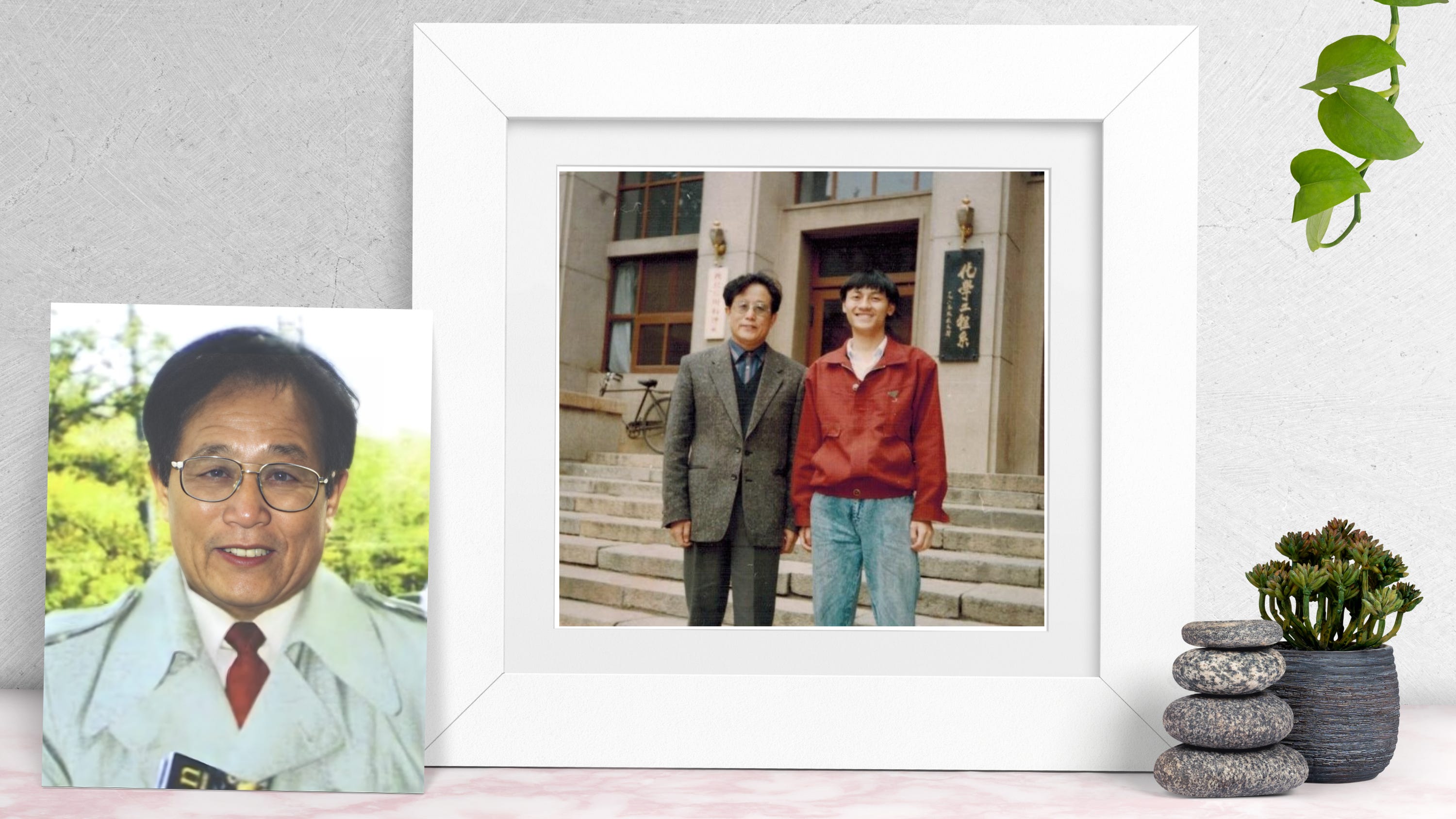 |
Left: Professor Gao Chunman. Right: Winston pictured with Professor Gao at Tsinghua University in Beijing. (Credit: Winston Xie/Edited: Cynthia Sun) |
As the 27th anniversary of the April 25, 1999 Zhongnanhai Appeal approaches, a former top student of Tsinghua University, often regarded as China’s MIT, sat down to write a tribute to his mentor, an internationally renowned scholar in chemical engineering. Both men had devoted their lives to rigorous intellectual pursuit and a shared faith in Falun Dafa. Then the persecution began, and neither man’s life would ever be the same.
Even among Tsinghua’s best, Winston Xie stood apart and he became a student of Prof. Gao Chunman in 1993. From the start, Gao’s mentorship extended well beyond the laboratory. “He taught me about humanity and curiosity,” Xie recalls, noting that Gao frequently lamented how modern Chinese education had become a “cookie-cutter” system that “stifled the soul.” Moved by his mentor’s example, Xie began to practice Falun Dafa in 1994.
On April 25, 1999, Xie witnessed firsthand what would become a historic moment—more than 10,000 Falun Dafa practitioners gathered peacefully near Zhongnanhai to appeal against the arbitrary detention and mistreatment of fellow practitioners in Tianjin. He found “thousands of people standing in silent, dignified rows on the sidewalk” with “no chanting or anger.” “These were upstanding citizens, young and old,” Xie writes, “who had learned to put others before themselves.” By 9:00 p.m., after word spread that the Premier had promised a fair resolution, the crowd dispersed quietly.
“We thought the truth had won and the issue was resolved. We were wrong.” —Winston Xie The crackdown came in July 1999. Xie fled to the United Kingdom and eventually built a new life as a professor in the U.S. But he was blacklisted by the CCP and unable to return to China. He never saw his parents before they died. Prof. Gao’s fate was grimmer still: He managed to escape China and was granted refugee status by the United Nations. Despite that, he was abducted from Russia and forcibly repatriated to China in 2007. Isolated and under constant police surveillance since, he then died in 2011.
“Today, I carry my mentor’s legacy in every lecture I give and every time I sit in meditation,” Xie wrote. “This is the greatest tribute I can offer him: live with integrity and never let the world forget the peaceful dignity of the historic April 25 appeal.” |
| Read More |
|
|
PERSECUTION IN CHINA |
Blind Falun Gong Practitioner Sentenced, Then Vanishes from Home in Yunnan |
Multiple sources report that Yang Xiaoming, a blind Falun Gong practitioner living alone in Yunnan Province, has been out of contact with friends and missing from her home since late March 2026. Sentenced to seven years in 2023 for practicing Falun Gong, Ms. Yang had been permitted to remain at home given her blindness and deteriorating health before she disappeared. A friend believes she has been taken into custody to begin serving her sentence.
Ms. Yang began practicing Falun Gong in the mid-1990s, during which time she reported a restoration of her eyesight after years of eye disease. Following the onset of the national persecution in 1999, she spent a total of five years in labor camps between 2001 and 2008. The abuse she suffered there caused permanent damage to her vision, leading to complete blindness by 2012.
Ms. Yang’s disappearance matches insider accounts of provincial directives in Yunnan ordering the incarceration of practitioners who had been sentenced but allowed to remain at home due to age or illness—raising serious concerns about enforcement and detention targeting the most vulnerable. |
| Read More |
|
|
|
AROUND THE WORLD |
British Government Official and Parliamentarians Condemn Attack on Falun Gong Practitioner |
On April 15, 2026, the United Kingdom’s (UK) Minister of State for Security Dan Jarvis MP wrote to Lord Alton of the House of Lords, condemning an assault on a Falun Gong practitioner outside the British Museum, according to Minghui.org. He reaffirmed that practitioners are entitled to “practice their beliefs peacefully and without fear” in the UK, and stated that any foreign state-directed intimidation or harm on British soil will not be tolerated.
In addition, six Members of Parliament—Feryal Clark, Preet Kaur Gill, Jo Platt, Patricia Ferguson, Cameron Thomas, and Mark Pritchard—sent letters to the UK Falun Dafa Association echoing these concerns and affirming their commitment to protecting freedom of religion or belief. |
| Read more |
Have you read this? Behind the April 25 Incident |
The April 25 incident marked the first time Falun Gong drew widespread international media attention. For many in the West, it was their introduction to a previously little-known spiritual practice—broadcast from Zhongnanhai, the seat of China’s central authority.
Yet the incident was not an isolated one. Behind the scenes, a series of escalating provocations dating back to 1996 suggests that forces within the CCP had been targeting Falun Gong for years before the persecution was formally launched. |
| Read more |
|
|
|
|
|
|
|
|
|
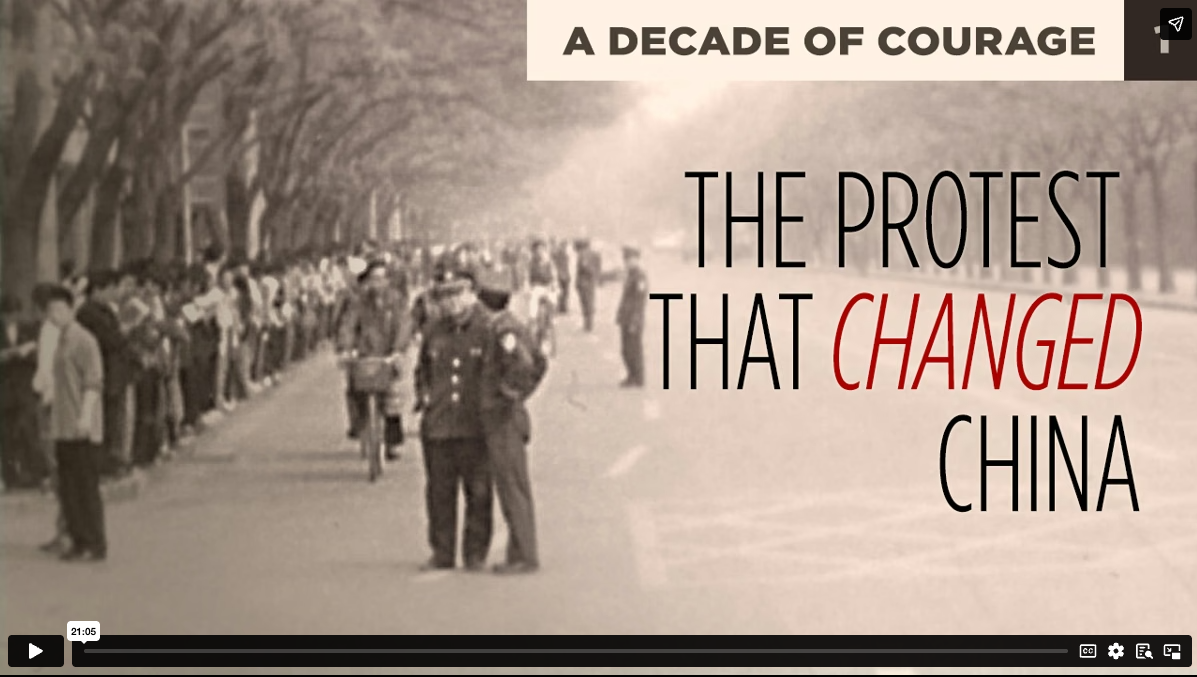 |
Ten years after the events of Tiananmen Square, a quiet but monumental gathering in Beijing reshaped the course of modern Chinese history. A Decade of Courage, Part 1 documents the April 25, 1999, appeal where 10,000 Falun Gong practitioners stood in peaceful petition for their right to believe. This film captures the pivotal moment when a successful appeal met the beginning of a relentless state crackdown. |
| Watch Now |
|
|
|
|
|
|