

Americans Targeted by Beijing
Results from a Nationwide Survey on How the CCP is Attacking and Silencing Falun Gong in the United States
Falun Dafa Information Center | June 2026
“There is especially a feeling among the Chinese within our community that: ‘Wait a second. I left China, and now the same thing is happening here in America? I don’t understand.’ There is bewilderment and disbelief.”
— American high school teacher from New York
Key Takeaways
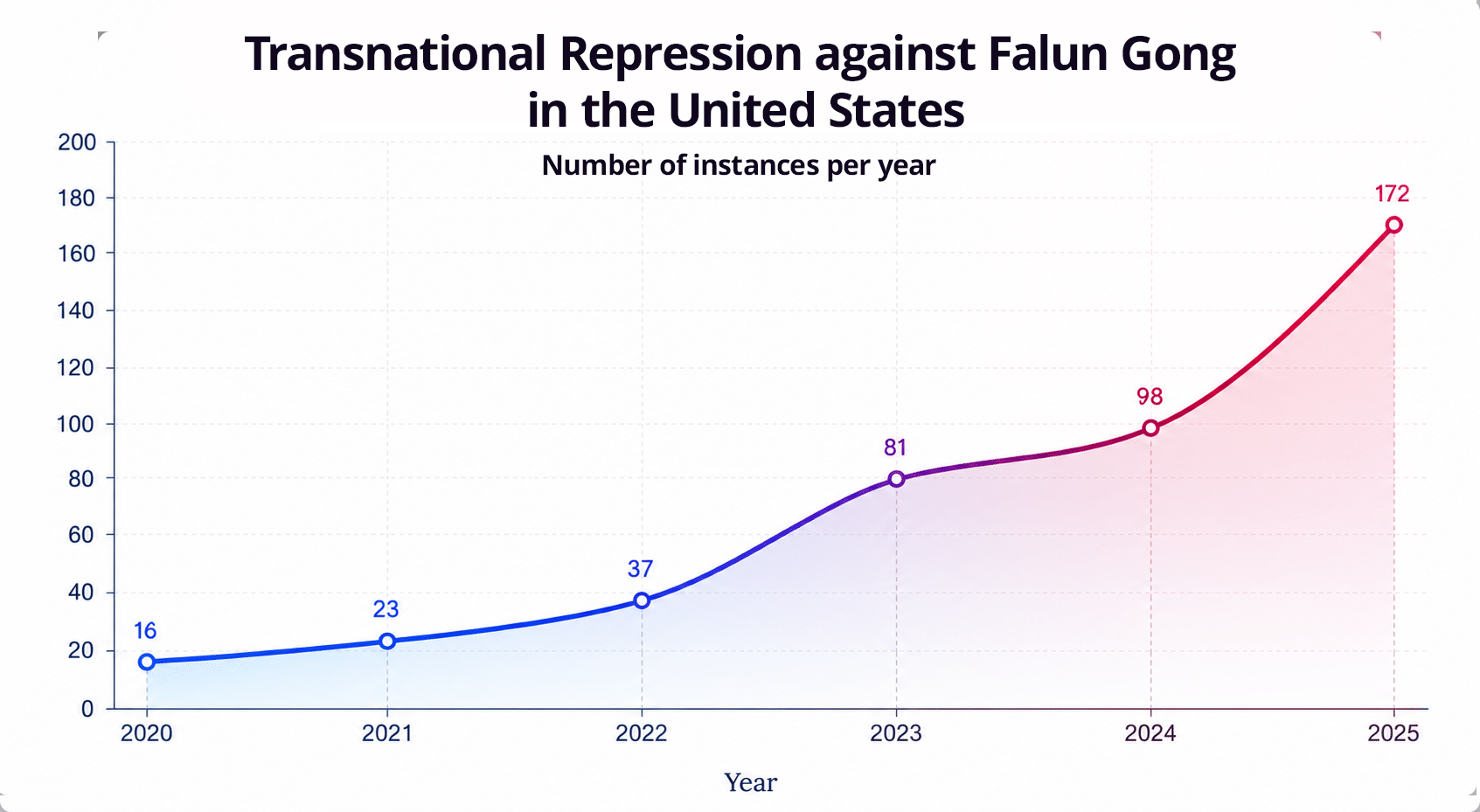
The Chinese Communist Party (CCP) is the world’s foremost perpetrator of transnational repression, deploying surveillance, physical attacks, and other tactics against their targets in the United States and around the world.1 For more than 26 years, the CCP has targeted Americans who practice the Falun Gong spiritual discipline. As millions of people who practice Falun Gong in China face brutal persecution, simply for following their faith and practicing meditation exercises, their American counterparts have also encountered the regime’s repression beyond China’s borders. Since 2023, there has been a notable rise in reports of harassment, violent threats, and other forms of transnational repression targeting American practitioners.
To better understand the current situation and its impact on the community, the Falun Dafa Information Center (FDIC) conducted an online survey of Falun Gong practitioners in the United States. From September 2025 to March 2026, the FDIC received 1,080 responses from across the country. This report documents the survey results with the aim of raising public awareness and informing government policy responses to this pressing human rights and national security issue. Its key findings include:
Table of Contents
1. Context and Methodology
2. Three Key Findings
3. Key Tactics Deployed
4. Distorted Narratives are Having Real-World Effects
5. Who is Targeting Americans?
6. Signs of Resilience and Future Challenges
7. Conclusion
8. Recommendations
Endnotes
Appendix A: Methodology and Survey questionnaire
Appendix B: What to do if you are a victim of transnational repression
Acknowledgments
This report was authored by Mark Yang, Alex Zhang, and Cynthia Sun. Levi Browde, Dr. Larry Liu, and Dr. James Yu reviewed the report and provided feedback. The findings draw on the experiences of courageous individuals who completed our survey and shared their—often traumatizing—accounts. In doing so, they helped defend freedom and human rights in America. Their voices are vital to protecting the core principles of freedom, security, and open society that define the United States.
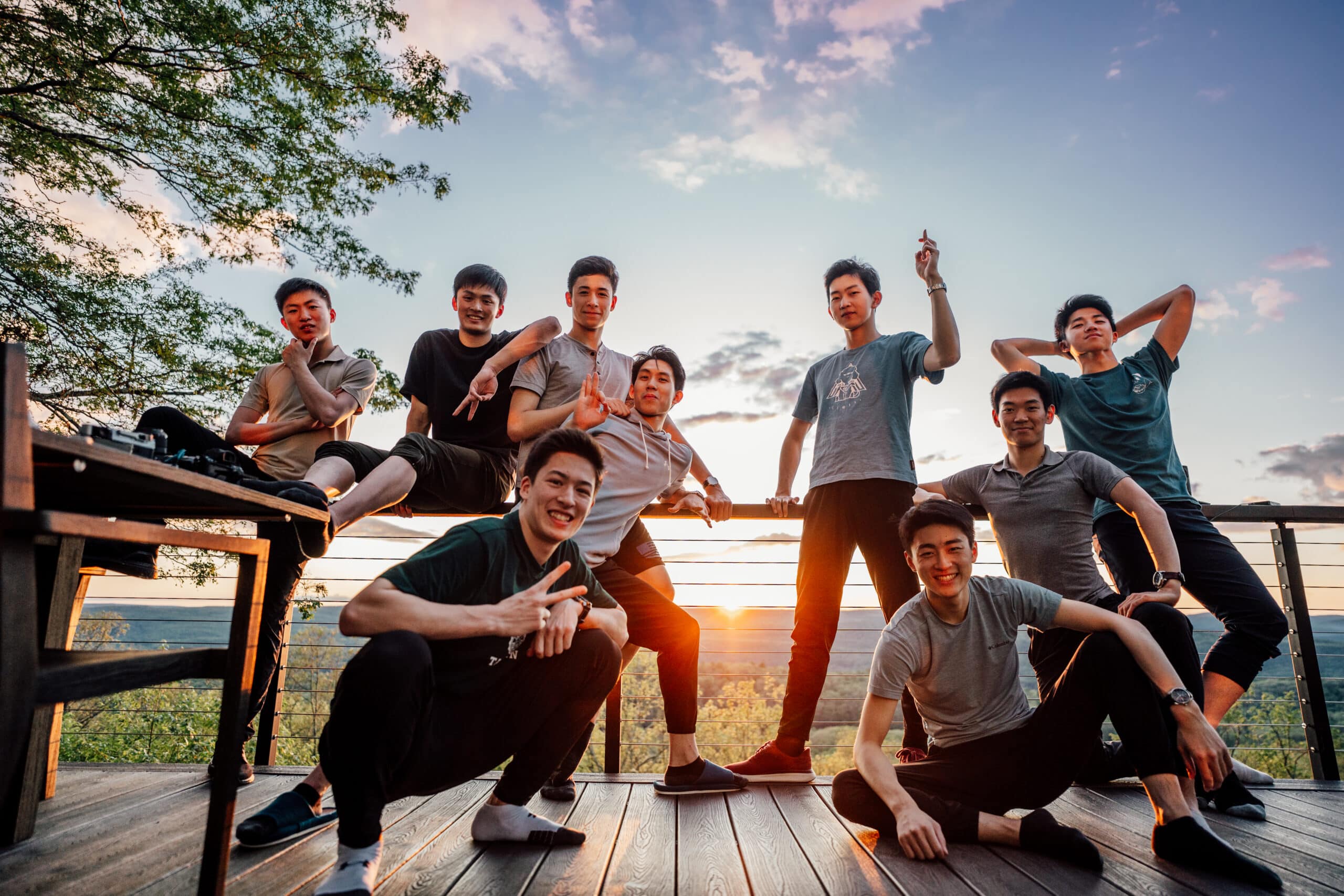
About the feature image
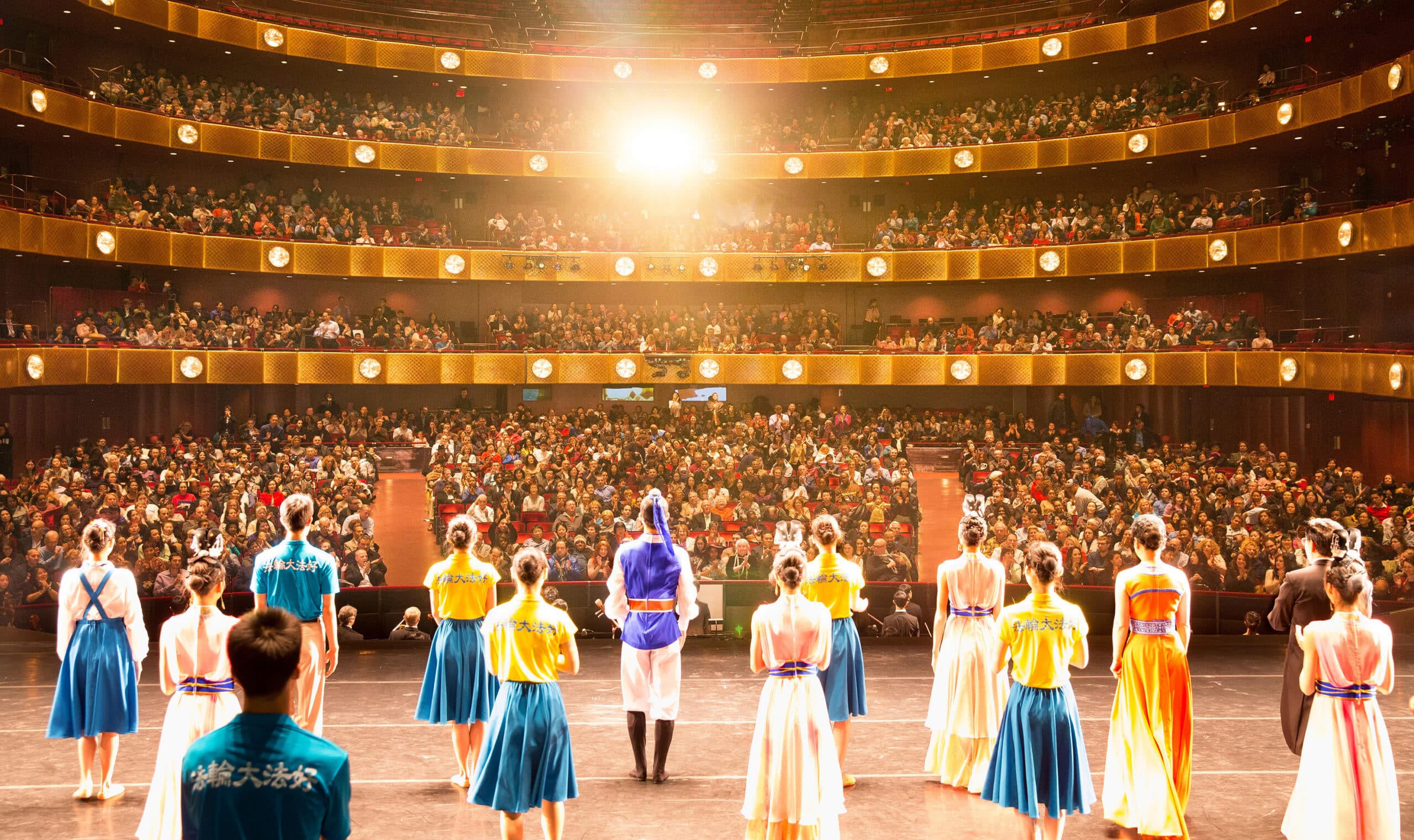
The photo features a group of young male dancers from Shen Yun Performing Arts, a primary target of the CCP’s transnational repression documented in this report. Credit: Shen Yun Community.
Chapter 1
Context and Methodology
This chapter addresses three elements essential for understanding the findings that follow: (A) a brief introduction to Falun Gong and the persecution its practitioners have faced in China for more than two decades; (B) evidence drawn from internal CCP sources about a deliberate, escalating campaign to extend repression beyond China’s borders, one originating from the highest levels of the regime; and (C) an overview of the methodology used to conduct and analyze this survey.
What is Falun Gong?
Falun Gong (a.k.a. Falun Dafa) is an ancient spiritual practice in the Buddhist tradition. It combines meditation and gentle exercises (similar to yoga or tai chi) with a moral philosophy centered on Truthfulness, Compassion, and Tolerance (Zhen 真 , Shan 善 , Ren 忍 ). It was introduced to the public in the early 1990s and there were 70 million to 100 million people who had taken up the practice in China by the end of the decade, according to Chinese government estimates. Falun Gong spread beyond China, and is now practiced by people in more than 100 countries.2

On July 20, 1999, the CCP launched a comprehensive effort to eliminate Falun Gong, fearing its popularity and its encouragement of independent thought. Hundreds of thousands of believers in China have since been detained, imprisoned, and tortured.3 There are more than 5,300 well-documented deaths from abuse, with many more estimated deaths due to state-sanctioned forced organ harvesting.4
Over the years, Falun Gong practitioners have initiated sustained non-violent efforts to resist the persecution, raise awareness, and educate the public. These have included grassroots advocacy, parades, public panels, rallies, and outreach to government officials.5 Among these initiatives, Shen Yun Performing Arts stands out as one of the most prominent.
Founded in New York by Falun Gong practitioners, Shen Yun is a classical Chinese dance and music troupe that seeks to revive traditional Chinese culture untainted by communist influence. While most of the roughly 17 to 20 pieces displayed in each performance celebrate legends, dynasties, and folklore, one or two artistically depict the persecution of Falun Gong in China to raise global awareness of these rights abuses.
After more than 26 years, the persecution continues on a large scale today. In recent years, the regime has redoubled its efforts to “transform” practitioners in China—and to surveil, harass, silence, and malign believers around the world.6 In this escalated campaign, practitioners in the United States have drawn particular attention from the regime’s security apparatus and Shen Yun has become a natural target. The CCP’s ongoing prioritization of its campaign to eliminate Falun Gong, both within China and globally, illustrates why understanding Falun Gong remains vital to comprehending contemporary China.
Key Developments
Top CCP directives prompt intensified transnational repression campaign.
Leaked information from internal CCP informants describes a meeting in 2022 where Xi Jinping personally ordered Chinese security services to silence and intimidate Falun Gong practitioners worldwide.7 This multi-agency plan matches reporting in The Diplomat and whistleblowing by an overseas Chinese dissident with deep networks in China.8 Xi reportedly directed the use of two tactics: lawfare, filing baseless lawsuits to burden and discredit targets, and disinformation. He reportedly urged the use of social media accounts and mainstream outlets with no traceable ties to the CCP. Subsequent leaks from the Ministry of Public Security exposed further tactics and instructions deployed to realize this vision, including explicit directives to try and turn American public opinion and the U.S. government against the Falun Gong community. The plan also named New York-based Shen Yun Performing Arts, a classical Chinese dance company founded by Falun Gong practitioners, as a primary target for discrediting and sabotage.9

Convicted Chinese spy John Chen (L) claimed he met with “Uncle Xi [Jinping]” three times in a decade, according to U.S. Department of Justice court records. Chen was sentenced to 20 months in prison after trying to bribe a purported U.S. official to revoke Shen Yun’s non-profit tax status. (Photo credit: U.S. Department of Justice)12
Office on Combating Falun Gong in North America
On June 29, 2021, a leaked official appointment letter jointly issued by the CCP’s Ministry of Public Security and Ministry of State Security was publicized by the World Organization to Investigate the Persecution of Falun Gong, a U.S.-based NGO dedicated to tracking the CCP’s repression of Falun Gong practitioners.
The document confirms the appointment of Wu Xiuhua as the director of the “Joint Office on Combating Falun Gong in North America,” revealing a sophisticated, multi-agency apparatus dedicated to transnational repression. The letter provides two critical insights: first, it proves the existence of a CCP undercover administrative operation within foreign borders to target a specific faith group; second, it documents a formal escalation of the CCP’s overseas mission, as the office was elevated to a “deputy bureau level” to intensify its crackdown on Falun Gong communities and effectively, undermine the sovereignty of countries in North America. 15
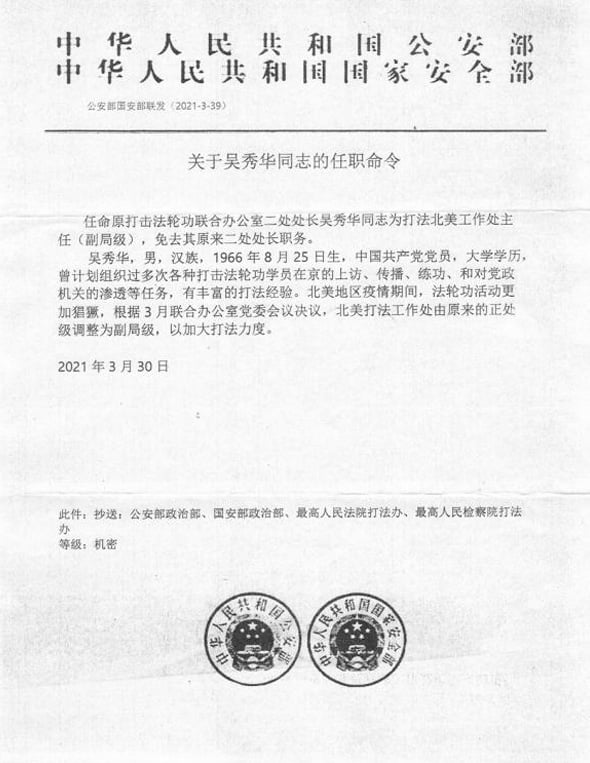
Leaked document obtained by World Organization to Investigate the Persecution of Falun Gong.
The playbook for overseas repression.
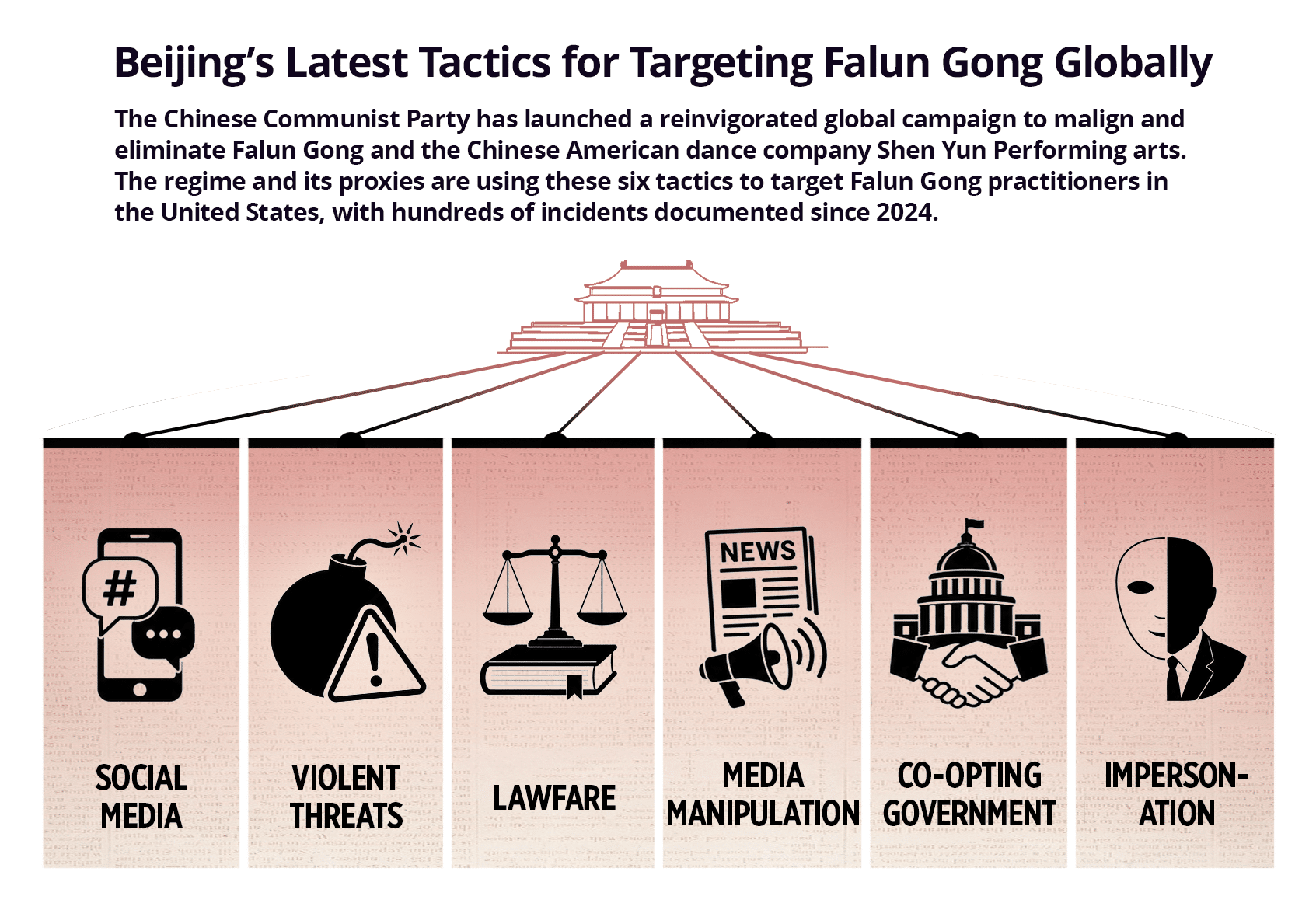
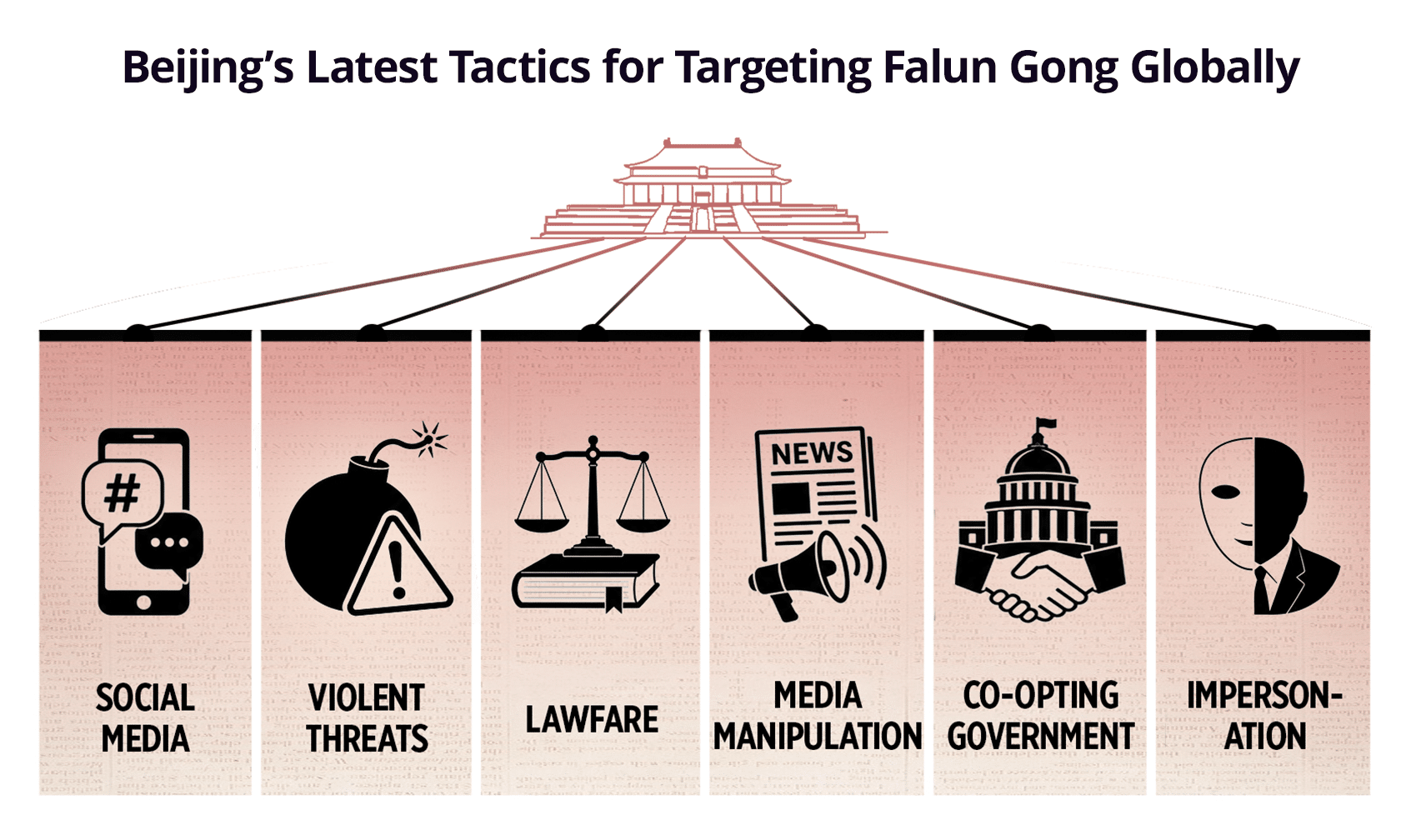
The FDIC has tracked this unprecedented campaign since 2023, after noticing a dramatic escalation of online disinformation and offline threats. For example, between March 2024 and May 2026, more than 298 death threats were addressed to Falun Gong practitioners, their families (including children), and supporters.13 The cases make clear that the CCP apparatus will follow Xi’s directives and use any means to malign and silence U.S. citizens and residents who practice Falun Gong. These tactics are comprehensive and extensive, including: physical assault, violent threats, espionage, attempts to co-opt U.S. government agencies, false impersonation, lawfare, social media disinformation, and media manipulation. Perpetrators include both state actors and proxies.14
Misleading and biased reporting in U.S. media echoes Beijing’s narratives.
Since August 2024, The New York Times has published a series of articles on Shen Yun Performing Arts—founded by first-rate artists who practice Falun Gong—and on the faith itself. The content falsely depicts Shen Yun as abusive and the faith community as hood-winked zealots.16 Multiple dubious elements stand out in the reporting: (a) relying on a small number of sources, some of whom have ties to a Chinese state-run dance academy; (b) failing to disclose these ties to readers; (c) disregarding good-faith efforts to provide contrary information; (d) ignoring medical and subject matter experts; (e) withholding critical context on how other arts and boarding schools operate; and (f) continuing a long-term editorial pattern of distorting Falun Gong’s beliefs and the scale of persecution, such as suggesting there is no evidence of systematic forced organ harvesting in China despite two decades of independent investigations establishing that these atrocities had been committed.17 The reporting raises serious concerns about journalistic ethics and the irreparable harm done to a persecuted religious minority.18 Full analysis of the flawed reporting is beyond the scope of this report, but is available on the www.faluninfo.net website.
As a prominent outlet, the Times’ flawed coverage has quickly influenced outlets worldwide to repeat inaccurate remarks about Falun Gong and Shen Yun. Furthermore, a number of official Chinese government websites19 and thousands of bot accounts20 on social media have promoted the Times’ content, in an apparent effort to legitimize the regime’s human rights abuses.
“Falun Gong and its leader … are perennial targets of PRC-backed influence operations and transnational repression.”
—Graphika, January 202621
Methodology
The findings presented in this report are based on an online survey conducted by the FDIC among Falun Gong practitioners living in the United States from September 2025 to March 2026. The study utilizes a mixed-methods approach for analysis, combining quantitative findings with select qualitative data and case studies, drawing on quotes from respondents and interviewees.
Survey design and dissemination
The survey comprised 43 questions, combining multiple-choice or yes/no questions with open-ended queries. The questionnaire was distributed in both English and Chinese to improve understanding and responsiveness among the bilingual Falun Gong community. Topics covered included respondent demographics, the history of persecution in China, direct experiences with transnational repression in the United States, and practitioners’ sense of comfort and safety when practicing Falun Gong. The complete questionnaire and a more detailed methodological explanation are provided in the Appendix.
In the introductory page, participants were informed of the survey’s purpose, its voluntary nature, potential risks associated with the sensitive topic, and data protection measures before beginning; consent was indicated by proceeding with the survey. The survey was by default anonymous, but respondents were given an option at the end to provide contact information for follow-up questions.
The online questionnaire was distributed with the assistance of local Falun Dafa associations throughout the United States. These associations are volunteer-run, non-profit organizations that teach and promote the practice to the public and coordinate scripture reading and experience sharing sessions for local Falun Gong practitioners.22 This channel guaranteed that respondents were genuine Falun Gong practitioners and drew on the long-standing relationship of trust that exists between the associations, the FDIC, and the practitioner community.
This approach produced a sample of 1,080 valid responses, representing approximately 10 percent of the overall estimated population of Falun Gong practitioners in the United States.23
Data analysis
All responses were closely reviewed by the FDIC research team. Duplicate or incomplete responses were excluded where they undermined data integrity. Only clear, specific, and credible accounts were retained for analysis. Quantitative data were tabulated to identify patterns and prevalence rates. Qualitative responses were examined through thematic analysis, with every coding decision and rule documented. At least two researchers and advisers reviewed coding and analytical processes to ensure consistency and accuracy.
Researchers also sent optional follow-up emails or conducted interviews with 31 participants who indicated they were willing to be contacted. These conversations allowed researchers to clarify details and gain additional context around specific incidents. All quotes appearing in the report are drawn from either these interviews or written survey responses.
Given the topic’s sensitivity, the survey was voluntary. As such, a self-selection bias is possible—people who felt strongly about the issue may have been more likely to respond. However, voluntary participation was essential both for ethical reasons and to encourage honest replies. By actively encouraging everyone in the Falun Gong practitioner community to take part (not only those who had been targeted), the research team attempted to minimize skewed results.
We believe the combination of verified practitioner recruitment, rigorous privacy protections, transparent methods, and careful analysis grants the results strong validity and makes them a reliable resource for understanding the Falun Gong community in the United States and the transnational repression they face.
Chapter 2
Three Key Findings
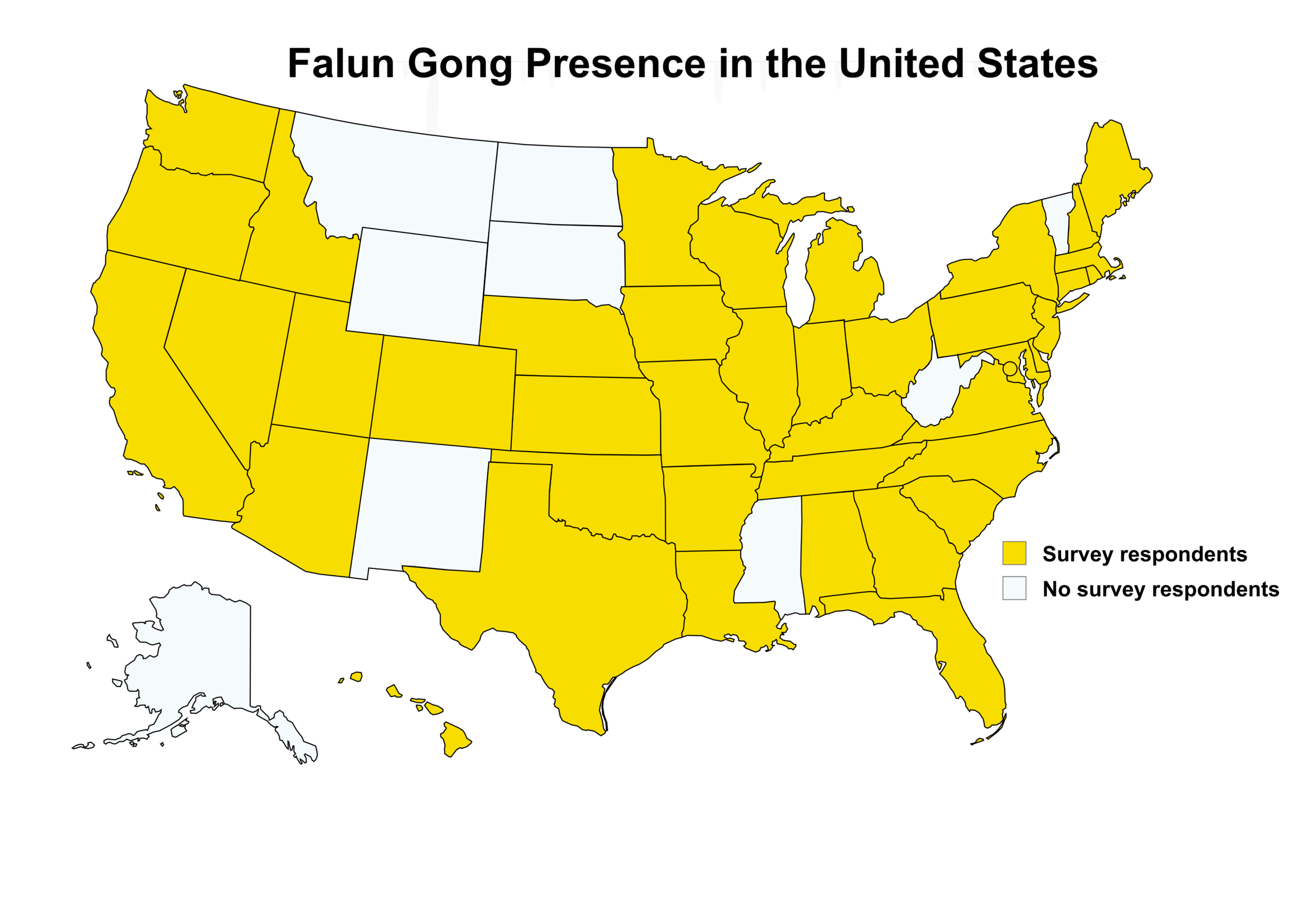
This chapter explores three core dimensions of the survey’s findings. The first concerns who, exactly, is being targeted: Falun Gong practitioners in the United States are a nationwide, highly educated, and diverse community. The second is the scale and trajectory of the repression they face, which has escalated dramatically in recent years. The third is the emergence of Shen Yun Performing Arts as a primary focal point for the CCP’s campaign, a cultural institution that Beijing has explicitly targeted for sabotage and discrediting.
1. The American Falun Gong community is nationwide and diverse

Falun Dafa practitioners in New York, including from the Falun Dafa Club of Columbia, perform a meditative exercise.
“I was arrested when I was 15 … I was threatened by the police. My home was ransacked. My mom … passed away in China and never got a chance to leave.”
—U.S. citizen now living in Georgia
“I was in elementary school in 5th grade when a government worker visited every classroom and asked all the students whether we and our family practiced Falun Gong, the tone was very clear. If the answer is yes, there would be serious consequences … My mother was brutally persecuted, imprisoned six times. Each time [she] was on her dying breath and skin and bones [when she] returned home. The miracle is, every time, she regains health [after resuming] Falun Gong practice.”
—Middle-aged Falun Gong practitioner now living in California
“Since the persecution began in 1999, I have not been able to safely return to China. I’ve had to make the painful decision to stay away because my presence could put my relatives at risk of harassment or retaliation. Some family members have been so afraid of being targeted that we stopped contacting each other entirely—not because we didn’t love one another, but because fear made even a simple phone call dangerous. When my grandmother, who raised me, was dying, I couldn’t go home. I couldn’t hold her hand. I couldn’t say goodbye. I couldn’t attend her funeral. That is what persecution looks like in real life. It separates families. It forces people into impossible choices between love and safety.”
—Shen Yun Conductor who has lived in the United States for over 30 years
Case study: Cheng Peiming—forced organ harvesting survivor targeted on U.S. soil
Cheng Peiming is the first known survivor of the CCP’s forced organ harvesting. Imprisoned in China for practicing Falun Gong, parts of his liver and lung were surgically removed, a fact subsequently corroborated by independent medical examination. After escaping to the United States, Cheng began speaking publicly about his experience, testifying at panel discussions and documentary screenings across the country.26
His courage has come at a cost. Leaked notes from a Public Security Bureau insider revealed a three-pronged CCP strategy targeting Cheng, which included staging his death to look like a suicide. Chinese state media has also published articles attempting to discredit his account.
Indeed, since late 2024, Cheng has faced repeated suspicious incidents in New York: a nighttime break-in of his home in November 2024; his car keyed and nails lodged in his tires on multiple occasions, one causing a blowout while driving; and in June 2025, surveillance footage captured a man hiding his face and approaching his vehicle before fleeing.27
Cheng and his wife were both among this survey’s respondents. Both reported feeling very unsafe—physically and psychologically—due to attacks and surveillance. They also reported feeling unsafe and concerned for their family in China, who have been coerced into publicly denouncing Cheng. They described feeling compelled to quit their jobs in May 2024 after their tires were slashed and five vehicles closed in on them in the parking lot of their company, prompting fellow Falun Gong practitioners to come to their rescue.
“The CCP wants to kill me,” Cheng told a reporter. “Because I am the only living witness of the CCP’s forced organ harvesting.”28
2. Transnational repression is increasing dramatically
3. Shen Yun is a key target
Case study: Coordinated mass shooting threats in Atlanta and San Jose
On the morning of December 11, 2024, an email containing a mass shooting threat was sent to the Atlanta Falun Dafa Association, the local presenter for Shen Yun performances at the Atlanta Symphony Hall during the upcoming Christmas week. The email sender wrote in Chinese that they would “go to the Atlanta Symphony Hall and shoot at all people there if the Hall hosts Shen Yun performances!”
One survey respondent described that “the message caused significant concern among the theater management, our staff, and audience members…We immediately reported the incident to law enforcement agencies, including the FBI, the Department of Homeland Security (DHS), and the local police department. A formal investigation was opened.”
An identical threat was sent on the same day to a theater in San Jose, California. In both cases, no evidence was found of immediate danger or even an actual physical attack being planned, but the incidents received media attention.32
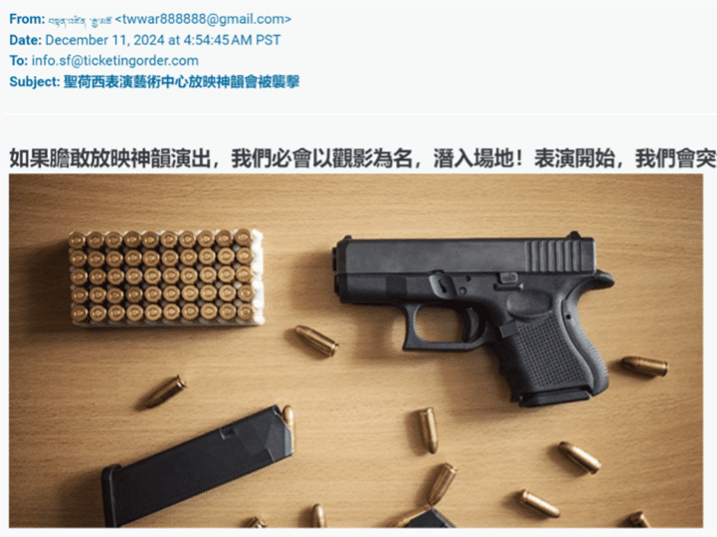
Screenshot of an email threat targeting a Shen Yun performance received by a California theater. An identical threat was sent to an Atlanta theater on the same day.
“Our touring vehicles have been tampered with multiple times, to the extent that we have had to arrange around-the-clock security to ensure the safety of our artists and staff. In addition, Chinese embassy and consulate officials have contacted or directly visited theaters and local government officials in cities where we were scheduled to perform, pressuring them to cancel our shows. There have been dozens of documented incidents of this kind of interference.”
—Shen Yun Conductor who has lived in the United States for over 30 years
“Last year, we had multiple bomb threats threatening our performances, albeit all being just fakes and scares. [They] definitely put a lot of mental pressure on all of the workers and performers. We always throw out any leftover water [bottles] from the day before, not just for hygiene issues, but also due to fear of poisoning”
—Ethnic Chinese Shen Yun performer born in the United States
“In the past few years, … [American] media outlets have tried to attack Shen Yun’s reputation by interviewing ex-members of Shen Yun, directly targeting Falun Gong to make others believe we are some evil cult. Why not interview current members? Being a member since Shen Yun’s inception in 2006, I have found many of these statements to be untrue or taken out of context. I was personally there to witness the occurrences that were mentioned in these negative reports and saw the incidences in a much more positive light. … But my brother, for example, has read these news pieces and [now] has a bad impression of Shen Yun.”
—Female Chinese American Shen Yun Performer
Chapter 3
Key Tactics Deployed
Falun Gong practitioners in the United States face a range of persistent and serious forms of harassment and intimidation tied to the CCP’s efforts to suppress their voices and smear their reputation. Between 2020 and 2025, survey respondents documented five primary tactics: targeted physical assaults and property damage, widespread verbal harassment at public events, direct threats of violence, pressure on relatives in China, and pervasive surveillance. Together, these tactics have created an atmosphere of fear and insecurity, extending the reach of an authoritarian government’s repression onto American soil.
1. Physical assault and battery
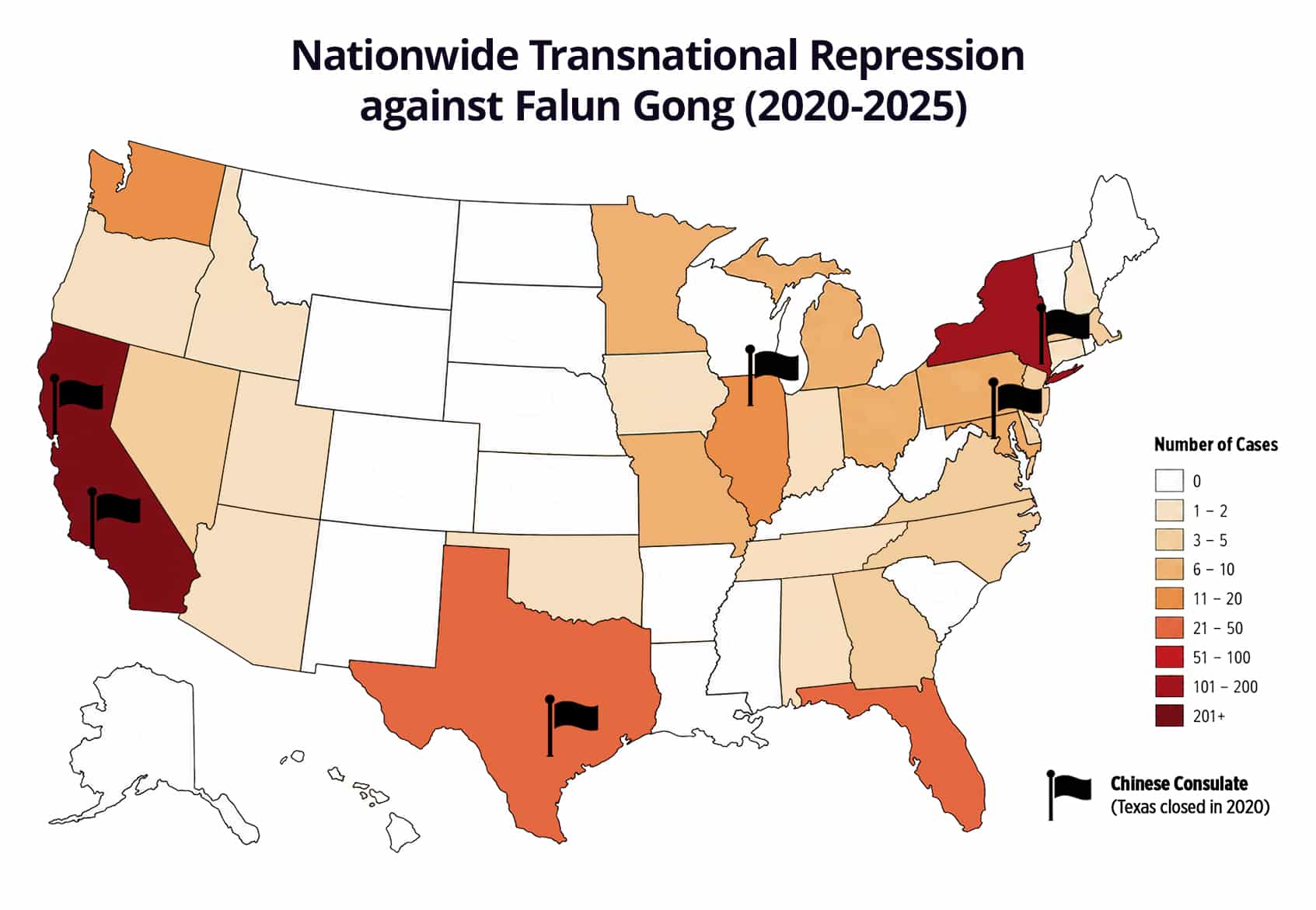
Survey data and follow-up interviews identified 92 specific instances of physical assault and property damage targeting Falun Gong practitioners in the United States between 2020 and 2025. Victims were violently beaten, spat on, had their vehicles vandalized, and informational materials destroyed. These instances occurred across 15 states, but the majority were in California and New York.
Case study: Assault at a parade in Brooklyn (2024)
In 2024, Falun Gong practitioners held a parade in Brooklyn to raise awareness for human rights abuses in China and resistance to the persecution. Multiple participants reported being assaulted during or after the parade. The participants were identified as Falun Gong practitioners from their yellow shirts and jackets that read “Falun Dafa.”
“[O]n Eighth Ave, an assailant rushed into the rally procession and attacked me twice.”
—Female marketing professional
“After the rally…I was suddenly struck forcefully in my chest by a tall Chinese man using his right shoulder. The impact stunned me, and my entire left side went numb.”
—Elderly Chinese man
Two days after the parade, a person sent emails claiming responsibility for the attacks. The incident was deemed a hate crime by local law enforcement; however, no further developments or arrests are known.
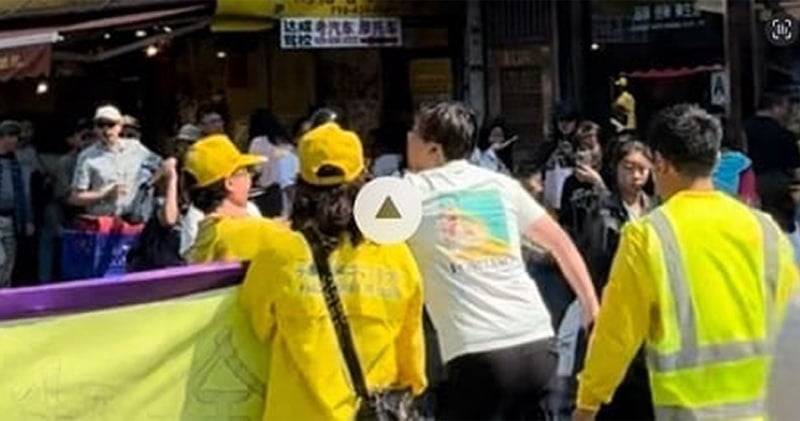
A video screenshot of an assailant (C) hitting a female practitioner (L) on September 14, 2024, during a parade in Brooklyn, New York.
Case study: Vehicle repeatedly vandalized with demonizing labels (2022–2024)
A woman from San Gabriel, California, participated in car parades from 2021 to 2024 with her vehicle prominently displaying the messages: “Falun Dafa is Good. Truth, Compassion, and Forbearance is Good. End the CCP. God Bless America.” However, her car was vandalized four times between 2022 and 2024 in incidents that could qualify as hate crimes under California law targeting her spiritual practice. After her roof sign was cut and stolen in the first attack, she never replaced it. Afterwards, profane graffiti messages, such as “Falun Gong = racist cult,” were painted on the rest of her car, repeatedly.
The use of both the false label “cult” and the allegation that Falun Gong is “racist” illustrates how the CCP’s demonizing and inaccurate propaganda is penetrating the consciousness of some Americans.
The term “cult” is a manipulated translation of a Chinese-language term that the CCP applied retroactively to Falun Gong after the persecution began. It has been used to justify brutal treatment of believers. Both Western observers and human rights groups have concluded that Falun Gong is not a cult. Ian Johnson, a former journalist who won a Pulitzer Prize for his reporting on Falun Gong, wrote in his book Wild Grass: “The group [Falun Gong] didn’t meet many common definitions of a cult… [it] is at heart an apolitical, inward-oriented discipline, one aimed at cleansing oneself spiritually and improving one’s health.”33 Canadian scholar David Ownby referred to the application of the cult label to Falun Gong as a “red herring” exploited by the Chinese regime.34
Claims that Falun Gong is somehow racist are similarly unfounded, but have gained traction as journalists and CCP propagandists have quoted the practice’s teachings out of context and incorrectly interpreted them as forbidding interracial marriages. In fact, interracial marriages and mixed-race children are extremely prevalent among the global Falun Gong community, as evident from any observation of a Falun Gong parade.
The appearance of both of these inaccurate terms in this incident demonstrates the potency with which the regime has successfully hijacked loaded terminology and cultural sensitivity to incite hatred against American Falun Gong practitioners.
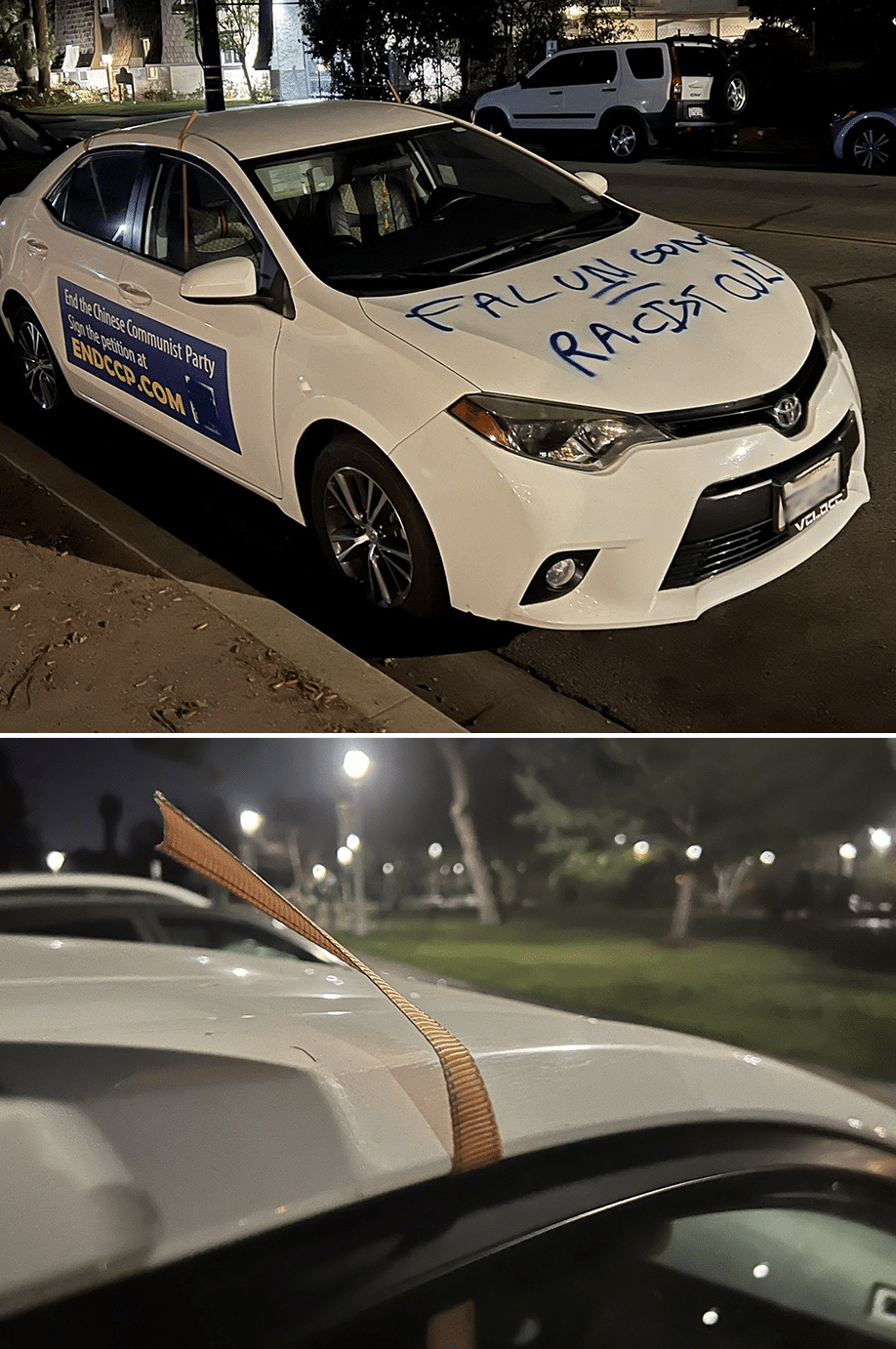
Pictures of damage to the vehicle on February 14th 2022. Profane graffiti message was painted on the body of the car while the roof sign was cut and stolen.
2. Harassment and verbal abuse
As the most widely reported tactic, survey respondents reported 158 specific instances of physical or verbal harassment across 12 states, with the majority occurring at Falun Gong parades, events, and informational booths. These cases included actions such as people aggressively riding vehicles around peaceful sit-ins, passersby shouting profanities, or individuals and groups playing CCP music on loudspeakers to disrupt meditators.
For example, on August 30, 2025, during a peaceful rally in Pennsylvania to commemorate the persecution of Falun Gong, an IT professional said a Chinese man “repeatedly came circling the block on a motorcycle and loudly saying bad things to us. He then raised his motorcycle engine rev which in turn made a loud sound draining [out] our speakers’ voice. He made many circles again and again intimidating our group.”
Across the reported cases, the aggressors were primarily local individuals (66%) with a large majority of those (72%) being ethnic Chinese. Others included counter-protestors organized by known CCP proxies, such as the Chinese Anti-Cult World Alliance (CACWA), and direct harassment by Chinese governmental agencies via phone calls from China or diplomatic representatives in the United States (see further examples in Chapter 5).
Case study: Young Chinese man insults and kicks Falun Gong information booth
One respondent described an incident that took place in Flushing, New York. On Tuesday April 29, 2025, while volunteering at an information booth to raise awareness about the persecution in China, he saw a young Chinese man who “suddenly, without any warning, forcefully kicked the pillar supporting the booth and violently kicked the table. This caused the shelves and table of the booth to tilt and become crooked, while nearly knocking over a fellow practitioner who was standing behind the table doing the exercises.”
When the respondent confronted the aggressor, the Chinese man simply said: “I don’t like the sight of you, so I’ll just kick your booth.” Following a few more provocative comments, the aggressor took a phone call and later left the scene.
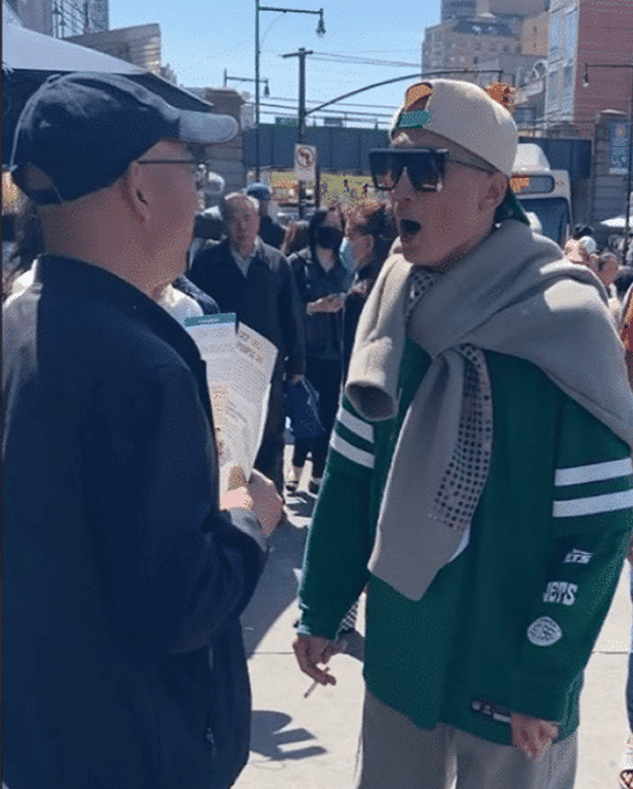
The Chinese man shouted threats and insults at the practitioners around the booth. (Photo credit: The Global Tuidang Center)
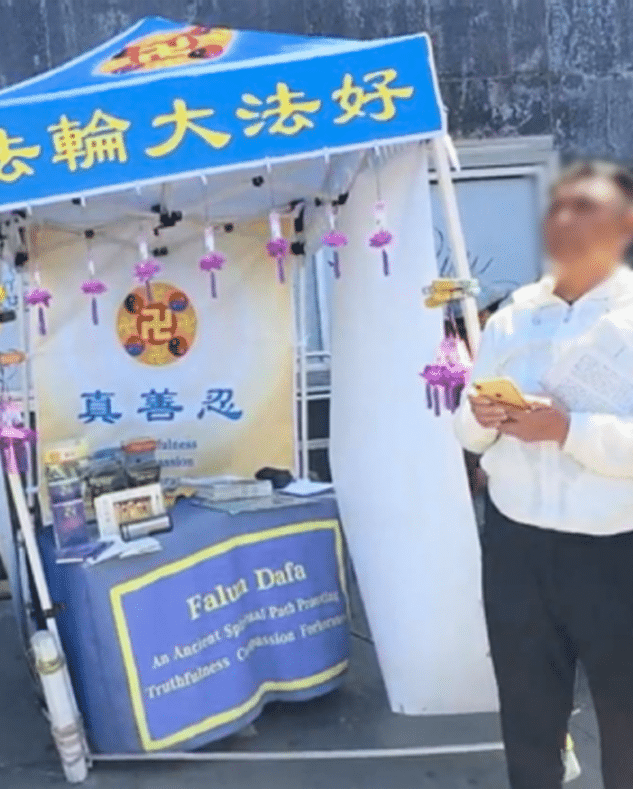
The informational booth and table had been visibly dislodged and disordered by a series of forceful kicks from the Chinese man. (Photo credit: The Global Tuidang Center)
3. Threats of violence
Respondents experienced a significant increase in violent threats in 2025 compared to previous years, though such threats began intensifying already in early 2024. Eighty unique individuals were affected by at least 86 instances of violent threats such as bomb, mass shooting, arson, or death threats. In nearly 11 percent of these cases, a local individual issued the threat in-person, explicitly stating or gesturing an intent to harm a Falun Gong practitioner. The remainder mostly came from anonymous emails by suspected CCP proxies or pro-Beijing trolls. More than half of the reported instances of violent threats occurred in 2025 (57%). In addition to the survey responses, FDIC has from other sources documented 298 violent threats targeting Falun Gong, Shen Yun, and supporters since March 2024.35
One respondent described a situation in August 2025 when she was raising awareness at an information booth in Flushing, New York: “A man, appearing to be in his thirties, mocked and provoked me. He also stopped passersby and, together with them, verbally attacked Falun Gong. He attempted to seize a large quantity of leaflets but only managed to take one after I and two other fellow practitioners intervened. He then proceeded to tear the leaflet while walking around and yelling nearby. After this, he left for a short time and returned, attempting to ignite the tent with a lighter. After I warned him that I would call the police if he continued, he defiantly said, ‘Go ahead, report me!’ while crossing the street, getting into the passenger seat of a black car, and quickly driving away from the scene.”
Case study: Death threat sent to FDIC staff
On August 1, 2024, an individual using a Chinese name sent an email to Levi Browde, FDIC executive director, threatening to kill staff members listed on the organization’s website and their families. The email included photographs of shotgun shells and a loaded shotgun.
The sender also appeared to impersonate the prominent Chinese dissident Jie Lijian, who has publicly supported Falun Gong and criticized the persecution. This suggests a possible effort not only to threaten the organization, but also to sow discord between Falun Gong practitioners and other Chinese activists.36
“You will meet God. You, and … as well as family members, all will be killed. I’m not kidding you!”
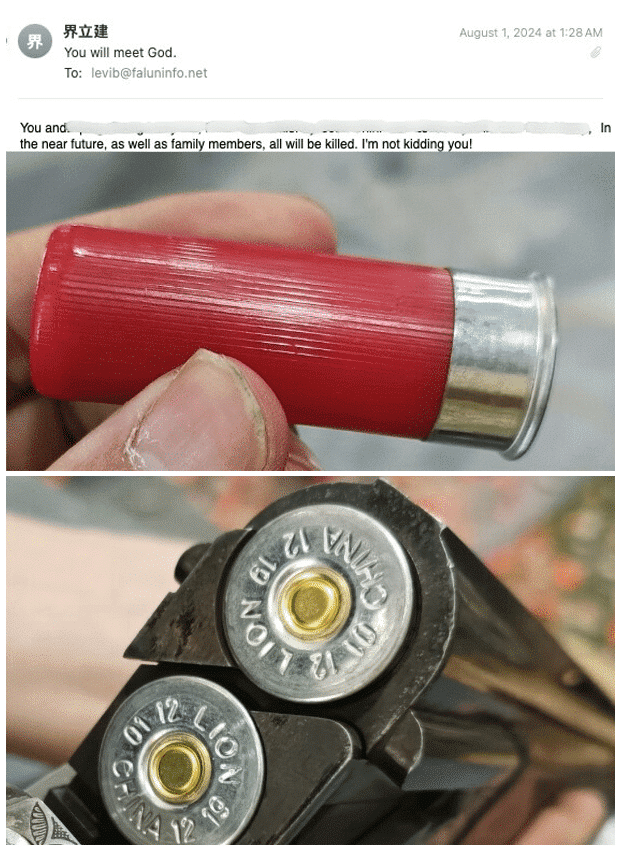
Death threat targeting FDIC staff members on August 1st, 2024.
4. Reprisals against relatives in China
Over one-third of respondents with family in China saw relatives targeted because of their activism in the United States. In 87 specific instances, their family members in China had been targeted by the Chinese security apparatus or local governmental authorities through in-person visits, phone calls, or both. They often demanded information on the U.S. practitioners, attempted to lure them back to China, or asked their relatives to deliver threatening messages to silence their U.S. activities. One woman’s family in Liaoning had received so many visits from local authorities that her “family had difficulty sleeping” and told her to “be careful and do not attend Falun Gong events.”
“Throughout the years, my grandparents (on my dad’s side) have been constantly visited by the local police to pressure them to have their son come back to China and quit practicing Falun Gong. My grandparents on my mom’s side have their phones tapped all the time, my mom is not able to communicate freely with them without consequences. If my mom talks about anything related to Falun Gong, the persecution happening to us, or anything related to China issues in general, local police would come and visit my grandparents.”
—Ethnic Chinese, female Shen Yun performer born in the United States
5. Sophisticated surveillance
Over 60 percent of respondents (662 people) reported feeling “somewhat unsafe” or “very unsafe” about China’s surveillance, especially via phones and the internet. At least seven respondents said the CCP had threatened them using specific details about their personal information, activities, or vacation plans, through direct phone calls from the regime’s security apparatus or via reports from relatives.
For example, a practitioner living in New York who works in the media sector described that in 2023, soon after telling a few friends about travel plans to Taiwan, his relatives were forced to relay a message from the Ministry of State Security that “it would be better to return to mainland China than to go to Taiwan,” confirming his suspicion that “some of my movements were being monitored and known by the CCP.”
In another instance, a respondent recalled a phone call to her New York home landline where a Ministry of State Security representative from Beijing called her directly by name and threatened her to cease her activism, calling it an attempt “to incite the subversion of state power.”
Case study: Cell phone compromised and monitored
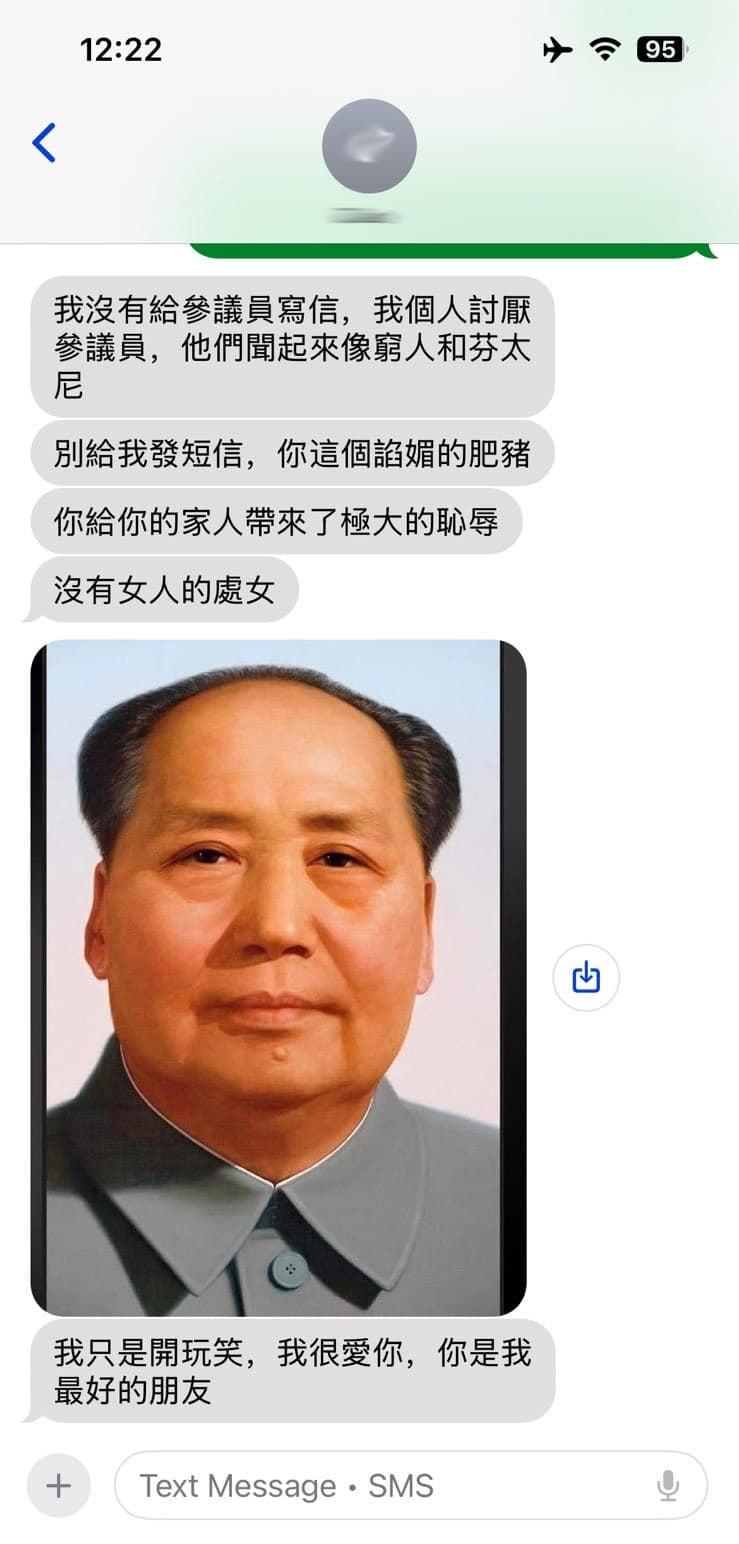
A respondent from Ohio—a retired teacher over 65 years of age with a Ph.D.—recounted a concerning incident from May 15, 2025. He sent a message to his senator, explaining his concern over the CCP’s persecution of Falun Gong and forced organ harvesting. Minutes later, his wife messaged him about the message and, instantly, she received several responses in Chinese from the retired teacher’s phone number. The messages demeaned his wife and the U.S. senator, and also included an image of CCP Chairman Mao, suggesting the retired teacher’s phone had been compromised and surveilled by Chinese cyber actors. The couple reached out to their phone and carrier companies, which were unable to provide any assistance or explanation.
Chapter 4
Distorted Narratives Are Having Real-World Effects
Transnational repression does not only comprise threats or physical assaults. Sometimes it takes the form of a news article, a social media post, or a whisper campaign, but the damage done can be just as lasting. This chapter examines how distorted narratives about Falun Gong, amplified by misleading media coverage and coordinated online disinformation, are having measurable real-world effects on practitioners’ lives: straining family relationships, fueling discrimination, enabling censorship, and eroding the goodwill of institutions that once stood alongside the community. The people affected are ordinary Americans—educators, performers, and professionals—targeted for their faith.
U.S. media coverage since 2022 is contributing to social stigma
An overwhelming majority of the respondents (90%, 972 people) reported noticing increased negative news coverage and social media commentary about Falun Gong since 2022, with many citing a series of inaccurate and misleading reports by The New York Times published in 2024 and 2025.37 Others also mentioned seeing negative and misleading narratives about Falun Gong circulating on social media platforms from internet trolls and misinformed netizens, who have echoed the CCP’s decades-long propaganda and the distortions in the Times’ reports.
“The CCP has worked aggressively to spread misinformation around the world about Falun Gong to justify its persecution. Those false narratives shape perceptions, create suspicion, and erode public understanding of who we really are. When propaganda succeeds, it becomes easier to marginalize and dehumanize people of faith.”
—Shen Yun Conductor who has lived in the United States for over 30 years
Coordinated social media campaigns are being used to smear Falun Gong
Several survey responses noticed an increase in anti-Falun Gong misinformation and disinformation on social media since 2023, often appearing in a coordinated fashion. For example, an IT professional from Maryland wrote:
In 2023 and 2024, I found a large number of videos attacking Falun Gong and Shen Yun on YouTube, Reddit, X, and many other platforms. Their methods are strikingly consistent, and the materials they use are also very similar. They…claim that one day they saw Shen Yun materials and discovered that this group is bizarre and a cult, and then they present materials from the CCP and materials from The New York Times—all pieced together without logic but designed to give a negative impression. And then many paid commenters follow up with supportive posts.
These perceptions match other information that has emerged in recent years on China-linked efforts to spread false information on social media about Falun Gong, including via payments to Western influencers and networks of fake websites. In 2025, YouTuber Tim Pool, who has millions of subscribers, revealed that he had been offered $200 to post a video smearing Falun Gong as bizarre and dangerous.38 While he declined, the anecdote suggests broader CCP efforts to utilize Western social media influencers to disseminate false and hateful propaganda. Around the same time, the social media platform X removed thousands of bot accounts that had been actively targeting Falun Gong by amplifying negative narratives and media reports.39
In early 2026, a report by prominent social network analysis company, Graphika uncovered a network of 43 domains and 37 subdomains used to push pro-Beijing messaging while posing as major Western media outlets, including The New York Times, The Guardian, The Wall Street Journal, and others. Falun Gong, Shen Yun, and Falun Gong’s founder were key targets of this network for influence operations and transnational repression. As an example of this campaign, Graphika researchers identified a set of social media accounts that were “using likely randomly generated usernames and stock profile pictures, having almost no following and followers, criticizing Falun Gong and Shen Yun, and posting identical content simultaneously.”40
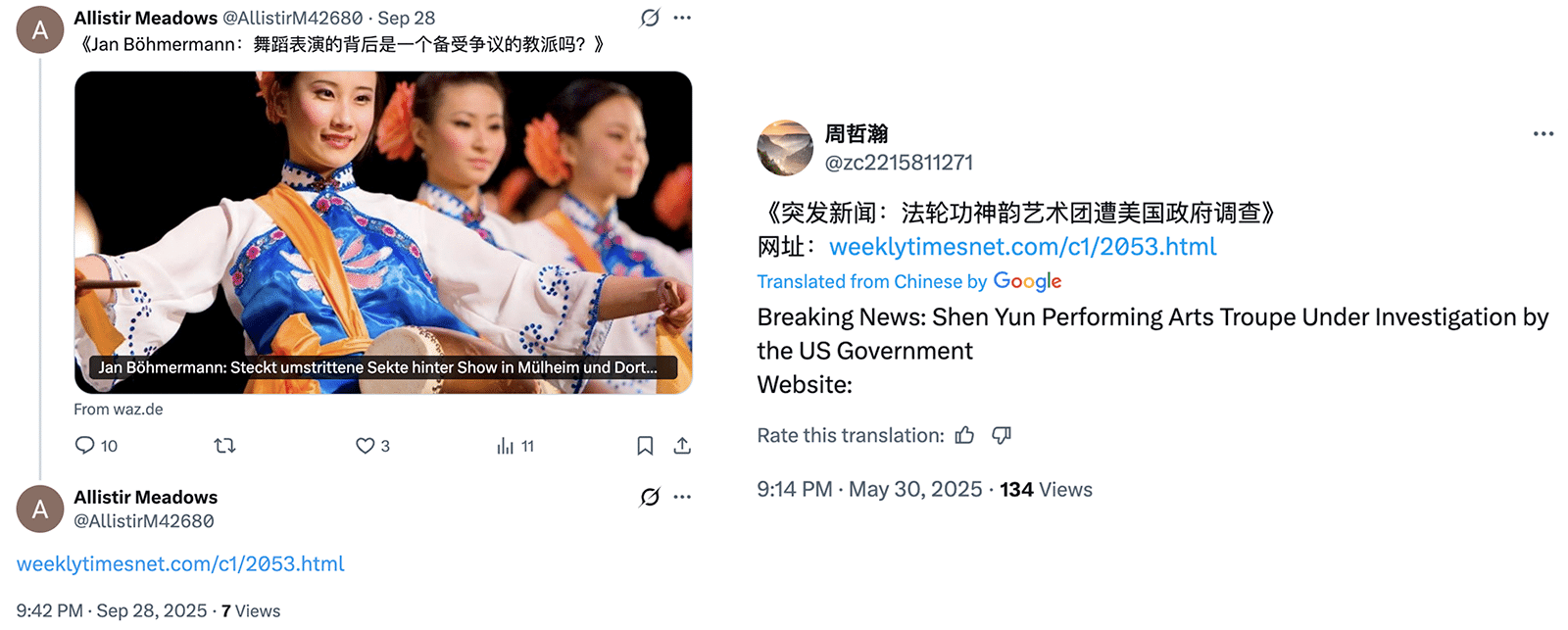
According to Graphika’s report, “Example of two likely Spamouflage-linked accounts sharing links to an article targeting Falun Gong and Shen Yun posted on weeklytimesnet[.]com, one of the spoofed mainstream media outlets.” (Credit: Graphika)
Distorted coverage is causing mental stress and straining social relationships
Respondents used words like “worrying,” “insecure,” “discrimination,” “hatred,” and “social isolation” to describe the environment of increased stereotypes, religious intolerance, misconceptions, and an unwillingness—even among family—to engage in good-faith conversations. The majority of respondents (64% or 691 people) reported feeling negatively affected by such narratives. Among them, nearly 64 percent (442 people) cited emotional distress; nearly 45 percent (309 people) noted tension within family or social relationships; a similar share reported experiencing verbal harassment in public or online (307 people); and over one-third (35%, 240 people) expressed feeling discriminated against at work, school, or in their community because of their faith.
“Anytime those articles came out, it would, for sure, impact me. You walk around, feeling, ‘Oh, did this person read it? Did that person read it? Are they looking at me differently now?’ You just feel uncomfortable, because you know that your colleagues, friends, family, are reading The New York Times, and there’s a chance that they’ve seen this article, which is really hateful. The article is designed to make me look weird, make anybody attached to Falun Gong [look] weird.”
—Father of Shen Yun performer
“The rise in misinformation and propaganda published in news articles, TV broadcasts, and social media has been mentally and emotionally distressing. I feel… less comfortable openly discussing my faith with non-practicing friends and new acquaintances, for fear that they will look up the practice, be misled by the false information that seems to dominate the digital landscape, and form a misconception that I can’t quickly or easily rectify.”
—Young Chinese American educator in New York
Misinformation and disinformation facilitate censorship from public events and civic spaces
Americans across 18 states described being excluded from public events due to their identity as Falun Gong practitioners. In total, 84 individuals reported 92 instances in which they were barred from parades, community events, or national conferences. Several accounts pointed to the involvement of Chinese individuals and organizations, including local Chinese businesses and Chinese Chambers of Commerce in enabling or enforcing these exclusions. Others report that previously sympathetic local officials or businesses had more recently shunned Falun Gong. Some rejections cited the Times’ reporting as the reason or appeared fearful of backlash from misinformed patrons for hosting a Falun Gong-related event.
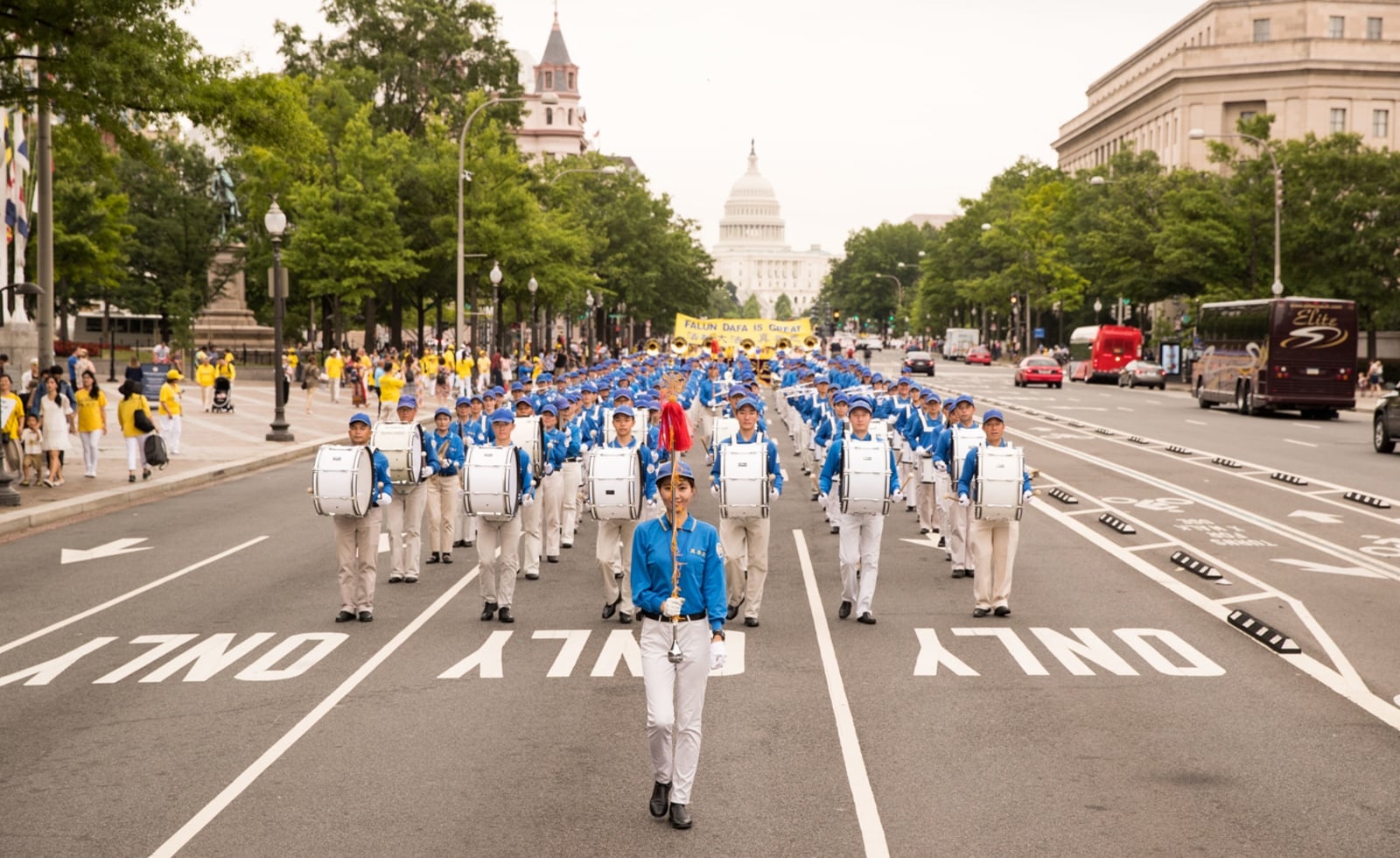
Tianguo Marching Band performing in Washington, DC in 2018. A similar band was almost excluded in a parade in San Francisco in 2025. (Photo credit: Tianguo Marching Band)41
Case study: Excluded from parade in California
Californian Falun Gong practitioners have been regular participants in a major parade in San Francisco for more than 15 years, typically joining with a Chinese waist drum troupe, floats, demonstrations of Falun Gong exercises, and a large marching band. However, in 2025, several survey respondents noted that Falun Gong contingents were no longer allowed to attend the parade and were not given a clear explanation for the exclusion. After much communication, the Tianguo Marching Band was eventually allowed to join but told not to distribute Falun Gong-related materials. Other Falun Gong practitioners remained excluded from an event that they have been participating in for over a decade.
U.S. theaters are under particularly strong pressure
More than 25 respondents noted that local theaters, despite years of successful partnerships with Shen Yun, showed obvious signs that they felt pressure not to renew contracts in 2025. Although the cause was not always directly evident, some survey respondents pointed to negative narratives circulating and theaters suffering from anonymous bomb and mass shooting threats.
While threats and negative media coverage may have played a part, in at least one case, a cancellation correlated directly to improved ties with the Chinese state-run Beijing Dance Academy (BDA). According to a December 2025 article in the Jamestown Foundation’s China Brief, in 2024, the Purchase College Performing Arts Center at the State University of New York canceled a contract with Shen Yun for the upcoming 2025 season after starting a partnership with China’s BDA earlier in the year. The arrangement had explicit requirements for ideological conformity and political selection criteria for participating students. According to the author, this raised “concerns that BDA’s partnerships may be used to exert pressure on foreign institutions to suppress performances critical of the CCP, thereby extending its domestic censorship criteria into global cultural spaces.”42
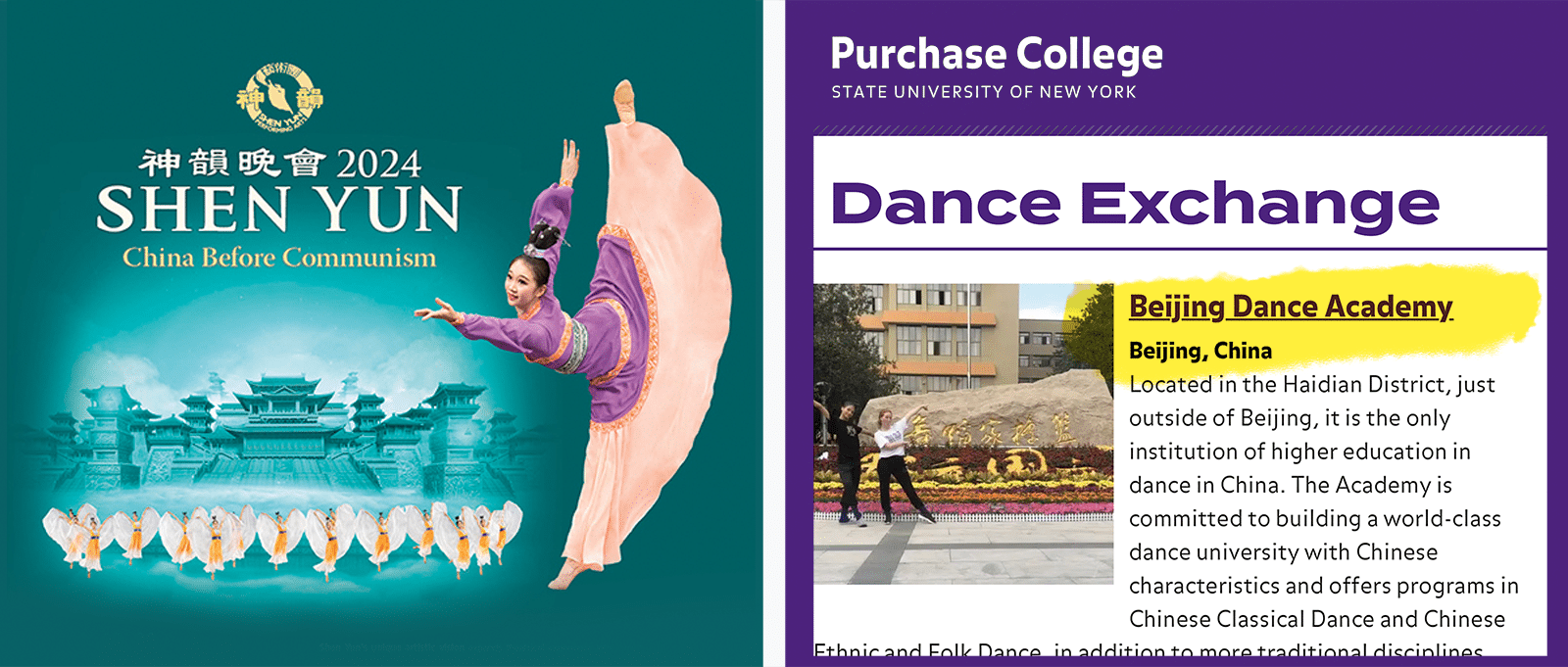
Left: During the 2024 season, Shen Yun performed at Purchase College to sold-out shows for the tenth year. (Photo credit: Shen Yun) Right: After Purchase College signed a dance exchange partnership with Beijing Dance Academy, the 2025 Shen Yun contract was canceled. (Screenshot: SUNY Purchase)
A small number of local officials have grown distant
Many federal and local officials that understand their Falun Gong constituents continue to issue proclamations and statements of support for Falun Gong.43 However, several respondents from Philadelphia, New York, and Washington noted that elected officials and staff who had previously been friendly took a cooler and more distanced tone over the past year. In some cases, it even became more difficult to get appointments.
For example, one office in Philadelphia no longer wished to issue citations for Shen Yun and Falun Gong, referencing the Times’ articles. A New York office, despite expressing sympathy for the community, told a respondent: “Well, what do you want me to do? I’m not going to go up against The New York Times.”
Chapter 5
Who is Targeting Americans?
Behind the incidents documented in this report sits the CCP, but not every perpetrator is acting on direct orders from Beijing. This chapter maps the full spectrum of those involved: from Chinese government agencies and known CCP proxies to diaspora members deceived by decades of propaganda, and American institutions that are unwittingly enforcing Beijing’s agenda.
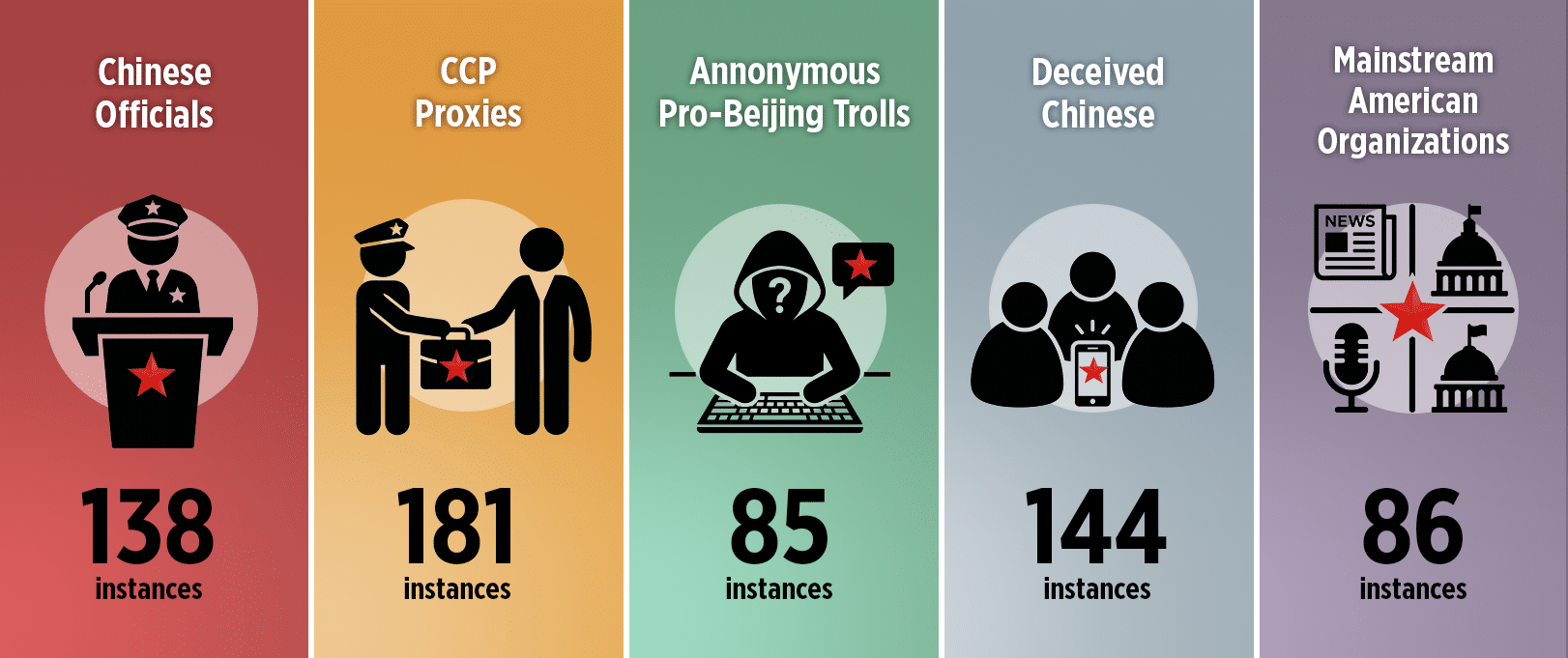
1. Chinese officials
In 138 cases, at least one Chinese government or CCP entity was directly engaging in actions to suppress Falun Gong activities or intimidate practitioners in the United States. The most prevalent agency named was the Ministry of Public Security (66 reports), followed by the Ministry of State Security (28 reports), and the Ministry of Foreign Affairs (17 reports). Other cases named another local Chinese official or did not specify a specific agency (31 reports).
Many of these incidents involved Chinese security agents intimidating family members in China, including extended family.
“My sister-in-law was approached by MSS [Ministry of State Security] several times in Beijing. Sometimes it happened in her workplace and sometimes they stopped her car on [the] highway. They tried to collect information about us in the U.S.”
—Professor with a YouTube channel that is critical of the CCP in New York
However, at least 25 cases targeted practitioners in the United States directly. They include phone calls from security agencies in China intimidating Falun Gong practitioners in the United States, as well as Chinese consulate staff harassing practitioners, for example by turning on sprinklers to spray Falun Gong practitioners during peaceful appeals or by pressuring theaters not to host Shen Yun performances.
“Every year, my grandmother would be harassed by the police and be asked whether she would practice Falun Dafa or not. There would be heightened surveillance, especially around the times of festivities, like the New Year’s. Even after my grandmother came to the United States, the police would tell her to send photos of herself back to China through WeChat, through my uncle who’s still in China. The last time this happened was around February/March of 2025.”
—Shen Yun Performer in his late 20s
2. Known CCP proxies
At least 181 instances involved CCP proxies engaging in harassment, threats, or other acts of suppression. These included the Chinese Student and Scholar Associations (CSSA), which took steps to pressure universities not to permit Falun Gong faculty and students to host events that raised awareness about the persecution in China. Counter-protesters have also harassed and threatened Falun Gong practitioners at public events or blocked their banners with PRC flags.
Case study: China Anti-Cult World Alliance (CACWA)
The Queens-based CACWA is the most prominent CCP proxy engaging in harassment and threats against Falun Gong practitioners in the United States. CACWA has been described in multiple reports and court-related filings as an overseas offshoot or front group of China’s anti-Falun Gong apparatus, with alleged operational ties to the CCP’s 610 Office through coordinated propaganda, recognition by CCP-linked entities, and potential funding or direction.44 Since the organization’s founding in 2008, its chairperson Li Huahong has been sued, arrested, and criminally charged for engaging in physical aggression and verbal harassment towards Falun Gong practitioners. In 2013, Li was criminally charged by the Queens Criminal Court with assault for pushing, hitting, and destroying property.
“Li Huahong…would curse Falun Gong [online] every day…She even threatened me, saying she would ‘teach me a lesson’ and show me ‘what I deserve.’”
—Chinese-American woman from Maryland
One of her allies, Michael Chu (a.k.a. Zhu Lichuang), holds multiple positions in CCP-aligned organizations and has been documented paying protesters in Flushing and Midtown Manhattan to distribute anti-Falun Gong and anti-Shen Yun materials.45 More than one survey respondent noted specific encounters with these two individuals and others linked to them, referring to Chu as a “CCP agent” at times.
“CCP agent Michael Chu…shouted and screamed in the street, insulting my beliefs and me personally, and used a cell phone to take pictures of me, violating my personal rights…This has caused me significant mental distress.”
—Young Chinese woman who works in media
Multiple respondents also reported that Li Huahong and others associated with the CACWA had harassed Falun Gong practitioners during Xi Jinping’s visit to San Francisco in November 2023. An elderly practitioner over 65 from California remembered: “At that time, individuals hired by the CCP blocked our signs and shouted loudly, attempting to obstruct and distract those seeking the truth.” A respondent that served as a journalist also recounted being “surrounded and almost beaten” by this aggressive group. Several of these incidents were also documented in a 2024 report published by the Hong Kong Democracy Council and Students for a Free Tibet.
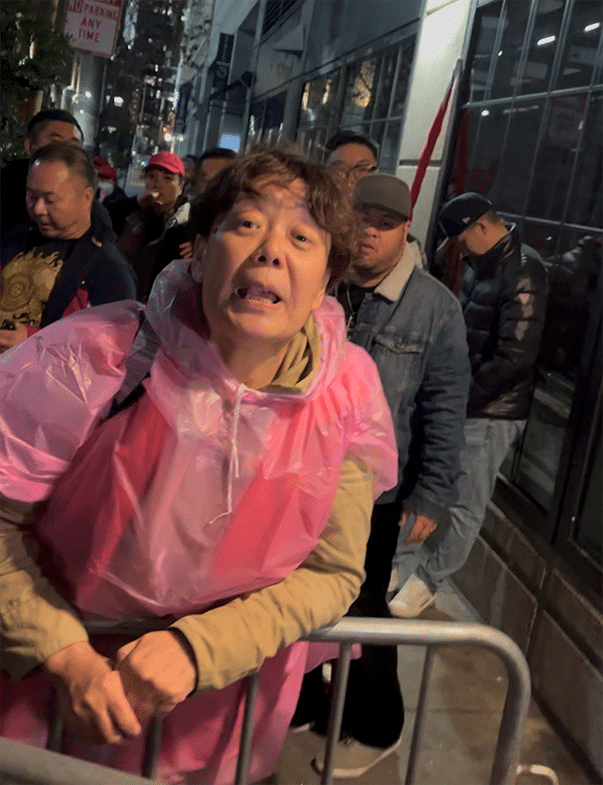
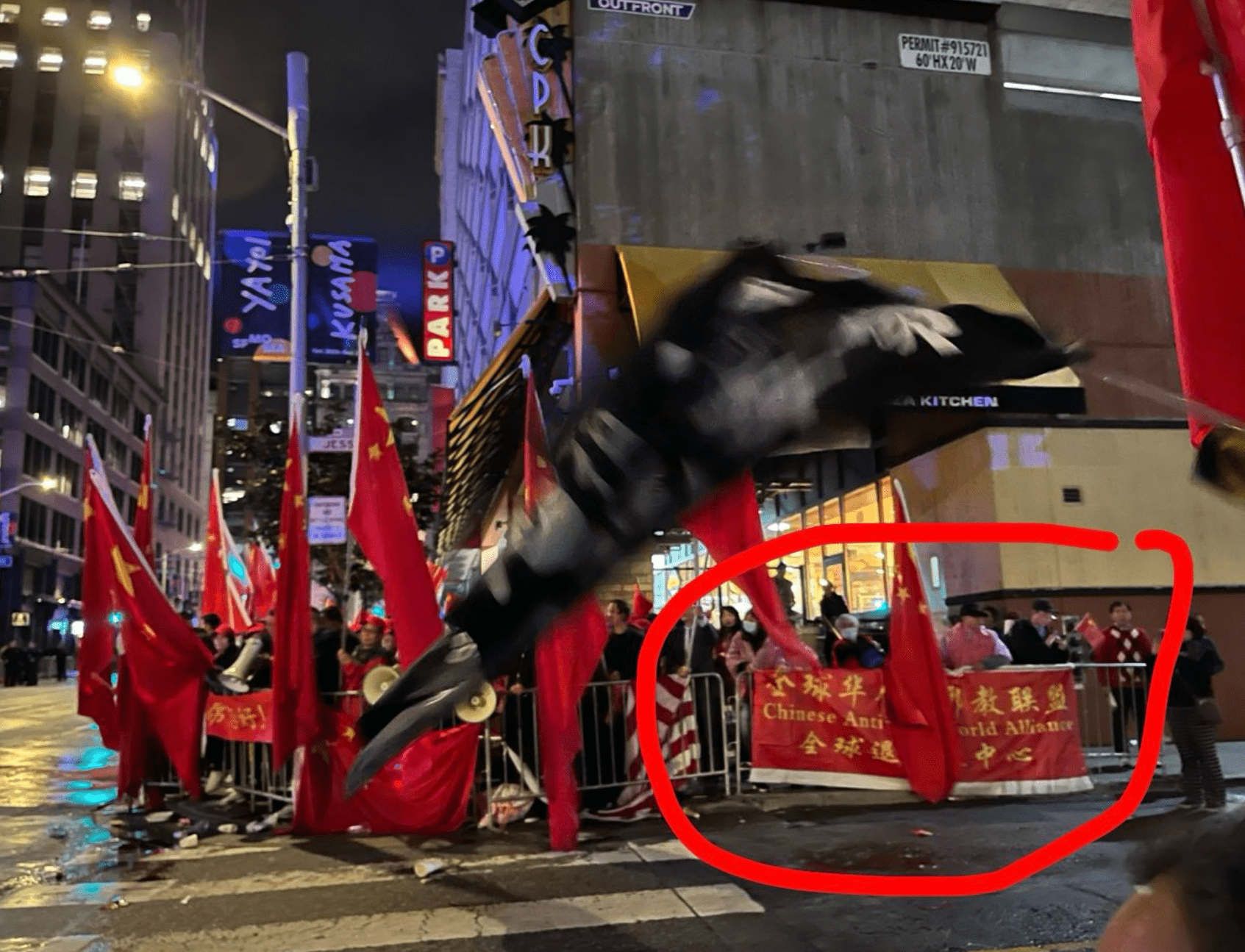
Images of CACWA and Li Huahong during Xi Jinping’s visit to San Francisco in November 2023. (Photo credit: Hong Kong Democracy Council and Students for a Free Tibet)46
3. Anonymous pro-Beijing trolls and other unknown individuals
Survey responses identified at least 85 instances involving pro-Beijing anonymous individuals who sent threatening messages through online platforms, engaged in vehicle vandalism intended to intimidate or cause serious harm, or participated in coordinated online harassment that goes well beyond the behavior of typical, organic, misinformed individuals. These violent threats included death threats directed at Falun Gong practitioners and their families as well as bomb and mass shooting threats targeting Falun Gong events and theaters hosting Shen Yun performances.
Respondents also reported multiple cases of individuals slashing Shen Yun bus tires across the United States to destabilize the vehicle. In addition, several noted that suspicious non-Chinese individuals were seen lingering for extended periods—often many hours—near Shen Yun vehicles late at night.
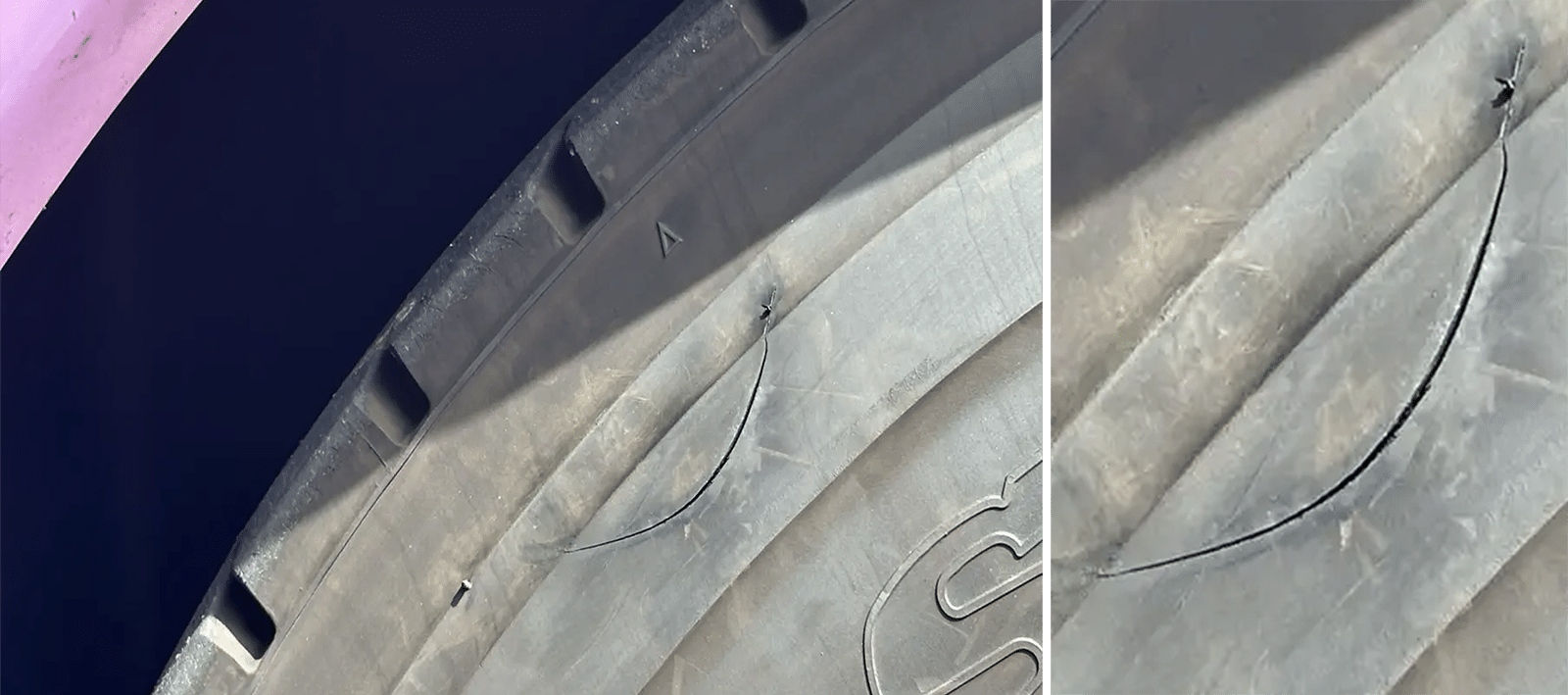
On March 15, 2024, the Costa Mesa Police Department detailed an “approximately 7-inch slash” on a Shen Yun tour bus tire. It was cut in such a way that it wouldn’t deflate but would burst when driven on the freeway.47
4. Deceived members of the Chinese diaspora
Local ethnic Chinese individuals, businesses, and associations comprise one of the largest categories of perpetrators cited by respondents. There are 144 specific instances where they were identified as the perpetrator of an act of transnational repression. These individuals or entities have no confirmed ties to the regime but are likely deceived by decades of CCP propaganda against Falun Gong. For example, on June 9, 2025, when a female practitioner was raising awareness about the persecution near the Chinese Consulate in Los Angeles, a Chinese woman shouted, “As a Chinese, how can you treat the Chinese Communist Party like this?” She became increasingly aggressive and shoved the practitioner three times.
This is not an isolated incident. Many respondents reported being called “traitors” or “betrayers” by passing by Chinese or accused of “bringing shame to China.” Respondents also expressed frustration that CCP propaganda has caused many Chinese nationals to reject rational conversations about the CCP’s human rights atrocities in China.
5. Mainstream American organizations
In 86 instances, it was a U.S.-based entity that engaged in censorship or harassment of Falun Gong practitioners. Of these, 24 were local Chinese businesses, organizations, or chambers of commerce. The remaining 62 involved mainstream institutions, especially local theaters (see Chapter 4), hosts of parades (see Chapter 4), and organizers of national and community events such as a poetry association and a medical conference. In many cases, the entity had gladly hosted Falun Gong or Shen Yun in the past, but turned more reticent amid the distorted and negative information about the community, economic incentives from Beijing, or after receiving violent threats. For example, a respondent who is an English teacher from Georgia noted that after a local theater received a false mass shooting threat, the venue preferred not to book Shen Yun in the following season:
Sadly, the venue … refused to book the performance for the following year. It’s a regrettable loss. The threat accomplished part of what was intended. It’s tragic that the Chinese Communist Party, a ruthless, bloody regime, can use misinformation and false threats to derail cultural events in America.
As outlined in Chapter 4, media outlets in the United States, both mainstream and local, have played a key role in generating a biased information environment tainted by CCP narratives and inaccurate claims about Falun Gong and Shen Yun, a reality that many respondents noted had fueled some of the above decisions by other organizations to suppress practitioners’ speech and activities.
Chapter 6
Signs of Resilience and Future Challenges
Despite the escalating repression documented above, the survey’s findings are not all bleak. The majority of Falun Gong practitioners in the United States report feeling able to practice their faith and speak out openly, a testament to both their personal resolve and the protections American society affords. But that resilience coexists with real and growing vulnerabilities.
Despite the pressure, the majority of respondents are holding strong to their faith and continuing their advocacy. More than 57 percent of the responding Falun Gong practitioners reported feeling “very safe” or “somewhat safe” to publicly engage in Falun Gong activities in the United States. More than 57 percent also reported feeling “very confident” or “somewhat confident” that their religious freedom and other freedoms are well protected. Still, obstacles remain.
“Living in the United States has given me a sense of confidence and comfort I never had before—because here, I can speak freely…I want to express my deep gratitude to the U.S. government. The United States stands as a beacon of liberty. If this country falls, that light will go out—and with it, the hope for countless people around the world. That’s why this matters so deeply. It’s not just political—it’s moral, spiritual, and human. I may feel secure now, but if the government and society don’t pay attention, that safety could vanish. The CCP sees the United States as its primary enemy—and if left unchecked, it won’t stop until it has undermined the freedoms we all depend on.”
—Falun Gong practitioner in Massachusetts
One-third of the respondents still feel unsafe, especially those who experienced persecution in China. Among respondents, 337 (31%) reported feeling unsafe or very unsafe. Such sentiments are especially prevalent among practitioners who had suffered persecution in China (55% or 184 people), and were traumatized by their experience, rendering this group more likely to feel unsafe in the United States.
“Although I live in the United States and am grateful for the freedom here, I do not feel completely safe. My father was killed in China for practicing Falun Gong. That history never leaves me. In recent years, I have seen bomb threats directed at performances, online harassment, and attempts to [use] legal [complaints to] undermine our organization. Knowing that the same government that killed my father is still actively trying to silence practitioners abroad makes it hard to feel fully secure. I feel protected by American law, but emotionally and psychologically, I remain aware that the threat has not disappeared.”
—Female dancer with Shen Yun from New York
Many victims lack knowledge of how to respond to transnational repression. Researchers’ review of evidence and follow-up interviews reveal that many Chinese Falun Gong practitioners, especially the elderly, lack the awareness and skills to document incidents, report attacks to law enforcement agencies, or protect themselves in the face of physical assault, harassment, property damage, stalking, or violent threats.
Respondents reported inadequate follow-up and enforcement by U.S. agencies. Multiple respondents reported relaying specific incidents to police or other U.S. law enforcement, including cases of physical assault and death threats, but hearing of no subsequent follow-up or consequences for perpetrators. In some cases, U.S. law enforcement relayed the challenges of tracing threats sent by anonymous email. In other instances, reports of people with ties to the Chinese consulate collecting information on Falun Gong practitioners in New York or paying people to disseminate anti-Falun Gong propaganda, actions that potentially violate the Foreign Agents Registration Act, appear to continue with impunity. As the findings of this survey demonstrate, such incidents are not isolated, but rather part of a larger pattern of CCP-driven actions that violate the rights of U.S. citizens and residents, while setting a problematic precedent.
“In March, at the Queens Public Library in New York, someone was displaying signs defaming the founder [of Falun Gong], Shen Yun, and [Falun] Dafa. He admitted that he had been hired by Michael Chu for $20/hour. We reported it to the police, but nothing happened.”
—Male college student from New York
Chapter 7
Conclusion
The findings of this report tell a story that should alarm every American who cares about civil liberties, religious freedom, and the integrity of U.S. institutions. A foreign regime—the Chinese Communist Party—has built a systematic apparatus to surveil, intimidate, harass, and silence American citizens and residents on U.S. soil.
The CCP and its proxies have directed death threats at families, tampered with vehicles, pressured theaters and universities, paid individuals to spread disinformation, and exploited the openness of American institutions to turn them against a persecuted faith community. This is not a distant human rights concern. It is happening here, in American cities and towns, in 30 states, right now.
What makes this moment particularly urgent is that the campaign is not improvised. It is escalating by design. As this report documents, Xi Jinping personally ordered an intensification of efforts to silence Falun Gong practitioners worldwide in 2022, with a special focus on the United States. The survey data illustrates the impacts of those orders through reported incidents of transnational repression targeting Falun Gong practitioners in the United States and how that number jumped over tenfold from 2020 to 2025. The tactics have grown more sophisticated, more coordinated, and more brazen. The CCP is not testing the waters. It is executing a strategy. And in some respects, it is working.
The evidence of partial success is sobering. Theaters that once welcomed Shen Yun have grown reticent or canceled contracts outright. Local officials who were once reliable allies have distanced themselves, citing media coverage that, as this report documents, is misleading and echoes Beijing’s narratives. American journalists, event organizers, university administrators, and community leaders have—often without knowing it—become transmission vectors for a foreign government’s propaganda. Nearly two-thirds of Falun Gong practitioners surveyed report emotional distress from the disinformation environment. Over a third feel discriminated against at work, school, or in their communities. The regime’s goal is not merely to silence practitioners abroad. It is to make American society do the silencing for them.
And yet one of the most striking findings of this report is not only the scale of the repression, but the resilience of those targeted. Despite years of escalating harassment, violent threats, surveillance, and social stigma, the majority of Falun Gong practitioners in the United States report feeling able to practice their faith and advocate openly for those persecuted in China. They continue to organize, perform, document, and speak out—often at considerable personal cost.
Their persistence is not just admirable; it is consequential. For over 26 years, practitioners’ efforts to raise public awareness have contributed meaningfully to broader American understanding of the CCP’s abuses, from forced labor to torture to state-sanctioned forced organ harvesting. Every attempt to silence them is an attempt to suppress that record and pre-empt future exposés.
But resilience alone is not a strategy. And the community cannot carry on this fight by itself.
The CCP’s campaign against Falun Gong practitioners in America must be understood for what it is: a preview. The same infrastructure of proxies, disinformation, diplomatic pressure, and legal harassment that targets this community today is available to deploy against any group the regime finds threatening—Uyghurs, Tibetans, Hong Kong activists, Taiwanese Americans, Chinese dissidents, or others whose voices challenge Beijing’s narrative, including U.S. policymakers. If that infrastructure is allowed to operate with impunity against Falun Gong practitioners, Beijing will not stop there. The question this report presents to American institutions is whether they are willing to let a foreign authoritarian government determine who gets to participate in American public life.
The answer has to be no, but arriving at that destination requires action. Law enforcement must treat transnational repression against Falun Gong practitioners as the serious civil rights and national security matter it is and follow through on reports rather than allowing them to go unanswered. Media outlets must apply rigorous editorial standards rather than amplifying unverified claims or biased narratives that serve Beijing’s interests. Venues, universities, and civic organizations need the tools and preparation to recognize and resist foreign pressure. Lawmakers must close the gaps that allow CCP proxies to operate in the open. And Americans broadly must be willing to ask hard questions when a faith community is being systematically excluded, threatened, and maligned.
The CCP views the United States and its government as key obstacles to its campaign to eradicate and silence Falun Gong. In a sense, that is a compliment about what America is supposed to stand for. The freedoms enshrined here—of belief, of speech, of assembly—are precisely what make this country a refuge for those fleeing persecution, and a platform for those determined to document it. Protecting those freedoms, for everyone, is not only a moral obligation. In the face of a deliberate and escalating foreign assault on American civil society, it is also a test of whether America can defend itself—not in distant conflicts, but in its courthouses, newsrooms, theaters, and social media platforms, which Beijing is weaponizing against our own people and organizations.
Chapter 8
Recommendations
The incidents and trends this report documents are serious. They are also, at least in part, preventable. But addressing them requires concrete action from multiple actors. Government agencies, media organizations, civic institutions, and ordinary Americans each have a role to play. The recommendations below are designed to raise the cost of transnational repression for the CCP, protect those targeted, and reduce the opportunities for foreign manipulation to take root in American society.
What the U.S. government can do:
What civil society and Americans can do:
Endnotes
[1] “China: Transnational Repression Origin Country Case Study,” Freedom House, accessed May 8, 2026, https://freedomhouse.org/report/transnational-repression/china
[2] “What is Falun Gong?” Falun Dafa Information Center, accessed May 8, 2026, https://faluninfo.net/what-is-falun-gong-falun-dafa/
[3] Sarah Cook, “Falun Gong: Religious Freedom in China,” Freedom House, accessed May 8, 2026, https://freedomhouse.org/report/2017/battle-china-spirit-falun-gong-religious-freedom
[4] “Death Cases,” Minghui, accessed May 8, 2026, https://en.minghui.org/emh/special_column/death_cases/ True figures are likely much larger due to the regime’s censorship
[5] “Peaceful Resistance,” Falun Dafa Information Center, accessed May 8, 2026, https://faluninfo.net/falun-gong-story-peaceful-resistance/
[6] “2024 Year in Review: Five Key Developments in the Chinese Regime’s Persecution of Falun Gong,” Falun Dafa Information Center, January 15, 2025, https://faluninfo.net/2024-year-in-review-five-key-developments-in-the-chinese-regimes-persecution-of-falun-gong/
[7] “An Unprecedented CCP Campaign to Sabotage Shen Yun, Eliminate Falun Gong Globally,” Falun Dafa Information Center, December 16, 2024, https://faluninfo.net/launching-a-knockout-punch-ccp-campaign-to-sabotage-shen-yun-falun-gong/
[8] Tasnim Nazeer, “Leaked CCP Files Expose Global Crackdown on Dissent,” The Diplomat, February 24, 2025, https://thediplomat.com/2025/02/leaked-ccp-files-expose-global-crackdown-on-dissent/
[9] “The Chinese Communist Party’s Top Leadership Intensifies Secret Plans to Attack Overseas Falun Gong, Shen Yun, and The Epoch Times,” The World Organization to Investigate the Persecution of Falun Gong, December 12, 2024, https://www.upholdjustice.org/node/664 & “Weaponizing Social Media,” Falun Dafa Information Center, August 7, 2024, https://faluninfo.net/weaponizing-social-media/
[10] “An Unprecedented CCP Campaign to Sabotage Shen Yun, Eliminate Falun Gong Globally,” Falun Dafa Information Center, December 16, 2024, https://faluninfo.net/launching-a-knockout-punch-ccp-campaign-to-sabotage-shen-yun-falun-gong/
[11] Ibid
[12] “Criminal Complaint by Telephone or Other Electronic Means,” U. S. Department of Justice, accessed May 9, 2026, https://www.justice.gov/archives/opa/media/1381256/dl; “California Man Sentenced for Acting as an Illegal Agent of the People’s Republic of China Government and Bribery,” U. S. Department of Justice, November 19, 2024, https://www.justice.gov/opa/pr/california-man-sentenced-acting-illegal-agent-peoples-republic-china-government-and-bribery
[13] “Monitoring the CCP’s Latest Transnational Repression and Disinformation Campaign against Falun Gong, Shen Yun,” Falun Dafa Information Center, last modified June 13, 2026, https://faluninfo.net/incident-tracker-monitoring-the-ccps-latest-transnational-repression-and-disinformation-campaign-against-falun-gong/
[14] “An Unprecedented CCP Campaign to Sabotage Shen Yun, Eliminate Falun Gong Globally,” Falun Dafa Information Center, December 16, 2024, https://faluninfo.net/launching-a-knockout-punch-ccp-campaign-to-sabotage-shen-yun-falun-gong/
[15] “Updates on the Overseas Criminal Activities of the Chinese Communist Party Persecuting Falun Gong,” The World Organization to Investigate the Persecution of Falun Gong, June 29, 2021, https://www.upholdjustice.org/node/530
[16] “New York Times Continues Unfounded Attack on Falun Gong Beliefs, Community,” Falun Dafa Information Center, December 30, 2024, https://faluninfo.net/new-york-times-continues-unfounded-attack-on-falun-gong-shen-yun/
[17] For example, among the independent investigations include the “Bloody Harvest/The Slaughter: An Update” by Ethan Gutmann, David Kilgour, and David Matas, and the China Tribunal, an independent tribunal in London led by Sir Geoffrey Nice. Additionally, eight countries have passed binding legislations decrying the atrocity and proscribing actions to curtail it. David Kilgour, Ethan Gutmann, and David Matas, “Bloody Harvest/The Slaughter: An Update,” International Coalition to End Transplant Abuse in China, June 22, 2016, https://endtransplantabuse.org/an-update/; “Final Judgement,” China Tribunal, June 19, 2019, https://chinatribunal.com/final-judgment/; “Legislations,” International Coalition to End Transplant Abuse in China, 2025, https://endtransplantabuse.org/legislation/
[18] “12 Things to Know About The New York Times’ “Investigation” of Shen Yun, Falun Gong,” Falun Dafa Information Center, last modified January 2, 2025, https://faluninfo.net/key-things-to-know-about-the-new-york-times-investigation-of-shen-yun-falun-gong/
[19] “January 2026 Transnational Repression Update,” Falun Dafa Information Center, January 18, 2026, https://faluninfo.net/january-2026-transnational-repression-update/
[20] “X Takes Down Bot Accounts Attacking Falun Gong,” Falun Dafa Information Center, March 12, 2025, https://faluninfo.net/x-takes-down-bot-accounts-attacking-falun-gong/
[21] Margot Fulde-Hardy et al, “Glass Onion,” Graphika, January 13, 2026, https://graphika.com/reports/glass-onion
[22] Falun Dafa associations, while they are the local presenters of the Shen Yun Performing Arts, are not financially affiliated with Shen Yun or other institutions established by Falun Gong practitioners, like the The Epoch Times.
[23] Falun Dafa Associations do not maintain detailed membership lists. However, based on attendance at meditation sites, conferences and other activities, the Falun Dafa Information Center estimates that there are at least 10,000 people that practice Falun Gong in the United States.
[24] The remaining one percent of respondents expressed “prefer not to say.”
[25] “FDIC Brings New Evidence on CCP’s Forced Organ Harvesting as Congress Weighs Fresh Sanctions ,” Falun Dafa Information Center, May 15, 2026, https://faluninfo.net/fdic-brings-new-evidence-on-ccps-forced-organ-harvesting-as-congress-weighs-fresh-sanctions/
[26] “Forced Organ Harvesting Survivor in the U.S. Faces Threats, Suspected Break-in,” Falun Dafa Information Center, November 4, 2024, https://faluninfo.net/forced-organ-harvesting-survivor-in-the-u-s-faces-threats-suspected-break-in/
[27] Ibid
[28] “New Threats and Impersonations Target Falun Gong and U.S. Institutions (May 29–June 17),” Falun Dafa Information Center, June 25, 2025, https://faluninfo.net/new-threats-and-impersonations-target-falun-gong-and-u-s-institutions-may-29-june-17/
[29] Out of respect for privacy and the sensitive nature of the topic, the FDIC gave survey participants an option “Prefer Not to Say,” should they feel uncomfortable disclosing the specifics of transnational repression incidents that they experienced. The cases included in specific counts are only those that were found by researchers to be credible and well-documented.
[30] Yuefeng Wu, “The real reason communist China is afraid of Shen Yun,” The Hill, March 5, 2024, https://thehill.com/opinion/international/4500639-the-real-reason-communist-china-is-afraid-of-shen-yun/
[31] “Diplomatic Disruptions and Disinformation,” Falun Dafa Information Center, January 8, 2024, https://faluninfo.net/diplomatic-disruptions-and-disinformation-beijings-global-drive-to-stop-shen-yun/
[32] Kim Leoffler, “Falun Dafa Association reports threat to Shen Yun Performing Arts show in Atlanta,” Fox 5 Atlantic, last modified December 13, 2024, https://www.fox5atlanta.com/news/falun-dafa-association-reports-threat-shen-yun-performing-arts-show-atlanta; Dorocy Li, “New Threats Made Against Theaters Ahead of Shen Yun Performances,” The Epoch Times, last modified December 16. 2024, https://www.theepochtimes.com/us/new-mass-shooting-threats-made-against-us-arts-group-shen-yun-5776682
[33] Ian Johnson, Wild Grass: Three Portraits of Change in Modern China (Vintage, Reprint edition, 2005)
[34] David Ownby, Falun Gong and the Future of China (Oxford University Press, 2008)
[35] “Monitoring the CCP’s Latest Transnational Repression and Disinformation Campaign against Falun Gong, Shen Yun,” Falun Dafa Information Center, last modified April 30, 2026, https://faluninfo.net/incident-tracker-monitoring-the-ccps-latest-transnational-repression-and-disinformation-campaign-against-falun-gong/
[36] “Death threat sent to Falun Dafa Information Center Staff,” Falun Dafa Information Center, August 1, 2024, https://faluninfo.net/incident-tracker-monitoring-the-ccps-latest-transnational-repression-and-disinformation-campaign-against-falun-gong/#august-1-2024
[37] A full analysis of The New York Times’ reporting is beyond the scope of this report. However, the FDIC’s investigations have found numerous inaccuracies and biases. See FDIC’s full analysis at: https://faluninfo.net/key-things-to-know-about-the-new-york-times-investigation-of-shen-yun-falun-gong; https://faluninfo.net/new-york-times-falun-gong-distortion/
[38] “Popular YouTuber Exposes the CCP’s Covert Influence Operations Against Falun Gong,” Falun Dafa Information Center, March 27, 2025, https://faluninfo.net/popular-youtuber-exposes-the-ccps-covert-influence-operations-against-falun-gong/
[39] “X Takes Down Bot Accounts Attacking Falun Gong,” Falun Dafa Information Center, March 12, 2025, https://faluninfo.net/x-takes-down-bot-accounts-attacking-falun-gong/
[40] Margot Fulde-Hardy et al, “Glass Onion,” Graphika, January 13, 2026, https://graphika.com/reports/glass-onion
[41] Tian Guo Band, accessed May 8, 2026, http://tianguo.band/wp-content/uploads/2018/07/ED16902-1600×1067.jpg
[42] Frank Tian Xie. “Beijing Dance Academy Dances to the Tune of Zhongnanhai,” Jamestown China Brief, no. 25(2025):22, https://jamestown.org/beijing-dance-academy-dances-to-the-tune-of-zhongnanhai/
[43] “Marking 26 Years of Persecution: U.S. Officials Stand with Falun Gong,” Falun Dafa Information Center, July 21, 2025, https://faluninfo.net/marking-26-years-of-persecution-u-s-officials-stands-with-falun-gong/
[44] Human Rights Law Foundation staff, “Overseas Influence Operations of the Chinese Communist Party:Furthering the Crackdown on Falun Gong in the United States,” Falun Dafa Information Center, Human Rights Law Foundation, accessed May 8, 2026, https://faluninfo.net/wp-content/uploads/2022/09/2022_09_08_PRIV-Overseas-Influence-Operations-of-CCP.pdf
[45] “Anti-Shen Yun Protesters Tied to Notorious CCP-Linked Figure in New York,” Falun Dafa Information Center, May 7, 2025, https://faluninfo.net/anti-shen-yun-protesters-tied-to-notorious-ccp-linked-figure-in-new-york/
[46] “Exporting Repression: Attacks on Protesters During Xi Jinping’s Visit to San Francisco in November 2023,” Hong Kong Democracy Council and Students for a Free Tibet, accessed May 8, 2026, https://ccpexportingrepression.com
[47] Leeshai Lemish, “Tire Slashing is Back!” leeshailemish.com, March 17, 2024, https://leeshailemish.com/on-shen-yun/2024/03/17/tire-slashing-is-back/
[48] “S.4009 – Falun Gong and Victims of Forced Organ Harvesting Protection Act,” Congress.gov, March 5, 2026, https://www.congress.gov/bill/119th-congress/senate-bill/4009/text
The findings presented in this report are based on an online survey conducted by the Falun Dafa Information Center (FDIC) to document experiences related to the Chinese Communist Party’s (CCP) transnational repression among Falun Gong practitioners living in the United States. The study utilizes a mixed-methods approach for analysis, combining quantitative findings with select qualitative data and case studies, drawing on quotes from respondents and interviewees.
Survey Design
The survey comprised 43 questions, combining multiple-choice or yes/no questions with open-ended queries. It was distributed in both an English and Chinese version to ensure easy understanding and to improve responsiveness among the bilingual Falun Gong community. Topics covered included respondent demographics, the history of persecution in China, direct experiences with transnational repression in the United States, and practitioners’ sense of comfort and safety when practicing Falun Gong. The complete questionnaire is reproduced here.
In the introductory page, participants were informed of the survey’s purpose, its voluntary nature, potential risks associated with the sensitive topic, and data protection measures before beginning; consent was indicated by proceeding with the survey. The survey was by default anonymous, but respondents were given an option at the end to provide contact information for follow-up questions.
The primary objectives of the survey were to:
- Document demographic profile of Falun Gong community: Collect data on the ethnicity (including whether they identify as Chinese or non-Chinese), gender, state of residence, age range, citizenship, and occupation of respondents to better understand and reflect the socio-economic conditions within the Falun Gong community in the United States.
- Document impact of persecution in China on U.S. Falun Gong community: Gather baseline information about whether respondents had previously been detained, imprisoned, or physically abused in China; whether any immediate family members remain imprisoned; whether any family members were killed as a result of persecution; and whether respondents were subjected to blood testing or unexplained medical examinations while in custody.
- Explore the scale and nature of transnational repression: Gather first-hand information on how frequently and in what capacity members of the Falun Gong community in the United States have encountered transnational repression tactics driven by Beijing, directly or indirectly. Identify and document incidents experienced in the United States, including harassment, surveillance, threats, interference with events, or other tactics consistent with transnational repression. Responses from this section were used to map patterns of external pressure or coercion directed at practitioners in the United States, including which actors have carried out specific tactics and incidents.
- Assess impact of recent biased and misleading narratives: Collect anecdotal accounts regarding how recent disinformation efforts and smear campaigns have affected practitioners’ daily lives, reputations, employment, or sense of security. This included examples of discrimination, verbal harassment, or hostility—such as incidents occurring at meditation sites or public outreach locations.
Participant Recruitment
The online survey was distributed with the assistance of local Falun Dafa associations throughout the United States. These associations are volunteer-run, non-profit organizations that teach and promote the practice to the public and coordinate scripture reading and experience sharing sessions for local Falun Gong practitioners. This channel guaranteed that respondents were genuine Falun Gong practitioners and drew on the long-standing relationship of trust that exists between the associations, the FDIC, and the practitioner community. It is worth noting, that while these associations often serve as local, independent presenters of Shen Yun Performing Arts, they are not organizationally or financially affiliated with Shen Yun or other institutions founded by Falun Gong practitioners, including the Epoch Times.
Associations were explicitly asked to invite all local practitioners—whether they had experienced repression or not—so the sample would not be skewed toward those who had suffered incidents. Drafted emails prepared by the FDIC were sent by the associations to local lists and the survey was also shared at local scripture study sessions. Any questions or concerns from potential participants were answered promptly.
This broad, inclusive approach produced a sample of 1,080 valid responses, representing approximately 10% of the overall estimated population of Falun Gong practitioners in the United States. Given that Falun Dafa Associations do not maintain detailed membership lists, the FDIC estimates that there are at least 10,000 people that practice Falun Gong in the United States based on attendance at meditation sites, conferences and other activities.
The survey began its distribution on September 4, 2025. Before disseminating the questionnaire nationwide, a pilot round was run through the New York State Falun Dafa Association in one city. Feedback from this small test group was used to clarify wording, eliminate ambiguities, and improve the logical flow of the questions. As of November 1, 2025, the FDIC had received the bulk of its 1,080 responses, while leaving the submission form open until the report’s final drafting in early March to capture as many participants as possible.
Follow-up Interviews
Researchers also sent optional follow-up emails or conducted interviews with 31 participants who indicated they were willing to be contacted. These conversations allowed researchers to clarify details and gain additional context around specific incidents. All quotes appearing in the report are drawn from either these interviews or written survey responses.
Data Analysis
All responses were closely reviewed by the FDIC research team. Duplicate or incomplete responses were excluded where they undermined data integrity. Only clear, specific, and credible accounts were retained for analysis.
Quantitative data were tabulated to identify patterns and prevalence rates. Qualitative responses were examined through thematic analysis, with every coding decision and rule documented. Analysis combined coding drawn from the survey topics and known forms of transnational repression and themes that emerged directly from the participants’ own words. At least two researchers and advisers reviewed coding and analytical processes to ensure consistency and accuracy.
Privacy and Ethical Safeguards
Protecting participants’ safety and privacy was the highest priority. The survey was hosted on a secure server operated by the FDIC, and all responses were anonymized and stored in a private cloud database. Personally identifiable information (PII) was stripped from every qualitative response to eliminate details that could be used for retaliation. No names, specific locations, or other identifiers appear in this report unless a participant explicitly gave written permission after being fully informed of the risks.
Follow-up interviews were conducted only via end-to-end encrypted platforms (primarily Signal). All interview recordings and transcripts are stored on encrypted, access-controlled cloud hosts. Data will never be shared with any third party unless the participant specifically authorizes it and understands the implications.
Limitations
Given the topic’s sensitivity, the survey was necessarily voluntary. As such, a self-selection bias is possible—people who felt strongly about the issue may have been more likely to respond. However, voluntary participation was essential both for ethical reasons and to encourage honest replies. By actively encouraging everyone in the Falun Gong practitioner community to take part (not only those who had been targeted), the research team attempted to minimize skewed results.
We believe the combination of verified practitioner recruitment, rigorous privacy protections, transparent methods, and careful analysis grants the results strong validity and makes them a reliable resource for understanding the Falun Gong community in the United States and the transnational repression they face.
What to do
1. If you’re in danger: Run away and call 9-1-1.
Prioritize safety; get medical help if needed.
2. Report it to the FBI.
• Submit a tip at tips.fbi.gov or call 1-800-CALL-FBI (225-5324).
• Mention “suspected transnational repression.”
• You can attach screenshots, audio, video, and documents.
• You can submit information to the FBI hotline in 60 languages including English, Chinese, and Vietnamese.
3. File a local police report. Ask for the incident number—this helps with protection orders, campus/workplace security, and follow-up.
4. Report the incident to the FDIC at [email protected]. You can also request help in compiling information and other additional assistance.
Preserve evidence
Save everything, including texts, DMs (direct messages), emails (with headers), voicemails, call logs, letters, packages.
- Screenshot and export entire threads; photograph caller ID and physical notes.
- Record doxxing: URLs, posts, handles, timestamps, and archive links.
- Keep a log (date, time, what happened, who saw it).
- Report the information to [email protected].
Lock down your digital life
- Turn on multi-factor authentication for email, socials, banking.
- Change passwords, do not use the same password across different accounts. Save passwords offline in a notebook, do not use digital password savers.
- Tighten privacy settings; remove home/work addresses and contact info from profiles.
- Keep devices in a faraday bag.
Keep others informed
- Employer/school/campus security: ask for safety accommodations (escort, access controls, parking, mail screening).
- Family/roommates: share a brief safety plan.
- If you’re abroad: Report to local police and your nearest U.S. embassy/consulate.
What to include in your FBI/local report
- Any prior incidents, witnesses, or related police case numbers
- Who was targeted; your contact info and safe callback method
- What happened in your own words; dates/times/time zone
- Why you believe a foreign state actor or proxy is involved
- All evidence (files/links); preservation steps you’ve taken