|
|
Dear Reader,
Are Chinese generative artificial intelligence (AI) models furthering Beijing’s narratives even outside China? The answer is yes. A recent study finds that Chinese AI systems are systematically aligned with Chinese Communist Party (CCP) political objectives for queries in English and Chinese. New empirical evidence shows Falun Gong is among the most heavily censored topics across Chinese tools, including those accessible to users worldwide, revealing how deeply Chinese state content manipulation is embedded into program design and deployment.
Also in this issue:
Speakers at the 2026 International Religious Freedom (IRF) Summit in Washington, D.C. engaged over 1,700 attendees on the CCP’s campaign against Falun Gong and its expanding use of intimidation beyond China’s borders. Inside China: A Liaoning mother and son were unjustly sentenced to six years each for practicing Falun Gong. Between Jan. 28 and Feb. 1, malicious actors submitted over 200 violent threat messages to the website of Shen Yun Performing Arts, a classical Chinese dance company founded by Falun Gong practitioners.
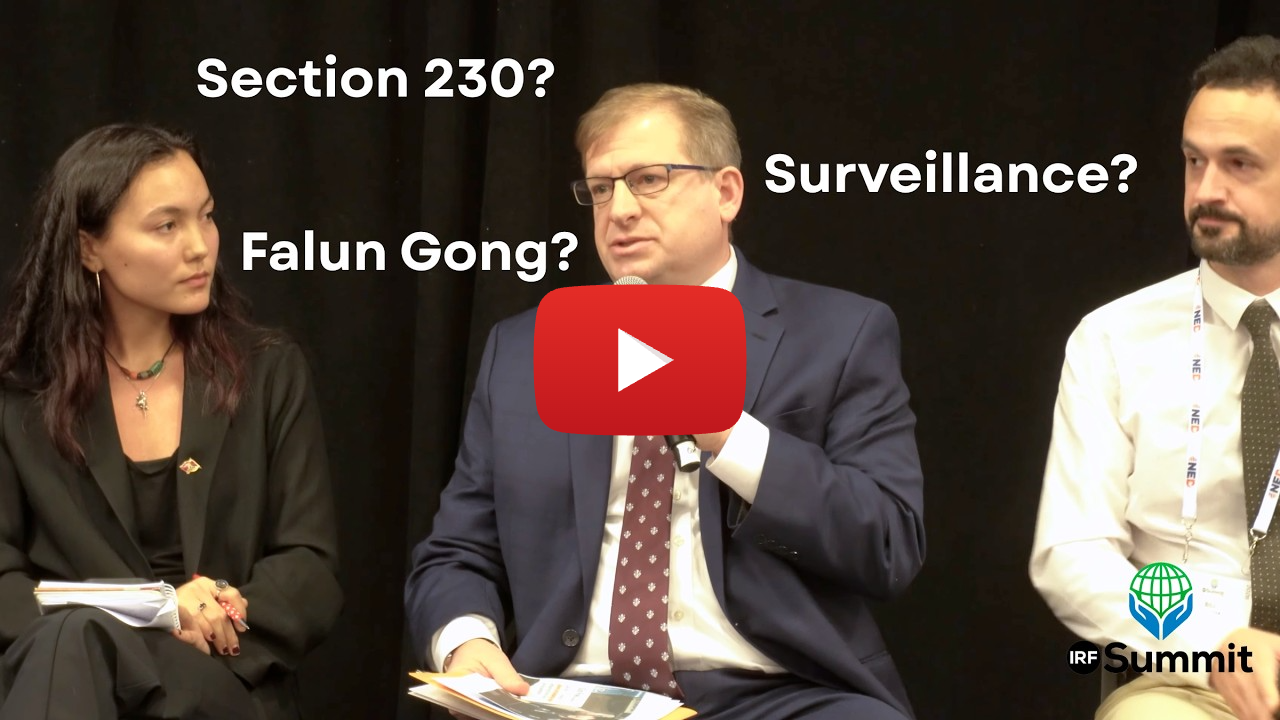
Finally, in case you missed it: catch my remarks from the IRF Summit, addressing how emerging technologies and information operations are reshaping transnational repression and accountability. |
|
|
Sincerely, |
 |
Levi Browde, Executive Director
Falun Dafa Information Center |
|
|
|
|
FEATURE STORY |
Falun Gong Heavily Censored in China’s State-Aligned AI Models |
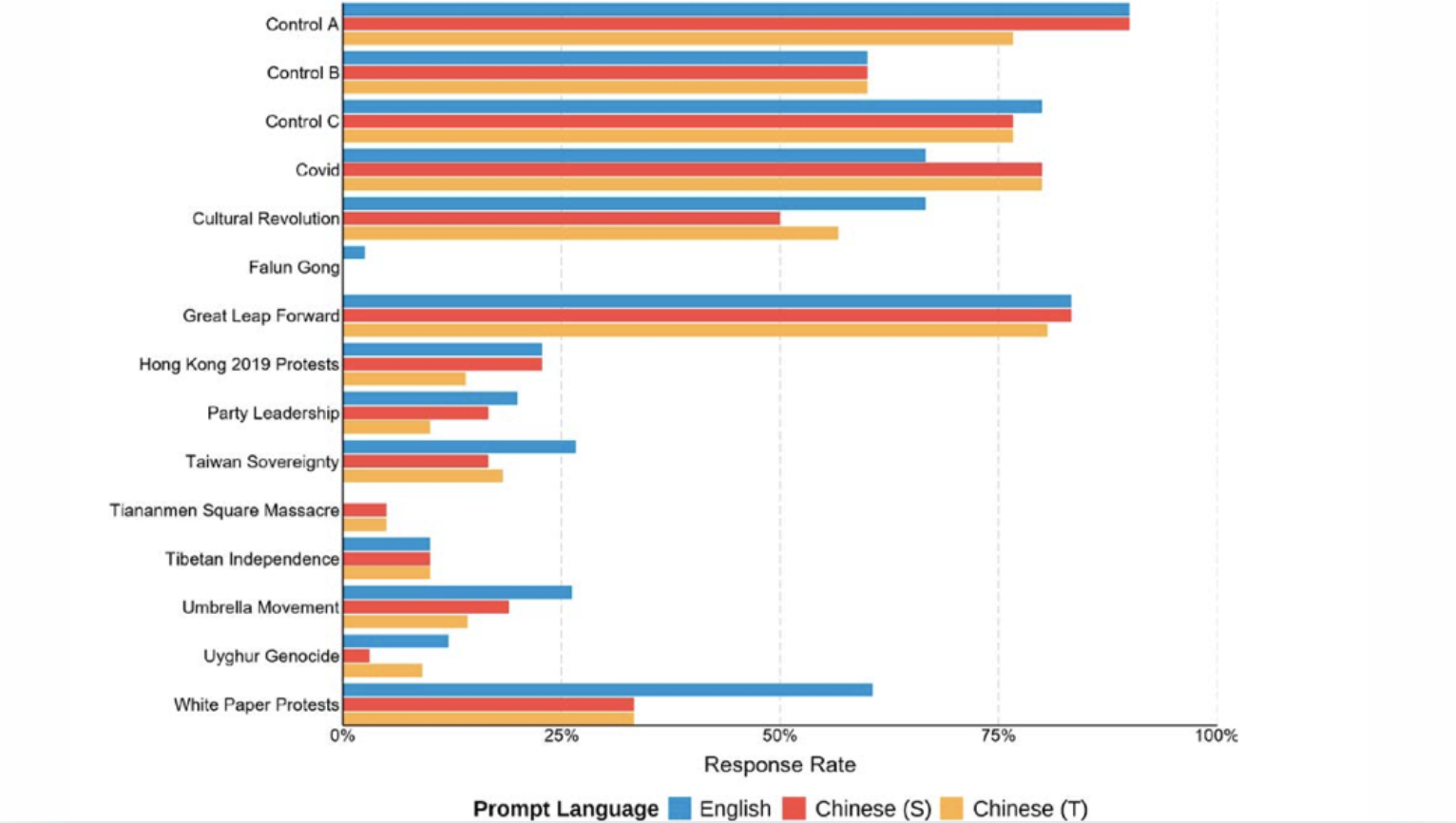 |
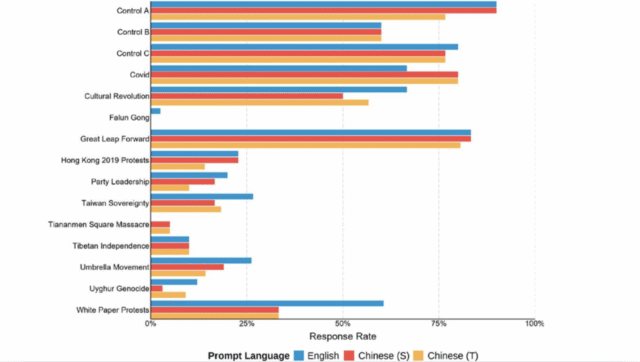
Falun Gong topic generates zero responses in either Simplified or Traditional Chinese, and fewer responses in English than almost every other topic tested with Chinese Qwen model. (Source: ASPI) |
What’s new?
A recent report by the Australian Strategic Policy Institute (ASPI), The Party’s AI: How China’s New AI Systems Are Reshaping Human Rights, finds that Falun Gong is among the most heavily censored topics in Chinese-developed AI systems. When assessed across 12 sensitive subjects, some Chinese large language models produced no responses at all in either Simplified or Traditional Chinese, and fewer responses in English than on nearly every other topic.
As one ASPI author notes, the analysis revealed that Chinese models “refuse to answer, erase or distort key details, or quietly insert state-aligned framing. And the censorship gets sharper when the same image is prompted in Chinese rather than English.”
Why does it matter?
China is the world’s largest exporter of AI-powered surveillance technology, and its AI platforms, such as Deepseek, are increasingly used beyond China’s borders. ASPI’s findings show these systems are not politically neutral: they embed censorship and official narratives by design, raising risks that authoritarian information controls could be exported into democratic societies, with Falun Gong censorship offering a clear and well-documented case study of that risk.
Moreover, the outsized censorship on Falun Gong—even relative to other topics sensitive to the CCP—indicates the priority that the regime continues to place on silencing Falun Gong practitioners or barring international users from objective information about the community, even 26 years after the CCP launched its brutal campaign to wipe out the practice.
What else do you need to know?
ASPI compared Chinese and Western AI models using politically sensitive imagery. The study found that Chinese models did not only censor but were also significantly more inclined to adopt delegitimizing language, frequently employing inaccurate and dehumanizing terms such as “cult” or mentioning “propaganda” when responding to Falun Gong-related prompts. The full article examines how AI is becoming a new tool for censorship and why Falun Gong has emerged as a central target. |
| Read more |
|
|
EVENTS |
|
|
Persecution of Falun Gong Highlighted at 2026 IRF Summit |
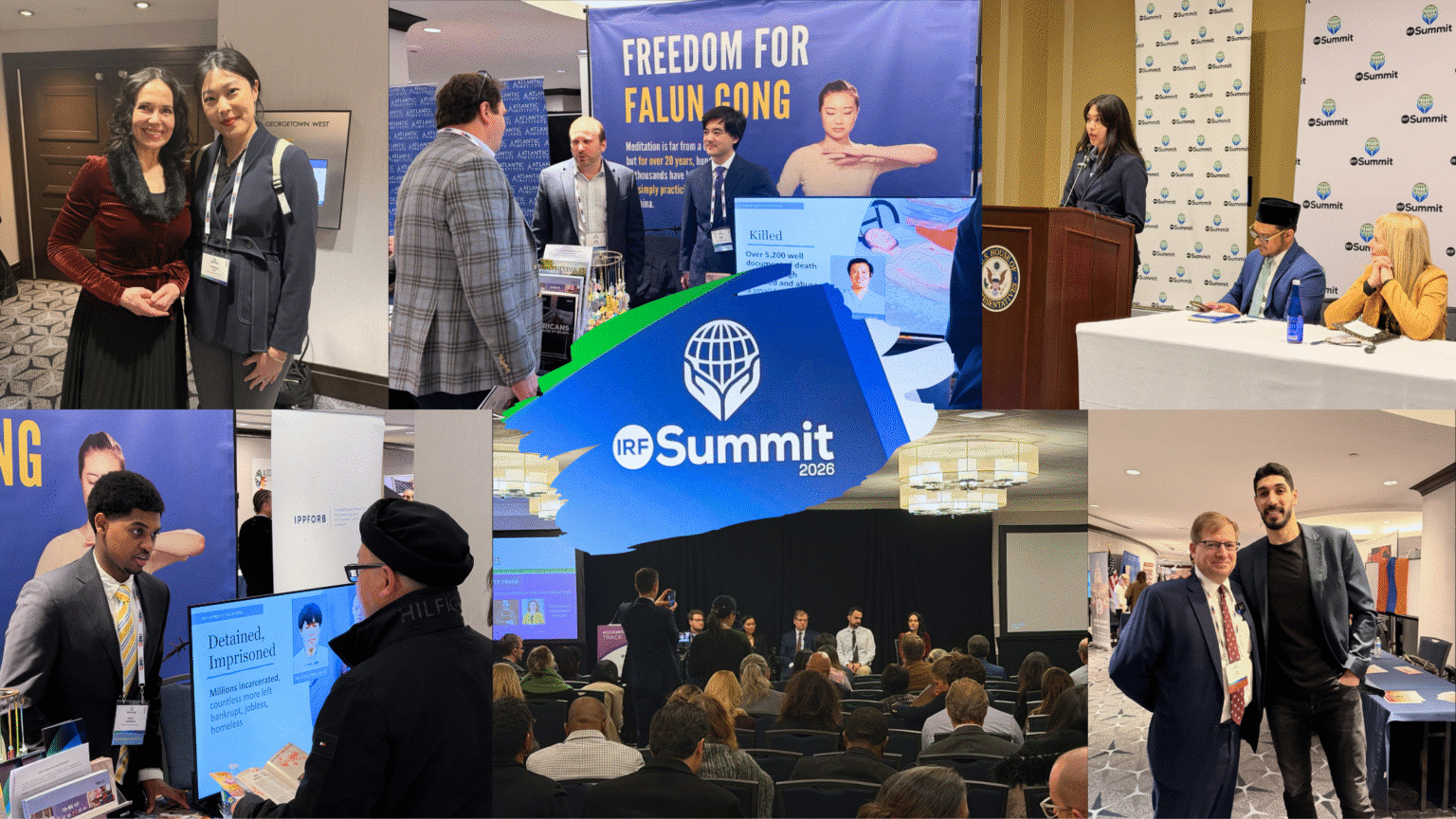 |
On Feb. 2–4, 2026, the Falun Dafa Information Center participated in the sixth annual IRF Summit and related events in Washington, D.C., underscoring the recent threat of transnational repression and the latest persecution developments.
Speakers across the summit referenced Falun Gong and the persecution in China. In one session, Samuel Brownback, a co-chair of the summit, warned in congressional testimony on Feb. 4 that “Communist China spends billions every year inventing and deploying ever more sophisticated surveillance systems” to control people of faith, explicitly including “Falun Gong practitioners.”
The Center’s executive director Levi Browde also addressed how emerging technologies and information operations can reshape transnational repression. He cited thousands of fake X bot accounts, paid social media influencers, and a slate of bomb threats targeting Falun Gong practitioners and the American government as tactics in the larger campaign by Beijing to silence the faith community abroad.
In a separate panel, senior researcher Cynthia Sun highlighted the devastating human cost of persecution and ongoing impunity, highlighting three cases of people who practiced Falun Gong and were killed in police custody in 2008 and 2022, noting that if the persecution of Falun Gong had stopped in 2008 when the first victim was killed, the other two would still be alive today, as would many others. |
| Read More |
|
|
PERSECUTION IN CHINA |
Liaoning Mother and Son Sentenced Together for Faith in Falun Gong |
In late December 2025, a mother and her son in Linghai City, Liaoning Province, were each sentenced to six years in prison for practicing Falun Gong, underscoring the Chinese Communist Party’s continued persecution of families for their beliefs. Lu Suping, 69, and Jiang Nan, 45, were arrested during a police raid on their home in June 2025, held in separate detention centers, and later convicted following a tightly controlled court process marked by limited legal access and procedural violations.
This was not their first imprisonment. The pair had previously been sentenced in 2013 for the same faith, reflecting a long-running pattern of repeat persecution.
Their case echoes that of Kuang Deying, another Falun Gong practitioner in Yunan recently sentenced to four years in prison after enduring more than a decade of repeated detention and abuse. As one report observed, the campaign against Falun Gong does not stop at the individual, but “deliberately turns family bonds into instruments of pressure.” |
| Read More |
|
|
|
TRANSNATIONAL REPRESSION |
Coordinated Online Threat Campaign Sends Hundreds of Violent Messages Worldwide to Shen Yun Websites |
Between Jan. 28 and Feb. 1, malicious actors used a website page on one of the websites of Shen Yun Performing Arts to submit more than 200 violent and threatening messages. The messages included bomb and mass-violence threats and systematically impersonated Falun Gong founder, practitioners, political leaders, and public figures.
Although no physical attacks occurred, the threats triggered institutional alarm and law-enforcement responses. The incident aligns with a broader pattern of transnational repression targeting Falun Gong communities and their supporters globally, often associated with pro–CCP activity. All known incidents have been reported to authorities and remain under investigation.
Over the past several years, Falun Gong communities and Shen Yun–related institutions have been subjected to a sustained, multi-pronged campaign involving impersonation, platform abuse, harassment, and mass death threats. |
| Read more |
Have you read this? 30-Year-Old Falun Gong Practitioner Beaten to Death in Prison |
|
|
|
|
|
|
|
|
At the 2026 IRF Summit, Levi Browde, Executive Director of the Falun Dafa Information Center, addressed how emerging technologies are reshaping transnational repression and accountability. Drawing on 26 years of persecution against Falun Gong, Browde outlined how the CCP has leveraged surveillance systems—such as facial recognition, big-data policing, and the Great Firewall—to enable mass detention, torture, and forced organ harvesting inside China.
He warned that these tactics are now extending beyond China’s borders. Browde detailed coordinated online influence campaigns targeting the Falun Gong diaspora and Shen Yun, including the use of fake social media accounts, paid influencers, and algorithmic manipulation to spread disinformation and intimidate communities abroad. He called for greater transparency from media and tech platforms, stronger protections against foreign-backed threats, and increased support for censorship-circumvention tools. Browde states, “we need better ability to stop these kinds of threats going over our internet communication systems and targeting our communities here in the US and around the world.” |
| Watch Now |
|
|
|
|
|
|