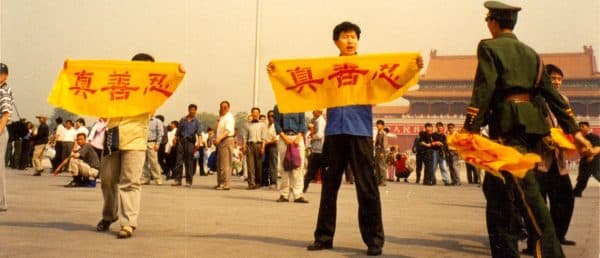
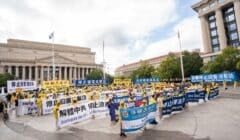
In 2025, evidence continued to show that the Chinese Communist Party’s (CCP) campaign against Falun Gong remains systematic inside China and increasingly aggressive overseas. The Falun Dafa Information Center documented key incidents affecting people across China, North America, South America, Europe, Asia, and Australia—from abuse, detention, and sentencing patterns across China to threats, intimidation, and information operations worldwide.
To start, we summarize the most up-to-date figures we can document.
By the numbers*
- Confirmed deaths (since 1999): 5,290
The documented deaths from torture and abuse inside China has reached at least 5,290 Falun Gong practitioners. This does not include deaths by forced organ harvesting, which some experts say, at the height of the fillings, exceeded 30,000 deaths per year (see China Tribunal judgement here for more details).
- Detentions & arbitrary arrests in 2025: 4,000+
Based on the most recent documentation available through early November, detentions and arrests inside China surpassed 4,000 cases in 2025.
- Death and bomb threats targeting Falun Gong diaspora and supporters: 220+
Beginning in 2024 and escalating through 2025, Falun Gong communities, affiliated organizations, and supporters in the U.S. government were targeted with death and bomb threats, some of which were traced back to Xi’an China.
- More numbers on transnational repression here.
*Note: These figures reflect documented cases; due to censorship and restricted access inside China, the true scale is widely understood to be higher.
1) Inside China: mass arrests and harsher sentencing patterns
One of the clearest trends this year was the continued use of coordinated, large-scale operations—including raids, target lists, and group arrests—followed by detention and sentencing. A stark example was the September 29 mass arrest operation of thirty Falun Gong practitioners in Jinan, Shandong, with follow-on detentions still ongoing as of the reporting period.
Another example came from Shanxi: in November, we published exclusive doorbell-camera footage showing multiple plainclothes officers harassing and arresting Chen Zhongli (陈忠丽), an elderly mother.
2) Transnational repression escalated—and got more brazen
Threats traced back to China
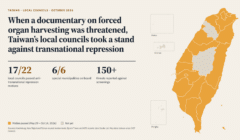
A major development came from Taiwan’s Criminal Investigation Bureau, which traced bomb threats targeting Shen Yun (and, in some cases, officials) to an entity in China—reported as the Huawei Research Institute in Xi’an.
Intimidation in Europe: “Once we have your names…”
In August, former Hong Kong Chief Executive Leung Chun-ying (CY Leung) approached Falun Gong practitioners in Helsinki and made threatening remarks on-camera, implying Hong Kong’s government has carried out surveillance and identification of Falun Gong practitioners since he was in office.
Harassment and proxy activism in New York
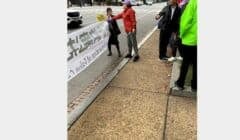
In the U.S., FDIC reporting exposed the activities of a known pro-CCP-linked figure and paid astroturf protestors in New York, illustrating how pressure campaigns can use local intermediaries and community coercion to spread disinformation.
3) Policy movement in Washington: accountability gained momentum
A central milestone this year was the U.S. House passage of the Falun Gong Protection Act (H.R. 1540) by unanimous voice vote on May 5, aimed at countering persecution and addressing forced organ harvesting abuses.
In December, the Congressional-Executive Commission on China also issued a major annual report that explicitly flagged ongoing persecution and referenced allegations of state-sanctioned organ harvesting.
4) The tech and information battlefield: censorship, bots, and AI
X removed coordinated bot activity
In March, X removed networks of accounts engaged in coordinated targeting of Falun Gong and Shen Yun Performing Arts on the platform.
DeepSeek and the future of embedded censorship
In September, new CrowdStrike research highlighted by the Wall Street Journal found DeepSeek refused certain prompt requests tied to Falun Gong at high rates, demonstrating that dangerous and discriminatory CCP-aligned censorship norms have scaled globally through consumer and dual-use technology.
5) A rare kind of headline: family rescue successes
Amid consistent reports of human rights abuse and tyranny, 2025 also brought moments of relief—and with it, proof that sustained advocacy can change outcomes.
- Finding Freedom in England: In July, Ms. Liu Pintong successfully arrived in the UK and reunited with her son after years of detention, surveillance, and travel restrictions—following a sustained family rescue effort. She gained legal asylum shortly after.
- Thanksgiving Reunion: Tom Hua, a UNHCR-recognized refugee, reunited with his wife and daughter in the United States after a decade apart—marking their first Thanksgiving together. We delayed publishing this story due to security considerations.
Looking ahead to 2026
The throughline of 2025 was unmistakable: persecution inside China remains severe with technology playing an increasing role, while pressure campaigns abroad are expanding and becoming far more sophisticated—from threats and intimidation to online manipulation and new tech vectors. At the same time, policy traction and accountability tools are growing, and family rescue wins show that targeted advocacy still matters.
If you found this recap useful, please share these developments and trends with someone who influences policy, media, or civil society—and keep these stories on their radar.
See you again in 2026! |